Anglican sisters attends a thanksgiving church service held in her memory at the Anglican Cathedral in Harare Zimbabwe. (Photo by Jekesai NJIKIZANA / AFP)
As Zimbabwe spirals further into economic decay, crime continues to soar with thieves now targeting churches, which are depositories for cash donations from congregates.
In November alone, three Catholic priests in the city of Bulawayo reported their parish houses being broken into by thieves, who did not find the anticipated loot.
In the capital Harare, another Catholic priest reported a break-in in December, which he attributed to the mistaken belief by thieves that he kept “huge sums of money” at his residence.
The thieves’ suspicions are not unfounded. In August a gang got away with US$18 000 in cash from an Apostolic Faith Mission church in Harare. Police said the armed gang was known to specialise in robbing churches that have stayed afloat during hard times thanks to donations made by congregants to support their pastors.
In deeply religious Zimbabwe, many church goers often make large donations and “pledges” to their church leaders to receive blessings referred to locally as “anointing”.
“We are witnessing unprecedented robberies of churches and pastors and the reason is all caused by high levels of unemployment and poverty that characterise our nation,” said Bishop Wilfred Dimingu, the secretary general of the Zimbabwe Council of Churches.
“Churches are part of that group that no longer banks money and robbers are aware of that,” he said.
Some criminals reportedly attend Sunday services to listen in when announcements are made about the previous week’s donations.
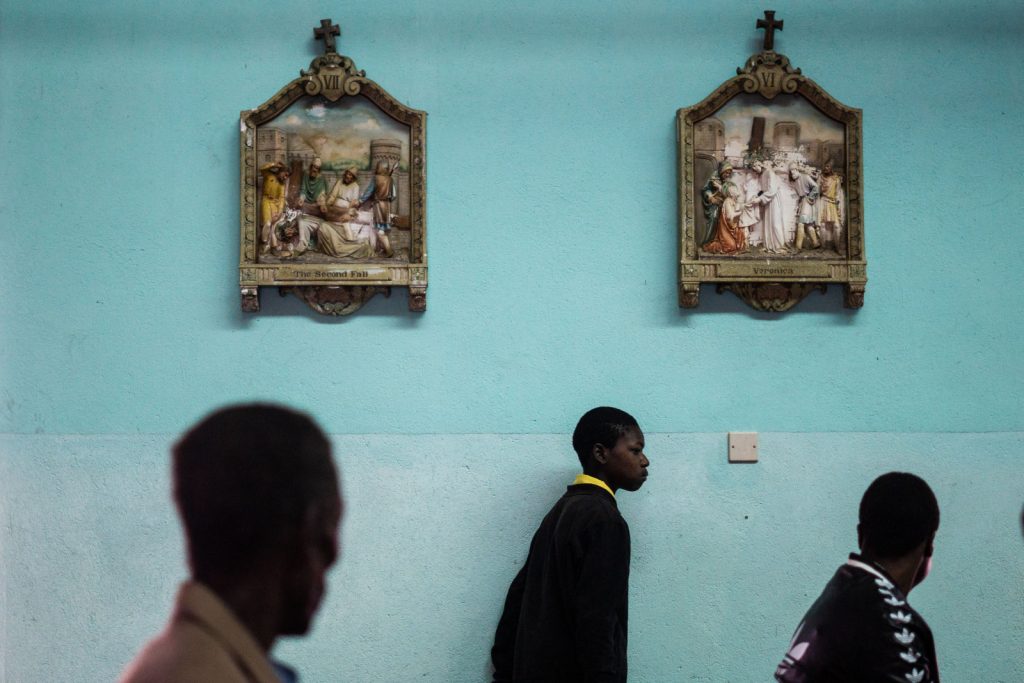 “It is for just this reason that the Human Rights Forum pointed out the ‘fragility’ of Zimbabwe, and the relationship between fragility and crime,” said RAU senior researcher Tony Reeler. (Photo by ZINYANGE AUNTONY / AFP)
Private security firm Safeguard reported in May that burglaries had spiked by 36% the previous month, partly because of the increased cost of living.
In Bulawayo, witnesses of daylight muggings often report being threatened against raising the alarm by the aggressive criminals, who justify their crimes with the line: “Do you want my kids to starve?”
In a country with an unemployment rate of more than 80%, according to the Zimbabwe Congress of Trade Unions — although the official rate puts the figure at 15% — crime has become the answer for many young men.
Recently, President Emmerson Mnangagwa capped nearly 20 000 university graduates, but the majority of them have little to no prospect of finding jobs in their chosen fields.
“The majority of Zimbabweans live in poverty, without access to basic social services and living incomes,” said Blessing Vava, the national director of the Crisis Coalition of Zimbabwe.
“There are factors that have bundled together and have created huge social inequalities that are likely to worsen.”
At one Catholic parish in Bulawayo early this year, thieves fled with sacred vessels used during Mass, only to dump their loot not far from the church after realising that it had no real market value.
Last week, a controversial pastor who has given “prophecies” about what he says is Mnangagwa’s ill-fated rule had his church robbed by thieves who got away with a safe containing thousands of US dollars. Police investigators said it was an inside job, with a church official admitting to tipping off his co-conspirators that the church kept large sums of cash on the premises.
Critics say some pastors have opened themselves as targets for crime by pursuing flamboyant lifestyles at odds with the poverty around them. As a result, even those churches whose leaders have not amassed wealth at the expense of their congregates have been targeted by criminal gangs.
“The prosperity gospel preachers come at a time when the country is experiencing severe economic hardship and these false prophets took advantage of the situation,” said Gerald Mabweazara, a PhD researcher at the University of Cape Town.
“People are desperate and they tend to fall prey to these prophets. Genuine Christians of the past practised extreme austerity and renounced pleasure, even property rights,” he said, adding that some pastors have attributed congregants’ poverty to lack of faith and not praying hard enough.
Despite the robberies, church officials say churches are also feeling the economic pinch.
“People think churches are rich, but you will realise they are also struggling because of the state of the economy,” said Mavis Gumpo, who keeps the books at a city church in Bulawayo.
“It’s tough trying to budget and pay bills when congregants give in local currency,” she said, the value of which has fallen sharply because of inflation, with most businesses preferring to transact in US dollars and rands.
While requests for comment from the police were not returned, Zimbabwe Republic Police spokesperson Paul Nyathi is on record lamenting the increase in church burglaries.
The Research Advocacy Unit (RAU), an independent think tank in Harare, has noted that robberies account for 26% of crimes reported last year. Researchers see broader implications of such crimes and how the country’s socioeconomic problems could have long term effects if not properly addressed.
“It is for just this reason that the Human Rights Forum pointed out the ‘fragility’ of Zimbabwe, and the relationship between fragility and crime,” said RAU senior researcher Tony Reeler.
“The point about fragility and its effects applies to the general population. The government has frequently expressed concern [about crime] but there seems very little change,” he said.
[/membership]