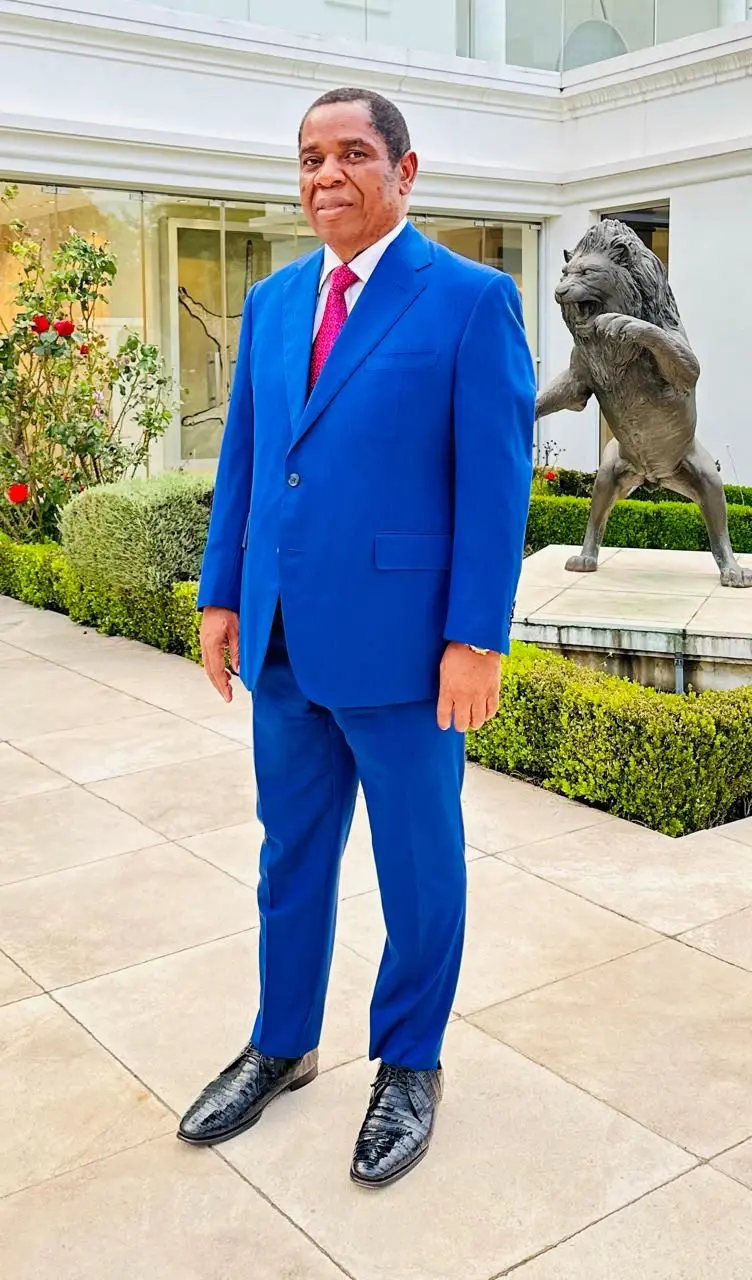

Former Mozambique finance minister Manuel Chang. (Wikus De Wet/AFP/Getty Images)
The South African government handed over former Mozambican finance minister Manuel Chang to American authorities early on Wednesday to stand trial in New York for his role in the so-called Secret Debt scandal that triggered a sovereign default in Mozambique.
Chang was surrendered to members of the FBI.
They arrived at Lanseria airport on board a US justice department jet at the weekend and US diplomats expected that the extradition would be completed on Monday. But Chang remained in prison for a further two days while South African officials finalised logistical arrangements for his release.
A long legal and political wrangle over his fate was settled by the constitutional court in May, when it denied the Mozambican government leave to appeal a 2021 high court ruling that overturned a decision by Justice Minister Ronald Lamola to surrender Chang to Mozambique.
Judge Margaret Victor ordered that he be surrendered to the US instead.
Lamola’s decision was challenged by the Fórum de Monitoria do Orçamento, a Maputo-based umbrella body of civil society organisations, which argued that Chang’s immunity as a member of the Mozambican parliament — which he remained until 2019 — may not have been lifted and if even if it had, he may still be shielded by systemic corruption and largesse linked to his former role as a member of government.
Chang was indicted in a New York district court on 19 December 2018 on charges that include conspiracy to commit fraud, conspiracy to commit securities fraud and conspiracy to commit money-laundering.
The charges stem from an elaborate fraud scheme that led to Mozambique defaulting on debt payments in 2016.
Some three years earlier, Chang signed off on state guarantees for €2 billion of loans extended to Mozambican parastatals by foreign banks, including Credit Suisse.
The money, a fair share of which came from investors in the US, was ostensibly intended to support the development of Mozambique’s tuna fishing industry and pay for trawlers and coastal patrol vessels. But US prosecutors said it flowed instead to Chang and his alleged co-conspirators, believed to include the son of former president Armando Guebuza.
He was arrested at Johannesburg’s OR Tambo International Airport just 10 days following the indictment.
The US filed a formal extradition request in January 2019 and Mozambique followed suit in February that year.
Faced with two competing requests, then justice minister Michael Masutha decided in May to surrender Chang to Mozambique.
Shortly afterwards, Masutha was replaced by Lamola, who asked the high court to set aside the decision and refer the matter back to him. The minister opposed an application by Chang demanding that he either be returned to Mozambique or released.
The court held, in a ruling that would become known as Chang I, that it “would make no sense to extradite a person to a place where he cannot be prosecuted” and that hence the only valid request was that filed by US authorities. It referred the matter back to Lamola.
But Chang would spend another year in prison in Pretoria before Lamola, in a U-turn that was never credibly explained in court or elsewhere, decided in August 2021 to extradite him to Mozambique after all.
Well-placed sources have suggested the minister was obliged to cede to regional realpolitik, given the likely embarrassment the Mozambican government faces when the trial gets underway in the US court.