Knock-on effects: Cape Plc operated an asbestos mine near Prieska from the 1920s to 1979, but the harmful effects of the element continue down the generation. Photos: Hein du Plessis
Residents at a former asbestos mining site in the Northern Cape are urging the government to rehabilitate and close the mines as they remain at risk of contracting asbestos-related diseases, years after the operation shut down.
The Koegas asbestos mine, located in close proximity to the community of Prieska and Marydale, was owned by the now-liquidated Cape Plc. The England-based asbestos mining company had run operations in South Africa since the 1920s, where mostly black and coloured mineworkers were subjected to unsafe working conditions.
These workers contracted deadly diseases, including asbestosis and mesothelioma, as a result of inhaling the fine fibres of asbestos while working in the mines, or stamping them at the mill in Prieska.
Asbestos is an industrial mineral mainly used in building materials like insulation, roofing, and flooring, as well as in automotive parts like brake linings. The manufacturing, import, selling and use of asbestos and asbestos-containing materials was banned in South Africa in 2008 due to its harmful nature. Its use is also prohibited in the United Kingdom, countries across the European Union, Australia, New Zealand, Canada and Chile.
In 1995, British lawyer Richard Meeran represented the thousands of workers who contracted asbestos-related diseases (ARD) in the House of Lords, the then highest court of appeals in the UK. A settlement was reached for the mineworkers in 2004. Cape Plc’s operations in South Africa ceased in 1979, and it eventually got sold.
In a recently published book, In a Rain of Dust: Death, Deceit, and the Lawyer Who Busted Big Asbestos, Australian author David Kinley brings the issue back to light by documenting the story of the people who suffered at the hands of Cape Plc and the subsequent court case.
“The book pivots around the fact that the mining company knew that the scientific evidence [which confirmed the harmful effects of asbestos mining] was there,” Kinley told the Mail & Guardian.
“Cape Plc really did know that this was a very dangerous material, and yet, for decades, they muddied the waters, claimed that this was not as dangerous as it appeared, and used the apartheid system in a way that benefited them. Where black lives mattered less.”
“Therefore the legacy is much more damning and much more grave in places like South Africa than elsewhere, because it went on for so many decades longer than it did in the West.”
Community activists in Prieska and the surrounding areas say that there are still remnants of asbestos in the air, and this was confirmed by Meeran and Kinley during a visit to the area in June. They fear that people could still contract asbestosis.
Only a few mines in Koegas have been rehabilitated, but the vast majority have not, Kinley said.
“We saw blue asbestos on the ground in the middle of the town where the old mill used to be and when I was there two years ago, I went out to Koegas, which is where the mine was, and blue asbestos was rampant all through the hills, everywhere we were walking,” he said.
“The reality is that blue asbestos and brown asbestos is open to the environment, and even where attempts have been made to rehabilitate work, to cover the asbestos tailings, usually it was a very thin layer of soil.
“Sometimes it was with some plants or shrubs that would hold the soil together, but often they didn’t survive, leading the soil into erosion through wind, rain, water, and of course, then it disappears [exposing the mine to the air again],” he added.
“The asbestos fibres are incredibly fine beyond the human eye. They’re everywhere, and so people are exposed to them or inhaling them and even consuming them on their food or in their drinks.”
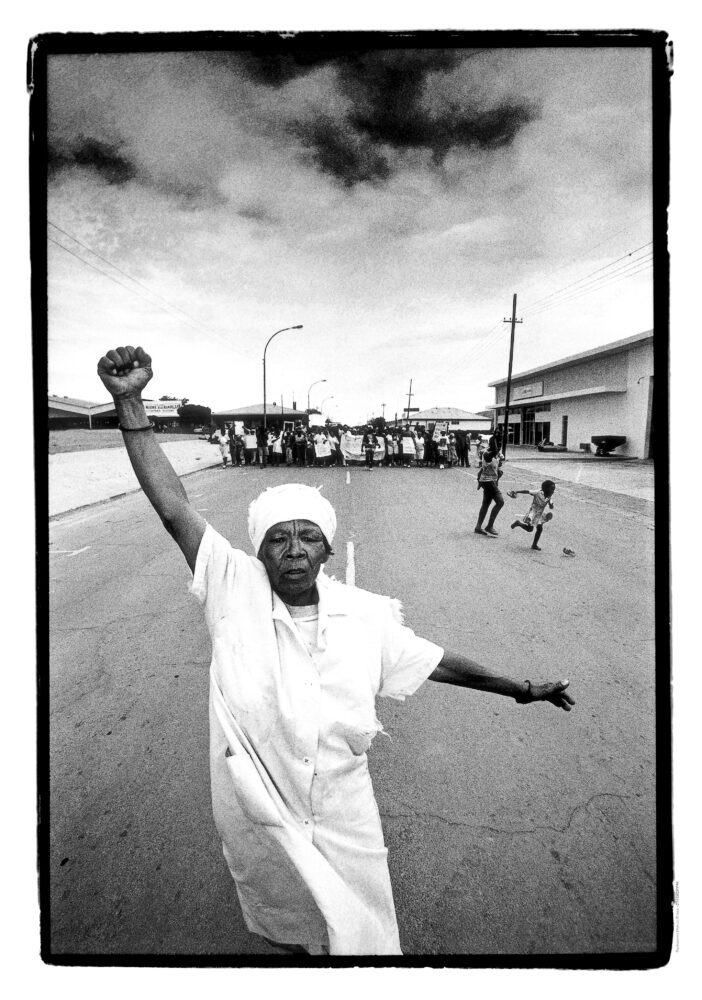
Activists are pressing the government
to clean up abandoned asbestos mines, warning that Cape Plc’s toxic legacy still endangers communities.
Cases of mesothelioma cancer are still occasionally popping up in Prieska and surrounding regions, mainly because the fatal condition has a 30-year latency period after an individual has been exposed to asbestos. But no new cases of asbestosis have been reported recently, according to Dr Christian Charles Schoeman, a specialist general practitioner who worked in the area for 34 years.
“The cases we see now are from the past exposure, when the mining was still active,” Schoeman said.
He added that there are areas where asbestos is visible, but these were the big fibres, which are not easily ingestible compared with the smaller fibres, which were more prevalent in the milling areas — where the asbestos was stamped by mainly women.
“The fine fibres were flying all over town, and everybody was exposed. The children were playing on the asbestos heaps … I think what we’re seeing now is the result of it, many years back, with the exposure that people had, the diagnosis was a death sentence.”
Jack Adams and Cecil Skeffers are community activists in Prieska. They got involved in the cause to ensure former mineworkers are properly compensated and to get the local municipality as well as the departments of health and mineral resources involved in the rehabilitation of the mines.
Predominantly black workers who were employed by the company during apartheid were not given proper protective gear and went down the mines with basic dust masks, they told the M&G.
Skeffers lost his father to mesothelioma, which emboldened his resolve to help rid the area of asbestos dust.
“My father was also affected by asbestosis while working on a Koegas asbestos mine. I could see the effects immediately and [was] directly involved with this suffering at night, of shortness of breath, loss of weight, no appetite, and eventually he fell sick and he died,” he said.
“I said to myself, this can’t be happening. Someone must take responsibility and accountability.”
Adams said he has tried to involve the government in building spin tracks to compact mining areas and pave them to close them up, but funding has been a major issue.
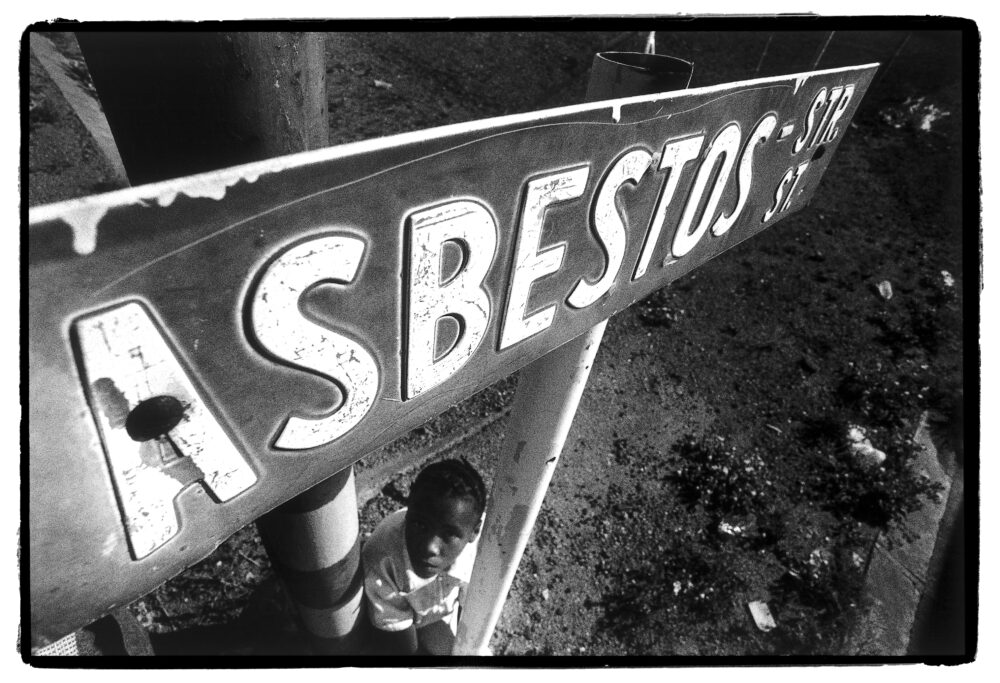 Breath-taking: Asbestos Street, Prieska, South Africa. In 1930 Cape Plc built a crushing mill in close proximity to residential and business areas, in Prieska. The mill was in operation until approximately 1964. During this period residents of Prieska were exposed to asbestos fibres, either as employees or in their daily activities around the town.
Photos: Hein du Plessis
Breath-taking: Asbestos Street, Prieska, South Africa. In 1930 Cape Plc built a crushing mill in close proximity to residential and business areas, in Prieska. The mill was in operation until approximately 1964. During this period residents of Prieska were exposed to asbestos fibres, either as employees or in their daily activities around the town.
Photos: Hein du Plessis
Cape Plc was obligated to rehabilitate the mines that left a trail of destruction, but the reality is that the company was sold after going bankrupt and so responsibility should be taken up by the South African government to care for the communities.
“It’s pretty universal that part of the licence to operate mining companies requires them to rehabilitate when they finish. It shouldn’t be the responsibility of the state to clean up. It should be the responsibility of the company whose practices have caused the harm,” Adams said.
Under the current circumstances, the state will have to deal with the consequences, Kinley said.
“It’s very hard to see how Cape, at the moment, could be pursued in litigation, not impossible, but [hard]. So therefore the state has to play a role. It simply can’t wash its hands from advocacy because obviously, it’s there under a social contract to govern on behalf of its people.”
While workers received compensation for the illnesses they contracted while working in the mines or at the mills, it was not sufficient, said the activists. Meeran agreed that the sick workers were indeed entitled to more money, but the company could not afford it.
Skeffers said the successors of Cape Plc’s directorship should be liable for the harm caused.
“The company is bankrupt while the money is channelled down and people are reaping the fruits of our sweat and tears and blood of our fathers and grandfathers.”
Cape Plc gaped a massive hole in Koegas and Prieska, which continues to haunt its people today.
As Kinley explains in his book: “Many members of their families and local communities were also similarly afflicted; little or no compensation was available to any of the victims under the overtly discriminatory occupational health and safety laws; and Cape itself, having departed the country more than a decade earlier, had washed its hands of any responsibility.
“Nearly all victims were black or coloured, with rates of ARDs nearly 200 times the average rate for the rest of the country.”
The M&G was not able to get Cape Plc’s comment as the company has since been taken over by other owners. The department of mineral and petroleum resources and Prieska mayor Andrew Phillips had not responded to questions from the publication at the time of going to print.
Reporting by Aarti Bhana, images by Hein du Plessis