

In a country where women continue to live with the fear and reality of gender-based violence, conversations about what it means to be a man cannot be separated from the question of accountability.
The violence that continues to claim women’s lives has forced South Africa to confront uncomfortable questions about the attitudes, behaviours and social norms that allow it to persist. But while much of the public conversation centres on the experiences of women who survive violence, there is an equally urgent need to confront the responsibility of men who witness, excuse or perpetuate harmful behaviour.
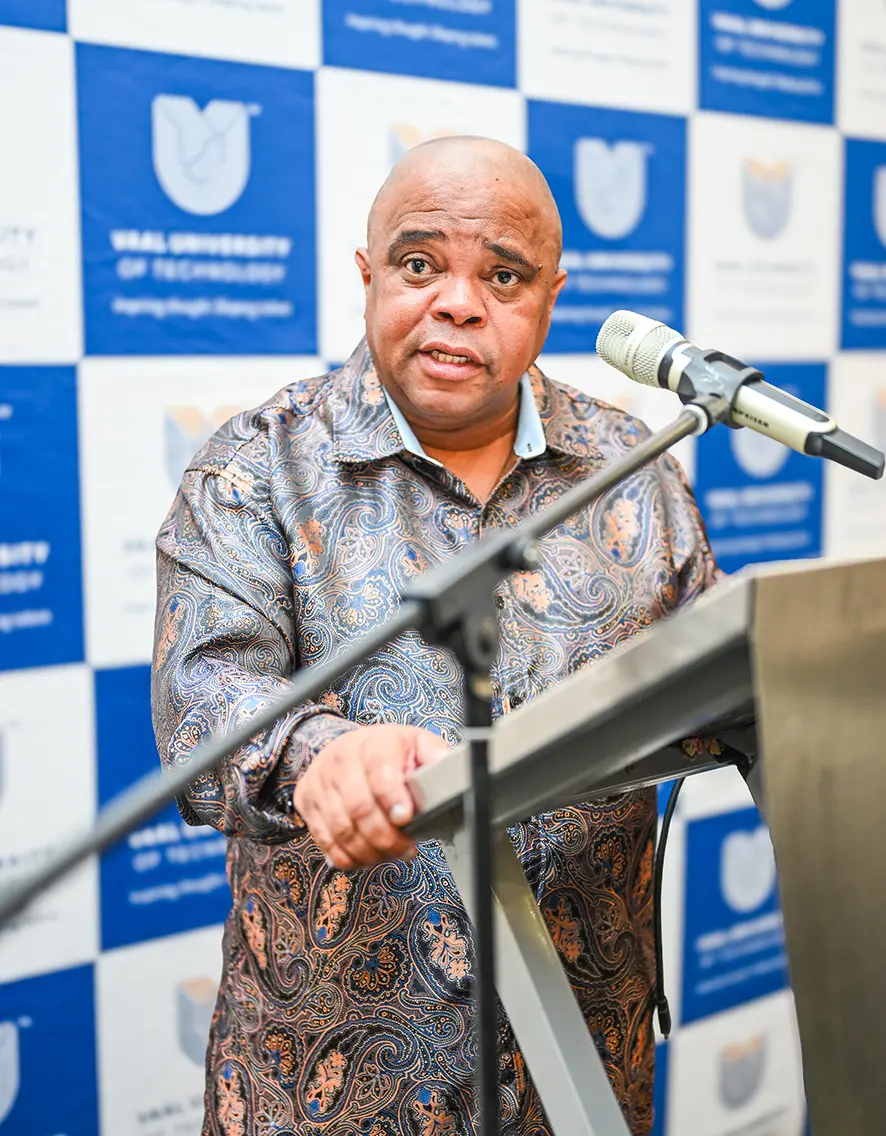
This was among the issues raised at the inaugural launch of the Vaal University of Technology’s (VUT) Men’s Forum, held at the Emerald Hotel in Vanderbijlpark on November 19.
The gathering brought together men from different professional backgrounds to reflect on relationships, health and their responsibilities in a society grappling with violence, inequality and social instability.
Among those who addressed the forum were Sechaba Motsieloa of EmpowaMen, Rabbuh Raletsemo of the Commission for Gender Equality, leadership mentor Dr Zukisani Mxoli, clinical psychologist Mzamo Mbuli, Dr Geeva Pillay of RTE Herbal, wellness specialist Lesang Maiketso, Fred Bohasu of Impact Amalgamate and Thato Emmaneul Mfono.

The conversations were not only about the pressures men face, but also about how they respond to these challenges and how their actions affect the people around them.
For VUT deputy vice-chancellor Professor Speech Nelana, the forum should become a space for continued engagement rather than a once-off gathering.
“I wish to emphasise that the establishment of the VUT Men’s Forum should not be understood as a once-off thing. It must become a meaningful platform for ongoing engagement, mentorship, peer support, personal development and access to professional assistance,” she said.
“Its success will depend on the willingness of our male colleagues.”
The challenge is to ensure that the conversations translate into something tangible beyond the conference venue. This means confronting the challenges of everyday life while creating a space where men can access the resources and professional support they need.
The forum also turned attention to personal struggles that many men are reluctant to speak about.
Mental health was one of the subjects discussed, with Mbuli urging delegates to take their wellbeing seriously and make use of available support.
“A large percentage of successful suicides are by men. So seek help and use the platform and resources provided by this forum,” he said.
He challenged men who are quick to recognise depression and mental health challenges in others to turn that same attention towards themselves and take care of their own emotional wellbeing.
The conversation highlighted the importance of creating spaces where men can speak openly about their struggles without feeling that asking for help diminishes them.
But personal challenges cannot become an excuse for harmful behaviour.
Mxoli spoke about the importance of building healthy relationships at home, being present in the lives of partners and children, and paying attention to the language used to describe and navigate relationships.
He also raised an important consideration around language and cultural context, explaining that some English expressions and sayings may be interpreted differently when used in African households. Without an understanding of these differences, communication can become a source of misunderstanding and conflict. He urged the university to be mindful of these nuances in its commitment to developing the forum.
The words people use to excuse wrongdoing can also shape how seriously it is taken. When harmful conduct is dismissed as a joke, a private matter or simply the way men behave, it becomes harder to challenge the attitudes behind it.
Mxoli encouraged delegates to be more intentional about the different areas of their lives.
“If there is anything I need you to take away from this conversation, it is these points: wellness, spirituality, minding your business, family life, education, investment and giving back. If you can factor these points into your life, you will become better men,” he said.
The discussions also touched on the realities that shape people’s lives outside the home, including financial pressures, physical health and the demands of work.
For many, these challenges are deeply connected. Financial strain can affect relationships, poor health can go unattended and the pressure to provide can leave little room for emotional vulnerability.
Financial wellness was another focus, with Thato Emmanuel Mfono discussing people’s relationship with money and the importance of making more informed financial decisions.
Acknowledging the economic pressures many households face, he cautioned against turning to gambling as a means of making money or escaping financial difficulties.
Instead, he encouraged delegates to explore opportunities within the township economy, which continues to present avenues for entrepreneurship and investment. He urged them to think about how they could make their money last longer and identify opportunities that would allow them to grow their financial security.
The discussions were complemented by wellness support stations that gave delegates access to health screenings, financial guidance and professional assistance.
Yet the most important work may begin after such support has been accessed, when individuals are required to make decisions about their health, their relationships and the way they treat others.
The gathering also encouraged delegates to reflect on the kind of people they want to become and the legacy they hope to leave behind.
In a country where the consequences of harmful behaviour are often borne by women, children and vulnerable members of society, that reflection must extend beyond personal ambition. It must include the question of whether the people around us feel safe, respected and valued.
The launch of the VUT Men’s Forum comes at a time when the need for meaningful intervention is pressing. Its continuation will depend not only on the institution’s commitment to providing support, but also on whether men are willing to engage honestly with the expectations placed on them.
The challenge is not simply to speak about being better men. It is to demonstrate it in the choices made every day: in the way conflict is handled, in the way partners are treated, in the willingness to challenge harmful behaviour and in the decision to take responsibility rather than look away.
Because a safer society cannot be built by women alone. Men have a responsibility to help create it, and that responsibility begins with what they are willing to confront in themselves.