

Mail & Guardian
Mail & Guardian
lenacapavirlatest news & developments
Hasina Subedar, who is overseeing the health department’s introduction of pre-exposure prophylaxis, or PrEP medication, lenacapavir, has a more informal title: South Africa’s queen of PrEP roll-outs. Photo: Jay Caboz

Somebody call Hasina

Amid the mostly depressing HIV headlines of recent times, concerned as they mainly are with the deadly impacts of donor defunding, South Africa’s imminent roll-out of a…

Our anti-HIV jab will be rolled out in six weeks. But funding cuts hollowed out the system needed to deliver it

The uptake of the once-every-six-month HIV prevention jab lenacapavir (LEN) in South Africa will be heavily affected by the Trump administration’s funding cuts to the country, a…

What’s the best way to spend the HIV prevention budget so that the country can drive infections down as fast as possible? We take a look at what modelling data shows. (Pexels, kaboompics)

180 000 infections in 2024, 47 000 by 2045 — if SA rolls out the twice-a-year HIV prevention jab fast enough

The HIV prevention shot, lenacapavir, will be rolled out at South African clinics within the next couple of months and from 2027, the health department will also buy generics.…

After a year of US funding cuts across global public health, including South Africa’s hard-hit HIV programmes, new realities are settling in. We spoke to Mitchell Warren from the New York HIV advocacy organisation, Avac, to find out what that means for South Africa. Photo: Paul Botes

What will HIV funding look like in 2026?

After a year of US funding cuts across global public health, including South Africa’s hard-hit HIV programmes, new realities are settling in

We talked to experts about their take on a few of the most pressing public health issues this year. (Jay Caboz)

Here’s what’s on South Africa’s 2026 public health agenda

We talked to experts in obesity, tobacco, artificial intelligence, HIV, TB and the NHI to find out what we can expect — and what we can’t — this year
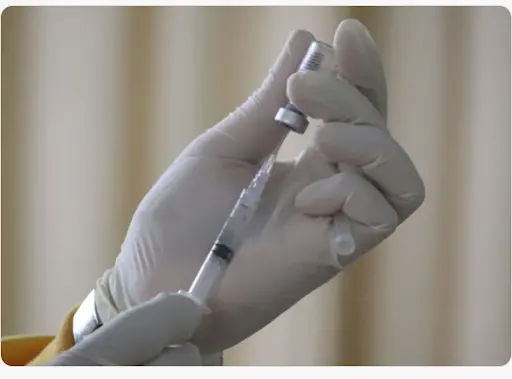
South Africa’s first consignment of lenacapavir (LEN), the twice-yearly anti-HIV injection, arrived at OR Tambo International Airport last week. Photo: Mufid Majnun/Unsplash

SA’s first batch of LEN jabs will arrive in February. Use Bhekisisa’s dashboard to find out who should get them

Who should get what slice of the pie once the medicine is available in public clinics? And are numbers alone what would drive decisions?

To end Aids by 2043, the South African government says it could get a group of local pharmaceutical companies to make generic shots of lenacapavir from 2027 onwards. There is, however, a hitch. None of the companies that will be involved have a licence to make the jab. (Julia Koblitz/ Unsplash)

SA wants to make its own six-monthly HIV prevention jabs by 2027. But there’s a hitch

None of the companies that will be involved have a licence from the inventor of Lenacapavir, Gilead Sciences, to make the jab

One in 10 clinics in South Africa will start to hand out a twice-a-year anti-HIV jab as early as February. The country’s medicines regulator, Sahpra, says it’s on track to announce its registration decision within the next few days, by the end of October. So who should get LEN first? (Anna-Maria van Niekerk)

The six-monthly anti-HIV jab could be in 360 clinics by February. Who should get the first doses?

The country’s medicines regulator Sahpra says it’s on track to announce its registration decision by the end of October

Long shot?: In April next year, South Africa plans to start rolling out an anti-HIV jab, taken only twice a year, that could end Aids in the country within 14 to 18 years. But is our public health system equipped to keep track of millions, who are on the shot? (Unsplash)

The six-monthly anti-HIV jab is coming. But can SA keep track of millions of users?

The shot, called Lenacapavir, has a 100% success rate in preventing young women from getting HIV through sex

Two Indian generic drugmakers — Hetero and Dr Reddy’s — will be funded by the Gates Foundation and Unitaid, respectively, to produce and sell the twice-a-year anti-HIV shot around R692 per person per year. (Anna-Maria van Niekerk)

Two drugmakers will sell the 6-monthly anti-HIV jab for the price of the daily prevention pill

Hetero and Dr Reddy’s will be funded by the Gates Foundation and Unitaid to produce and sell the twice-a-year anti-HIV shot around R692 per person a year

The health department anticipates that it could start to use government money to buy cheaper generics of anti-HIV jab the lenacapvir by April 2027. (Unsplash)

SA plans anti-HIV jab roll-out at hundreds of clinics by April

The health department hopes to make the twice-a-year anti-HIV injection lenacapavir available soon and to be buying generics by 2027

US President Donald Trump (Flickr)

Small win for activists, but SA’s HIV projects won’t reopen

The $400 million the United States congress removed from a list of funding programmes the Trump administration wants to cut doesn’t cancel the cuts to HIV and TB programmes made…

Research indicates the anti-HIV jab, lenacapavir, protects women completely and works almost as well for men, transgender and nonbinary people. Photo: Marko Milivojevic/Pixnio

SA gets R520 million to buy the twice-a-year anti-HIV jab – but there’s a snag

The country isn’t getting extra money from the Global Fund to Fight Aids, TB and Malaria; it has to use cash from a grant it has already been awarded and was cut by 16% in June

If all of its National Institutes of Health funding falls away, the country could lose 70% of its medical research capacity

The US’s NIH funds R6.65 billion of research in South Africa

If all of its National Institutes of Health funding falls away, the country could lose 70% of its medical research capacity

Lenacapavir could end Aids in South Africa by 2032. How much should we pay for it? (Canva)

The six-monthly anti-HIV jab could end Aids in SA by 2032

A modelling study released in March gives a clue at which price the jab, lenacapavir, would be worth the health department’s while

The Global Fund for HIV, TB and Malaria says it will fund the roll-out of the twice-yearly anti-HIV jab, lenacapavir, for poorer countries, including South Africa, with or without the help of the US government’s Aids fund, Pepfar

The Global Fund will roll out the twice-yearly anti-HIV jab — with or without Pepfar

In December, the Global Fund and the US President’s Emergency Plan for Aids Relief committed to funding the roll-out of lenacapavir in countries they support

On Saturday, the US state department issued details of who qualifies for a limited waiver during the Trump administration’s 90-day pause of foreign aid. The waiver, however, doesn’t allow for US government-funded anti-HIV pills, unless they’re given to pregnant women. (White House)

Too little, too late: What a Pepfar waiver can’t do for HIV

The US has said who qualifies for a waiver during the Trump administration’s pause in foreign aid but it doesn’t allow for anti-HIV pills, unless for pregnant women

Lenacapavir is a twice-yearly injection that stops the spread of HIV. (Gilead)

What it would it take to get the 6-monthly anti-HIV jab to South Africa

Lenacapavir drug can be made for as little as R740 per year for each patient

The US government’s Aids fund, Pepfar, has donated 231 000 doses over two years to South Africa — 96 000 of the doses will arrive between October and December, enough for 13 728 people to use to protect themselves against HIV infection for one year.

South Africa to roll out HIV prevention injection CAB-LA in clinics, with US donation

CAB-LA virtually eliminates someone’s chances of contracting HIV, but costs about four times more than the government can afford to pay