


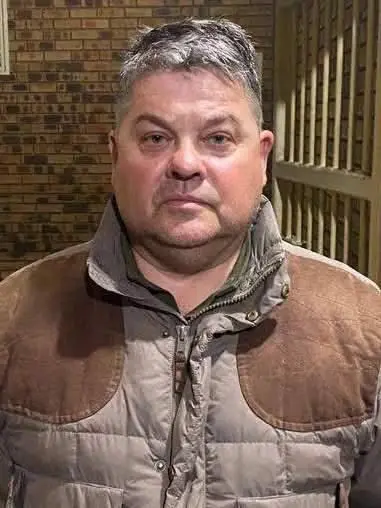
The conviction of hunting safari operator Dawie Groenewald in what authorities have described as the world’s largest rhino horn trafficking investigation highlights the complexity of organised wildlife crime and the difficulties of prosecuting those higher up the criminal chain, Endangered Wildlife Trust (EWT) says.
Last week, Groenewald was sentenced in the high court in Polokwane after entering into a plea and sentence agreement with the state, bringing to a close one of South Africa's longest-running wildlife crime prosecutions.
The case stretched back to 2008 and involved more than 1 700 charges relating to racketeering, money laundering, illegal hunting and rhino horn trafficking.
The matter was repeatedly delayed by legal challenges, constitutional applications and other procedural hurdles. During the course of the prosecution, two of the original 11 accused died, as did 10 of the state’s 185 witnesses and others emigrated.
While authorities hailed the outcome as a victory against organised wildlife crime, the EWT said the case also underscored how difficult it could be to secure convictions against those who operate at the upper levels of criminal networks.
“It illustrates the difficulties in linking higher-level criminal network members with illicit activities, who usually go out of their way to keep their hands clean, while having others facilitate illegal activities,” said Carina Bruwer, the manager of the EWT's Wildlife in Trade Programme.
“Because these criminal networks have extensive membership, different members fulfil different roles and linking everyone to prove the existence of an enterprise or criminal racket with the common aim of trading illegal rhino horn is complex, but it can be done with the necessary resources and capacitated investigators and prosecutors.”
Bruwer said criminal networks often had the resources to prolong legal proceedings.
“Criminal networks can also afford using lawyers and delay tactics to let court cases drag on for years, often resulting in lost witnesses and accused,” she said.
Groenewald, whom the Hawks described as the mastermind behind a large-scale rhino horn trafficking enterprise, was sentenced on the main racketeering count to a fine of R2 million or four years' imprisonment, together with a further 10 years’ imprisonment suspended for five years.
The National Prosecuting Authority (NPA) said the cumulative penalties imposed across the various convictions amounted to more than R10 million in fines and 36 years’ imprisonment.
The NPA said the charges against Groenewald “stem from a well-designed rhino horn trafficking enterprise emanating from incidents as far back as 2008. According to the indictment, Groenewald, in his capacity as manager of a professional hunting outfitter ‘Out of Africa’ and by employing professional hunters and other individuals, managed the sourcing of rhino horns from his own rhinos and from other private rhino owners to fuel the black market in Southeast Asia”.
The EWT welcomed the conclusion of the matter, saying it was important that Groenewald had been held accountable.
“We are glad that the case has finally come to a conclusion and that Mr Groenewald has been held accountable for his actions, which relied on the continuous exploitation of a protected species over a number of years,” Bruwer said.
“We can only hope that he will reflect on the impact of his crimes, will refrain from engaging in any further illicit activities and that the fine and the threat of the suspended sentence will serve this purpose.”
The NPA has defended its decision to enter into a plea and sentence agreement, saying it considered all available options in the interests of justice and emphasising that no rhinos were poached by any of the accused.
The EMS Foundation, a social justice NGO, said the case demonstrated how lengthy delays could threaten major prosecutions.
Senior researcher Megan Carr said its 2021 report, Where Have All the Rhinos Gone?, detailed the history of Groenewald, described as “allegedly being the mastermind behind a massive syndicate involved in rhino poaching and trafficking”.
“Over the last 16 years after his arrest in 2010, his legal team have used continuous postponements, technical applications and jurisdictional challenges to delay his trial where he was initially facing more than 1 700 criminal charges.”
The NPA, she said, faced severe hurdles proving intent in the case because legal domestic markets blurred the line between regulated commerce and transnational organised crime.
“Ultimately Dawie Groenewald avoided immediate jail time by securing a non-custodial financial penalty this month.”
Carr noted that a separate criminal case involving Groenewald and Schalk "AB" Steyn relating to the alleged possession and transportation of 19 rhino horns remained before the courts. The matter is scheduled to resume in August.
“This case … has also suffered similar delays in the Nelspruit Regional Court due to ongoing pre-trial applications and challenges made by their legal team,” she said.
“If the defence can continue to stretch out proceedings, they can argue that Groenewald’s constitutional right to a speedy trial has been infringed under Section 35(3)(a) of the Constitution. If the court finds the unreasonable delay is the fault of the state, it could grant a permanent stay of prosecution, throwing the case out entirely.”
Criminal enterprises, Bruwer said, often had the resources to mount lengthy legal challenges and exploit weaknesses in the criminal justice system. “Criminal networks can also afford using lawyers and delay tactics to let court cases drag on for years, often resulting in lost witnesses and accused.”
For the EWT, the significance of the Groenewald case ultimately extends beyond a single conviction.
However, she cautioned that wildlife trafficking remained a global problem requiring international responses.
“Until entire networks and supply chains driving everything from demand to supply are effectively targeted and dismantled, the illegal harvesting and trade in rhino horns will continue.”