


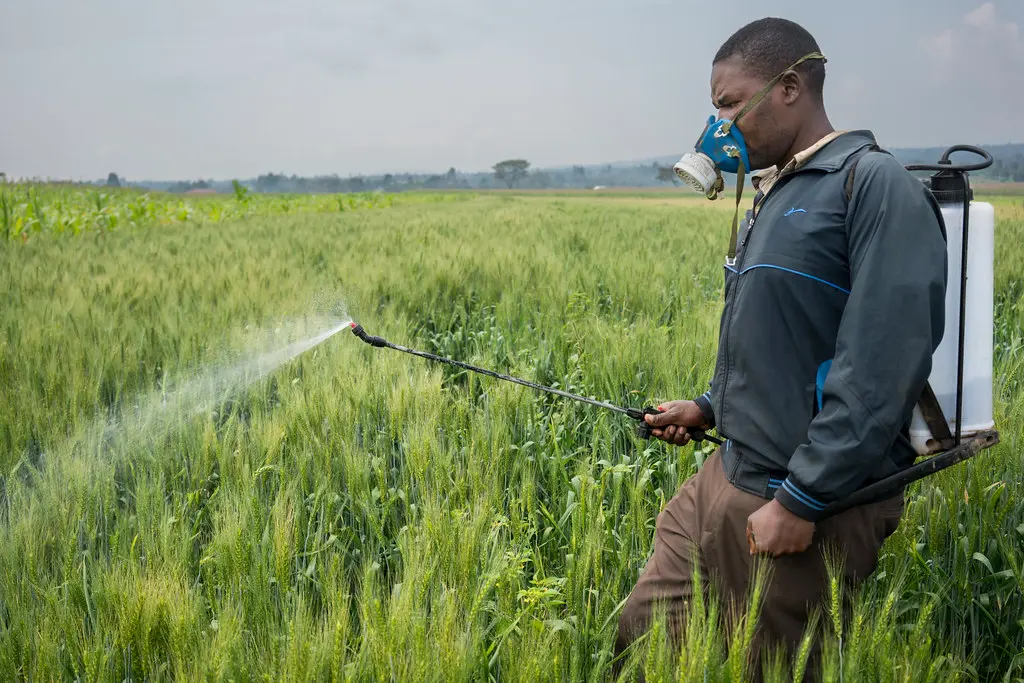
A proposed relaxation of Europe’s pesticide regulations could have consequences far beyond the European Union, scientists warn, as South Africa grapples with its own ageing pesticide laws and the use here of substances no longer approved in Europe.
An open letter signed by 30 epidemiologists, medical doctors and public health scientists from Europe and around the world, including University of Cape Town public health researcher Paola Gabriela Viglietti, has raised concerns about the proposed EU Food and Feed Safety Simplification Omnibus, known as the “Pesticide Omnibus”.
The signatories said the proposal could give many pesticides “unlimited, permanent approval” without periodic toxicity reassessment.
The scientists argued that regular reassessment was essential because new evidence could change the understanding of pesticide risks. They pointed to 31 pesticides whose approval had been withdrawn through the EU renewal process since 2011, including chlorpyrifos and several neonicotinoids and pyrethroids.
The letter also cited research linking pesticide exposure during pregnancy and childhood with neurodevelopmental effects and adult exposure with endocrine-disrupting and neurological effects. The signatories are calling for negotiations on the Omnibus to be paused until an independent comprehensive impact assessment is conducted.
They also want pesticide risks to be regularly reassessed as new scientific evidence emerges, and for new pesticides to undergo scrutiny before approval and continued monitoring afterwards.
Viglietti told the Mail & Guardian that the International Society for Environmental Epidemiology (ISEE) had formally endorsed the scientific statement on the EU’s proposed Pesticide Omnibus and published it as an official ISEE statement.
She said the statement was “not an isolated response from the scientific community”, pointing to a June Science policy forum by scientists from 27 European research institutions and a more recent letter to the European parliament signed by more than 500 European scientists and doctors.

“Taken together, these responses show scientists from different disciplines, including toxicology, ecology, epidemiology and medicine, raising related concerns about the proposed pesticide policy changes.”
Viglietti said there was also an important South African dimension because “pesticide regulation does not stop at national borders”.
She said pesticides that the EU had determined were too hazardous for use in Europe could nevertheless be manufactured by European companies and exported to countries including those in the Global South, where regulatory protections, training and access to protective equipment might be weaker.
“That creates a particular concern if the EU’s ‘Pesticide Omnibus’ results in substances receiving approvals that no longer expire and are therefore subject to less regular reassessment,” she said.
“Fewer reassessments could mean fewer opportunities for new evidence about health and environmental harms to trigger regulatory action in the EU, with potential implications for what substances remain available for export.”
Viglietti’s own PhD research added a local dimension to the debate. A systematic review of 66 international epidemiological studies published between 2010 and 2025 produced 118 unique exposure-outcome findings.
Just over half — 65, or 55% — showed statistically significant adverse associations between chronic postnatal pesticide exposure and neurocognitive, neurobehavioural or neurological outcomes in children and adolescents. The remainder were null or non-significant.
“I would characterise this as a relatively consistent and concerning body of evidence linking chronic postnatal exposure to a range of pesticides, including insecticides, herbicides and fungicides, with adverse neurodevelopmental outcomes across a substantial proportion of the international literature,” she said, stressing that this was “rather than evidence of a uniform effect across every pesticide or outcome”.
An important gap for South Africa was geographical: only one of the 66 studies was conducted in sub-Saharan Africa, Viglietti said.
“Much of the evidence base used to assess children’s pesticide risks therefore comes from populations and regulatory contexts that are quite different from those in African agricultural communities.”
In her first empirical PhD study, Viglietti said urinary biomarkers of two organophosphate pesticides — TCPy, a biomarker of chlorpyrifos exposure, and BCP, a biomarker of profenofos exposure — were significantly associated with poorer executive functioning, specifically cognitive flexibility and inhibitory control.
Neither of the organophosphate pesticides was approved for use in the EU, yet both remained in use in South Africa, she said.
“This is therefore particularly relevant to the EU debate: substances considered unacceptable for use under European regulation are still exposing South African children, with our study finding that biomarkers of these pesticides were associated with poorer performance in specific executive functions.”
Her second empirical study found that parent-reported behavioural difficulties were not significantly associated with the pesticide biomarkers. However, living on or near a farm was associated with poorer behavioural outcomes.
“Taken together, the two studies suggest that chemical exposure and the broader social and structural conditions in which farming communities live may both matter in our local context, and shouldn’t necessarily be treated as separate problems,” she said.
Viglietti said children were a particular concern because their developing nervous systems could be more vulnerable to neurotoxic exposures.
Women farmworkers also faced an “under-studied burden”, with research in Tanzania, Kenya and elsewhere in sub-Saharan Africa documenting exposure through agricultural work and domestic proximity to pesticides, alongside barriers to training, protective equipment and reporting mechanisms.
“Pregnancy and lactation introduce additional periods in which exposure may have consequences for both women and children.”
The issue, she said, was particularly relevant because South Africa was at a “key (and potential inflection) point of pesticide-policy reform”.
The country’s core pesticide legislation, the Fertilisers, Farm Feeds, Agricultural Remedies and Stock Remedies Act of 1947, was “almost 80 years old”, while a national implementation plan to phase out highly hazardous pesticides was under discussion after a stakeholder session in March this year.

Viglietti said her PhD research argued that South Africa’s pesticide-exposure problem was “not simply a matter of individual non-compliance”, but was also shaped by structural features of the regulatory system, including fragmented oversight, reliance on industry-supplied safety data and potential conflicts within the regulatory process.
The 2024 Naledi poisonings were a particularly stark recent illustration, she said. Several children died after food was contaminated with informally sold terbufos, an organophosphate pesticide.
This was followed by the South African People’s Tribunal on Agrotoxins, chaired by Judge Navi Pillay, which brought together testimony and evidence concerning pesticide harms in South Africa.
The EU debate had two connected implications for South Africa, she said. First, the EU had historically provided “an important reference point for pesticide regulation internationally”.
If Europe moved away from a system based on regular reassessment and precaution, that could weaken an important regulatory benchmark “at precisely the time South Africa is considering how to strengthen its own pesticide governance”.
Second was the question of pesticides remaining available for export from the EU. “South Africa already sits within a global trade system in which substances considered too hazardous for use in Europe can still reach markets here.”
She said that made European regulatory decisions relevant to South African workers, children and communities even when those decisions were made thousands of kilometres away.
“In other words, the concern isn’t simply that Europe might weaken its own protections,” Viglietti said. “It is that regulatory decisions made in Europe can shape the substances that circulate globally, while South Africa is simultaneously trying to reform a regulatory system that is already struggling to protect highly exposed communities.”