


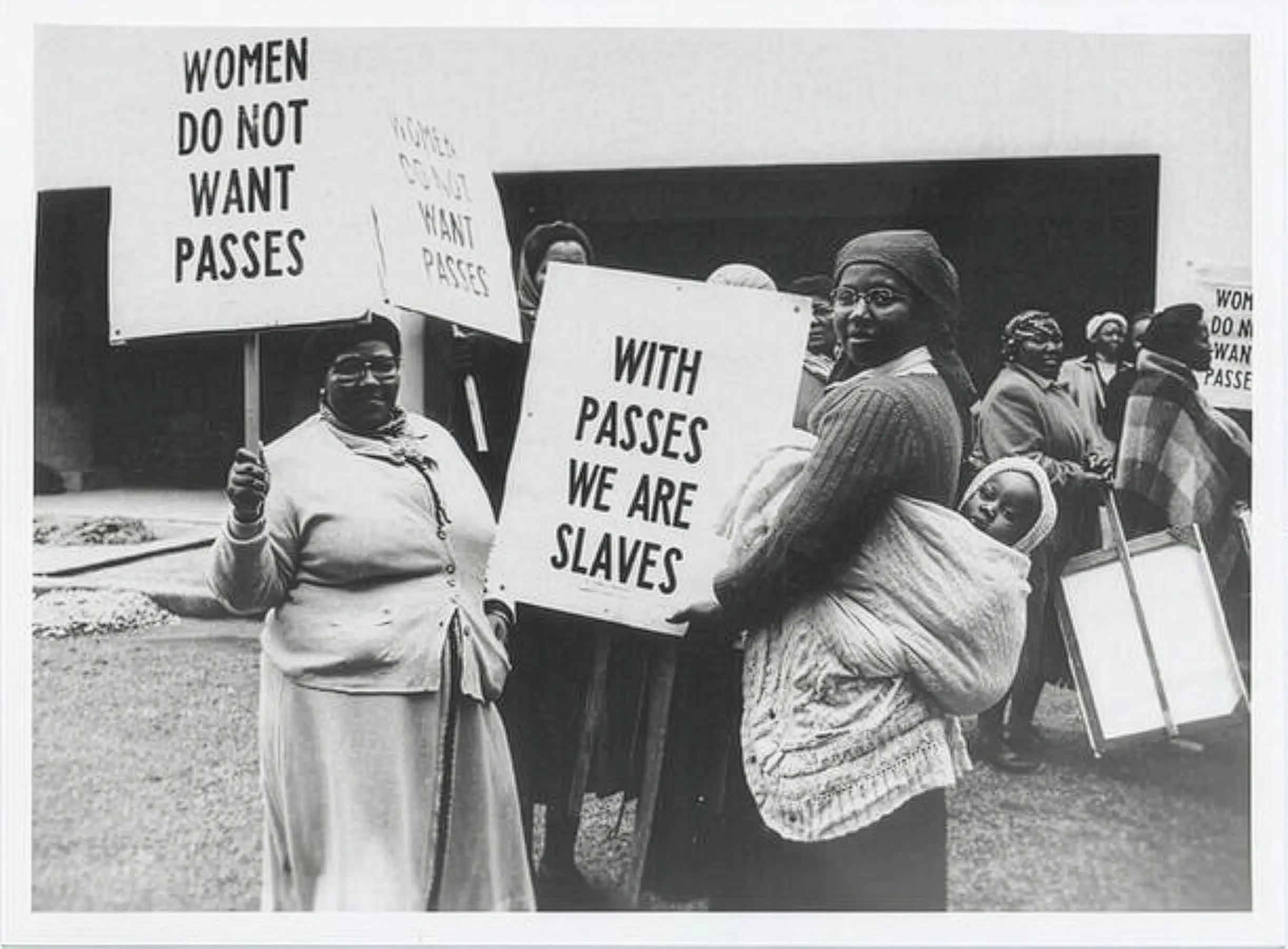
This year marks three anniversaries that demand we pause and reflect. It has been 70 years since 20 000 women marched to the Union Buildings against the pass laws. It has been 50 years since the June 16, 1976 Soweto uprising, which reverberated throughout Africa and the world.
June 16 holds significant parallels and recognition across Africa and was designated the Day of the African Child by the African Unio in 1991. It is recognised annually across the continent to honour the Soweto students and to focus on the rights and education of children in Africa, highlighting issues of inequality in sub-Saharan Africa, where millions of children remain out of school.
It has been 30 years since the adoption of our rights-based Constitution, the culmination of decades of struggle for a non-racial, non-sexist and democratic South Africa. The historical milestones follow closely on the heels of the celebration and reflections on 30 years since the 1995 adoption of the Beijing Declaration and Platform for Action, a seminal programme for the emancipation of women and the promotion of gender equality, which recognises access to education for women and girls as an important pillar of women’s empowerment and gender equality.
These are not separate stories. They are one story, told across generations, about the relationship between power, knowledge and freedom and the pivotal role of education. It is also a story that is not yet finished.
According to Statistics South Africa, more than 23 million South Africans, constituting almost 38% of the population, live below the lower-bound poverty line.
This is not an abstract statistic. It is a structural reality shaped by race, gender, geography and education. Poverty is not evenly distributed. It is deeper among those with little or no schooling, where more than half of the adults without education remain trapped below the poverty line.
It is also spatially concentrated, with provinces such as KwaZulu-Natal and the Eastern Cape carrying the heaviest burden. More importantly, even the relatively affluent province of Gauteng has a rising poverty rate. This makes poverty increasingly urban, reflecting the geography of a broken promise, where people move in search of opportunity that too often fails to materialise.
Poverty remains deeply unequal, making South Africa an enduringly unequal society. Our Gini coefficient remains at 0.64, far from the more equitable society envisioned in the early years of democracy.
The realities should force us to confront an uncomfortable truth: despite decades of policy commitment, poverty, inequality, unemployment and exclusion remain stubbornly entrenched. Arguably, at the centre of the contradiction lies education.
The long shadow of Bantu Education
To understand where we are, we must understand where we came from. The 1948 ascension of the Nationalist Party to power ushered in a period of relentless social engineering. Education was its most strategic weapon.
The Bantu Education Act of 1953 introduced a deliberately under-resourced, segregated curriculum designed, in then-minister of native affairs Hendrik Verwoerd’s words, to exclude the African child from the hard sciences and confine them to servitude. "There is no place for the Bantu in the European community above the level of certain forms of labour," he declared. "What is the use of teaching the Bantu child mathematics when it cannot use it in practice?"
This was not just simple ignorance. It was architecture. A deliberate system of cognitive imprisonment, which was extended through the Extension of University Education Act of 1959 into higher education. This made it a criminal offence for a black-African student to register at a formerly open university without ministerial permission. New ethnic universities were created: Turfloop, Fort Hare and Ngoye for the Bantu, the University College of the Western Cape for coloureds and the University of Durban-Westville for Indians. Each designed not to unlock potential but to contain it.
Resistance was immediate and sustained. The Federation of South African Women had organised protests against Bantu Education as early as 1954. Teachers, parents and pupils built networks of consciousness that would, over two decades, converge into open revolt. It is important to recover the women in this history: Nozipho Joyce Mxakato-Diseko and Fikile Ngcobo, both teachers at Phefeni Secondary School, where the events of 1976 were brewing, and Sophie Tema, the journalist who ferried shot children to Baragwanath Hospital. Their voices have been muted in the dominant narrative of June 16 for too long. The struggle against Bantu Education was as much theirs as anyone’s.
The emergence of the Black Consciousness Movement in the late 1960s and early 1970s represented a decisive intellectual rupture. Steve Biko, writing in 1971, defined Black Consciousness as the refusal to define oneself as an aberration of whiteness, an assertion of full humanity in the face of a system designed to deny it. It was, at its core, an educational project: a reclamation of the right to know oneself.
At Turfloop in 1972, Abram Onkgopotse Tiro gave his seminal graduation speech condemning the injustices of the Bantu Education system, its exclusions, its contradictions, its service of white interests even in the naming of black achievement. Students walked out in solidarity. Young teachers, influenced by Tiro, joined school classrooms with the deliberate intention of conscientising the next generation.
When the black pupils of Soweto rose on June 16, 1976, they were not acting spontaneously. They were acting on years of accumulated consciousness. The uprising was not simply about the imposition of Afrikaans as a medium of instruction. It was about power, about who controls knowledge, who is excluded from it and how the exclusion shaped the future. The pupils understood that education could either confine them to the margins of society or enable them to transform it. The insight remains profoundly relevant.
The education paradox
There is a long-standing assumption that education is the most reliable pathway out of poverty, embedded in policy, in public discourse and in the aspirations of millions of South Africans. Since 1994, the state has invested heavily in education, consistently allocating one of the largest shares of public expenditure to the sector. The Constitution entrenches the right to education for all. The National Development Plan placed education at the heart of efforts to eliminate poverty and reduce inequality. The Medium-Term Development Plan continues to position education as critical to inclusive growth and economic participation. Across three decades, the policy intent has been clear.
Yet the evidence suggests a more complex reality. Educational attainment has increased but poverty has not declined in proportion. In some cases, poverty has risen even among those with higher levels of education. This creates a fundamental tension: if education is expanding, why are its returns not being more broadly realised? The tension is not merely technical. It is structural.
Education does not operate in a vacuum. Its outcomes are shaped by the structure of the labour market, the nature of economic growth and the distribution of opportunity. Where the economy does not generate sufficient, meaningful employment, education alone cannot resolve poverty. Where access to high-quality education remains unequal, increased spending can coexist with persistent inequality. The structural failure disproportionately impacts women and girls, who often face compounded barriers in translating educational access into equitable economic participation. The system continues, in many ways, to reproduce the very inequalities it was meant to dismantle.
This is not to suggest that investment in education is misplaced. It is essential. But it requires us to rethink what we expect education to do and under what conditions it can succeed.
The intelligence divide
At the same time, the global context is shifting rapidly and the stakes are rising. Artificial intelligence is transforming how knowledge is produced, accessed and applied. Economic value is increasingly tied to digital capability, data and innovation. Yet access to these capabilities remains deeply unequal.
For women and girls, historical exclusion from the sciences risks evolving into a profound gender gap in digital literacy, STEM education and emerging technologies. What is emerging is not merely a digital divide but an intelligence divide — a widening gap between those who can generate, shape and control knowledge and those who cannot.
The historical logic of exclusion risks being reproduced in new forms. No longer enforced by law, as it was under apartheid, it might instead be perpetuated through unequal access to technology, skills and opportunity. The echo of Verwoerd's logic — that certain children need not be educated beyond a prescribed level — is uncomfortable but necessary to confront. The mechanisms have changed but the outcome risks remaining the same.
The African Renaissance as an educational imperative
This is where the idea of an African Renaissance becomes urgent and necessary. It calls for a shift from dependency to self-determination; from consuming knowledge to producing it; and from extracting resources to transforming them into sustainable development.
Africa remains rich in land, minerals and human potential, yet much of this wealth continues to be externally controlled or insufficiently leveraged for inclusive growth. The challenge is not only one of ownership but also capability. Without the skills, knowledge and institutional capacity to manage and transform the resources, the continent risks remaining a site of extraction rather than development.
Education is central to resolving the contradiction. The most valuable resource is not beneath the ground; it resides in people.
Yet the resource remains underdeveloped when education systems fail to unlock creativity, critical thinking and innovation. This is particularly evident in the continued underrepresentation of women in the fields that drive economic transformation, especially science, technology, engineering and mathematics.
The exclusion of women is not only unjust; it constrains the scope and quality of development. The women of 1976 — the teachers, mothers and organisers who sustained resistance and nurtured future generations — understood this long before democratic policy frameworks were written. Their omission from much of the historical record represents a form of epistemic injustice that the African Renaissance must address.
What education is for
The nature of work is changing. Artificial intelligence is reshaping industries, altering skill demands and introducing new forms of uncertainty. Education can no longer be understood as preparation for a single, stable career. Instead, it must equip individuals to adapt, learn continuously and navigate complexity throughout their lives.
This raises a fundamental question: What is education for?
If education serves merely to expand access, we could continue to witness rising enrolment alongside persistent poverty and inequality. But if its purpose is to expand human capability — enabling individuals to participate meaningfully in the economy and society — then it must be more closely aligned with the realities of a rapidly changing world.
It must also confront the structural barriers that shape outcomes: unequal school resources, disparities in teaching quality and the broader socio-economic conditions that limit opportunity.
If we take seriously the commitments of the Constitution, the National Development Plan and the Medium-Term Development Plan, education must do more than absorb significant public expenditure. It must generate public value. And if we take June 16 seriously, education must remain a site of struggle and transformation.
The pupils of 1976 did not march for access alone. They marched for dignity, agency and the right to define their own futures. They marched because they understood — as Onkgopotse Tiro had told their teachers, and as those teachers had taught them — that education in the service of oppression is a weapon against the people, while education in the service of liberation is among the most powerful tools for human freedom.
That struggle continues.
In a world defined by inequality, technological disruption and shifting economic power, the challenge is no longer simply to fund education. It is to transform education so that it delivers not only access but equality; not only skills but freedom; not only participation but dignity.
The question is no longer whether education matters. It is whether we are prepared to make it work.
This is a call to action for transformative educational empowerment that enables every girl and woman to learn, lead and shape the societies in which they live. The future of Africa depends on how effectively we invest in the intellectual, creative and innovative potential of its young women.
Let us commit, collectively and decisively, to building an education system that nurtures equality, innovation and leadership. Let us ensure that the next generation of African scientists, engineers, technologists and innovators includes as many girls as boys. The future must be inclusive, equitable and just.
Ohara Ngoma-Diseko is a teacher by profession, a gender equality leader, a former commissioner at the Commission for Gender Equality and the Education Working Group co-lead of the Beijing+30 African Women’s Movement.