


Sandile Memela’s argument begins with a convenient sanitising move. The anti-migrant marches, he argues here, were not intended to attack anyone; they were designed to hold the government accountable and compel the enforcement of immigration law.
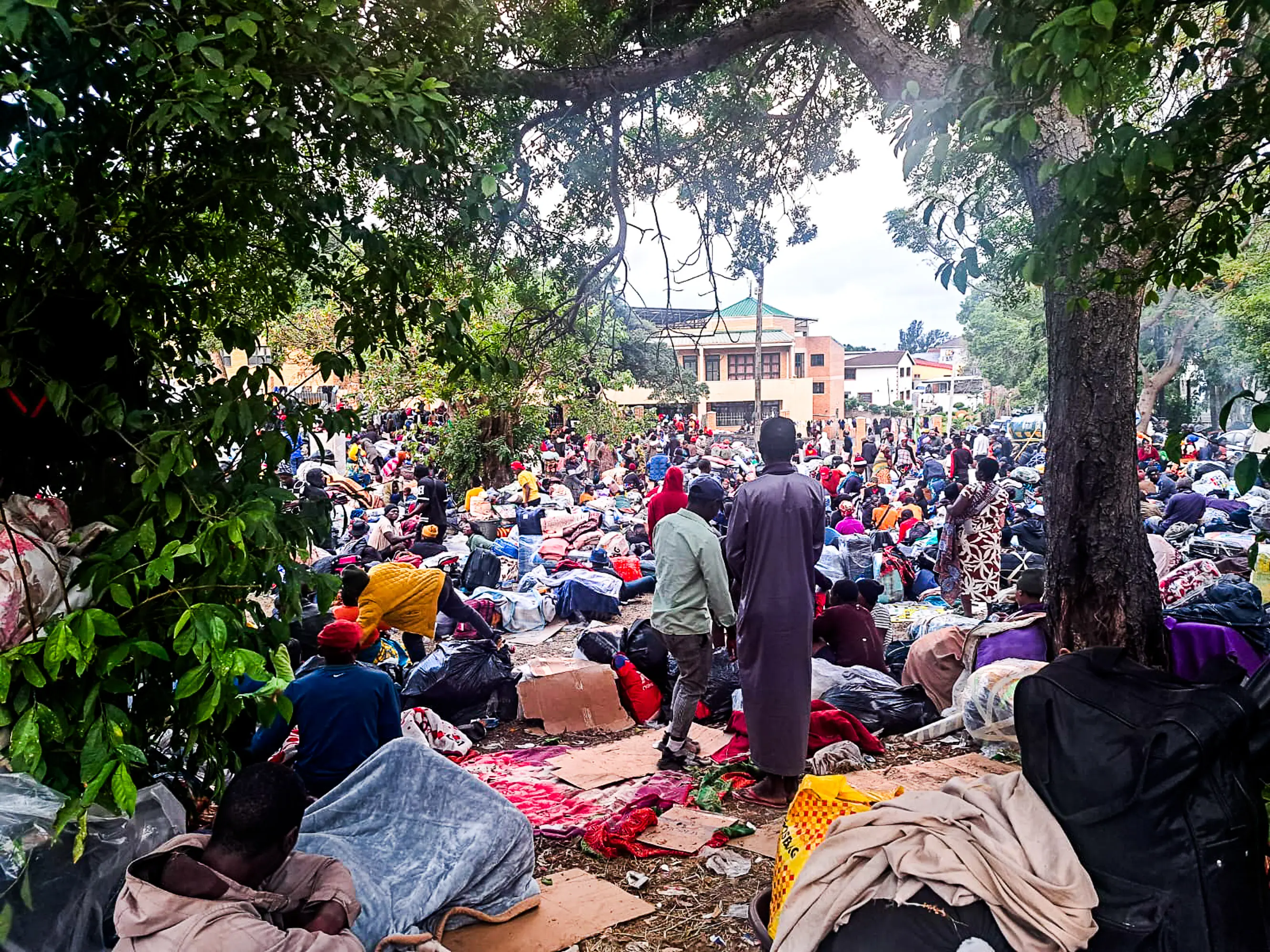
But purpose is not established by an organiser’s press statement alone. It is also revealed by conduct. When pseudo-activists move from door to door, enter homes or businesses, demand identity documents from people selected because they look or sound “foreign” and deliver them to the police, they are not merely petitioning the government. They are assuming powers the Constitution gives to the state. That is vigilantism dressed in civic language.
South Africa has every right — and a duty — to manage its borders, document migration, arrest people who commit crimes and deport those who have no lawful right to remain. But law enforcement cannot be defended through unlawful methods. A crowd is not Home Affairs. A march leader is not an immigration officer. A neighbour is not a court. Once private citizens decide who appears foreign enough to be challenged, the passport check becomes a racial dragnet.
This is where Memela’s argument performs its first astonishing leap. He asks whether the constitutional promise that South Africa “belongs to all who live in it” has been interpreted to mean that there are no rules and then jumps from fraudulent documents to “chaos and lawlessness”. The implied culprit is not simply unlawful conduct. It is the Black African migrant.
Notice the vocabulary. White expatriates “relocate”. Investors “arrive”. European professionals are “recruited”. But Black Africans “flood” the country. The Chinese-owned mall, the Pakistani or Bangladeshi trader, the American executive and the wealthy foreign investor do not become symbols of a nation under siege. Foreignness acquires urgency when it is poor, black and African. This is not a neutral conversation about immigration. It is racial sorting with a policy vocabulary. Viva Steve Biko, indeed.
No serious person argues that undocumented migration should be ignored. Fraudulent documents, corruption at Home Affairs, labour exploitation, trafficking and cross-border crime require competent state action. But none of that permits the collective indictment of millions of people, documented and undocumented, as the authors of South Africa’s national decline, as I argued here and Ebrahim Fakir here.
Memela lists unemployment, housing shortages, crime, failing public services and collapsing accountability, then sets African migration beside them as though juxtaposition proved causation. It does not. Did Mozambican construction workers loot municipal budgets, derail passenger rail or sign irregular tenders? Did Nigerian shopkeepers manufacture State Capture or preside over years of policy drift?
South Africa’s crisis has names, dates, commissions of inquiry, audit findings and court records. Its roots lie in political failure, corruption, administrative decay, weak economic growth, municipal collapse and the state’s inability to enforce its own laws consistently. Migrants did not create these conditions. They became useful characters in a morality play that has the effect of absolving those responsible while advancing the cause of political entrepreneurs seeking office at the expense of Black African migrants, who are used as pawns.
The economic evidence also fails to support the scapegoating thesis. Recent United Nations estimates put South Africa’s migrant population at about 2.6 million, roughly 5% of the population. An OECD–International Labour Organisation study estimated that immigrants contributed about 9% of gross domestic product. That does not mean migration creates no pressures or that every migrant is law-abiding. The economy is more complex than the crude equation: they came, therefore we collapsed. Reuters reported on 10 July that the anti-migrant exodus itself threatened construction, farming, retail, transport and delivery services that rely heavily on migrant labour.
Memela also dismisses African unity as an outdated slogan that supposedly requires South Africa to become a “political orphanage”. This is a false choice. Pan-Africanism is not the abolition of borders, and immigration law is not a licence for humiliation. A lawful state can control entry, issue permits, prosecute fraud and deport people after due process while still recognising that Africans have always moved across boundaries that colonialism drew through older economic and social worlds.
Migrants built Johannesburg itself: men and women drawn from across southern Africa to its mines, factories, kitchens, hostels and homes. The South African economy has never been a sealed ethnic container. To pretend migration began when Memela became irritated by it is historical amnesia.
Then comes the attack on journalism. Memela claims Jacinta Ngobese-Zuma was filmed but rarely interviewed properly; that reporters ignored the streets; that they repeated government and human-rights talking points; and that local journalists self-censor to protect their jobs. These are sweeping allegations presented without a content analysis, an interview count, newsroom evidence or even a serious sample of press coverage.
The public record considerably complicates that claim. Ngobese-Zuma has been highly visible in interviews and news clips carried by SABC News, eNCA, Newzroom Afrika, and BBC News. The movement showcases some of its media coverage here.
South African and international news organisations covered the 30 June marches extensively. Reporters were deployed in townships, in helicopters, in businesses and on the streets. At least 15 reporters have come under fire at the hands of the “holy” anti-migrant movement. On 9 July, Reuters reported from Alexandra that protesters were going door to door, breaking into homes and removing suspected illegal migrants, including people who said they possessed lawful documentation. That is street reporting. It is merely not the flattering version Memela prefers.
His complaint appears to be that journalists described the intimidation as intimidation rather than adopting the organisers’ self-description of “law enforcement”. But journalism is not stenography for movements, governments or mobs. It tests claims against conduct. When a group describes itself as peaceful while people associated with its demonstrations harass others, damage property or are implicated in deadly attacks, the reporter’s duty is not to preserve the press release. It is to report the contradiction.
Memela invokes the old maxim that journalism should comfort the afflicted and afflict the comfortable, even though he misunderstands its context. Finley Peter Dunne was satirising the newspaper industry’s sweeping power and self-importance, not laying down a solemn statement of journalism’s mission.
Yet, in Memela’s version, the afflicted are not the women, children, workers and traders being driven from their rented homes and deprived of their livelihoods. The afflicted are those supposedly made uncomfortable by the presence of poor Black Africans. Meanwhile, the comfortable who must be afflicted are no longer the powerful but journalists who refuse to turn prejudice into public policy.
Even his explanation for declining trust in the news is asserted rather than demonstrated. The Reuters Institute’s 2026 figures show that overall trust in news in South Africa fell by five percentage points to 50%. Yet the country still ranks ninth among 48 markets and remains well above the global average of 37%. News24 and eNCA each recorded trust scores of 80%, while the Mail & Guardian scored 66%. The figures confirm that trust has declined; they do not prove his sweeping claim that the decline was caused by universally distrusted “politicians’ poodles” who have abandoned the street.
The media must interrogate immigration policy more deeply. It must investigate corruption at Home Affairs, exploitative employers, fraudulent documentation, porous borders, criminal syndicates and pressure on clinics, schools and housing. It must scrutinise NGOs, government departments and migrant advocacy groups as well. But scrutiny is not achieved by laundering racial suspicion into common sense.
The real question is not whether South Africa should enforce immigration law. Of course it should. The question is whether enforcement belongs to accountable institutions governed by law, or to self-appointed patrols deciding, by accent, complexion and poverty, who belongs.
Memela presents his argument as a defence of accountability. It is, in truth, an alibi for displacement and an indictment of intellectual poverty. It shifts responsibility away from ministers, officials, tenderpreneurs, corrupt police officers and failed municipalities, and loads it instead onto the backs of the easiest people to target: poor Black African migrants.
A country does not restore the rule of law by unleashing the crowd, as reported earlier. It restores the rule of law by rebuilding the state.
Bhekisisa Mncube is an author and columnist who won the national 2024 Standard Bank Sikuvile Journalism Award for columns/editorials, as well as the award in the same category at the regional 2020 Vodacom Journalist of the Year Awards. He is a resident columnist at Daily Maverick.