


Zohran Mamdani’s victory in New York’s mayoral race brought to life author Arundhati Roy’s enduring assertion that another world is possible. For decades, Roy has urged us to imagine a different future and strive wholeheartedly towards it.
Much of her work, from her essays to her books, forces us to reckon with ourselves and the status quo.
In one essay, she writes of the importance of “never getting used to the unspeakable violence that occupies daily life; to respect strength, not power”.
Mamdani’s victory exemplified this. At a time when America is increasingly shaped by the conservative right, whose influence has spread far beyond its borders, Roy’s words feel more relevant than ever.
From England to much of Europe, right-wing politics has gained renewed confidence, while Maga has become more than just an American political slogan — it has become a political style that has travelled across the world.
South Africa, a country whose young democracy and not-so-distant apartheid past anchored it to the Left, has not been immune to the shift. The anti-immigration protests of 30 June captured the attention of the country and reflected a growing rightward turn that has been building for years.
The politics emerged through movements such as Operation Dudula, a civilian vigilante group that has steadily risen in prominence. Last year, the group blocked foreign nationals from accessing free primary healthcare facilities.
From its momentum grew movements such as March and March, which adopted a more nationalist and tribalist tone, anchoring themselves in Zulu nationalism as the country’s supposed salvation against illegal immigration.
Their leaders, draped in traditional Zulu attire, led hundreds — sometimes thousands — in marches against undocumented migrants, while at times conducting raids in townships and informal settlements.
March and March demonstrated just how dangerous this rightward turn can become. It also revealed the ripple effects of the Maga movement in America, whose language and political imagination seem to have travelled well beyond the US.
Like Maga, the movements wrap themselves in national flags, use patriotism as a shield and borrow familiar narratives about putting one’s country first, securing borders and attributing every social failure
to migration.
A political party that has successfully built its base on this rhetoric is ActionSA. The party has perfected this style of politics to the extent that it defines much of its governance.
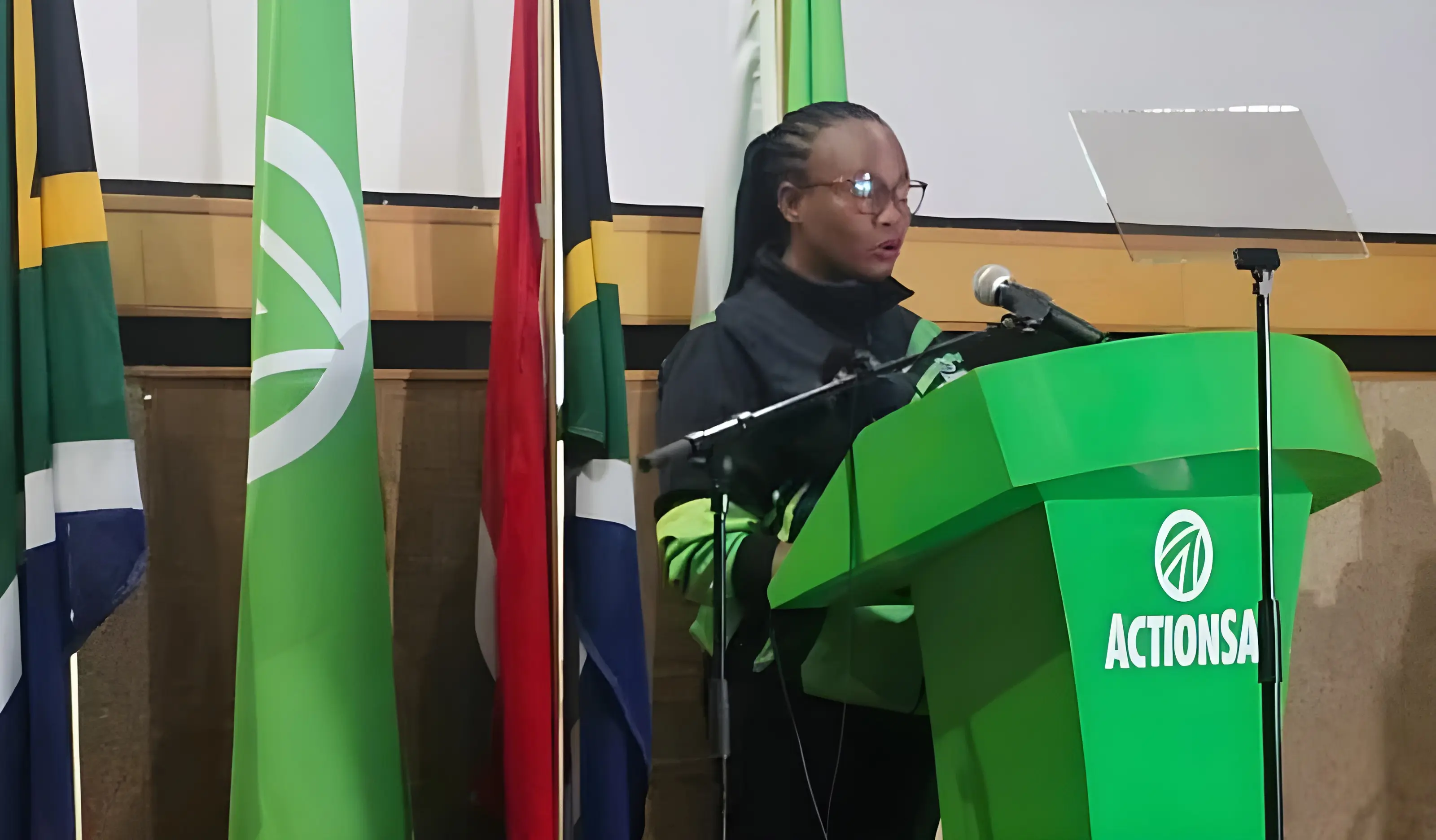
While many have applauded Tshwane mayor Nasiphi Moya, it is equally important to critically analyse how the ideas have become embedded in her administration.
What has concerned me most about her governance is that it thrives on populist logic. From targeting mainly small businesses through demolition campaigns, often in poorer and emerging communities, her approach is rarely centred on addressing the structural and systemic causes of poverty.
Her administration does not seek to tackle the deeper inequalities that produce informality and economic exclusion. Instead, it often opts for cosmetic interventions that generate headlines while leaving the root causes untouched.
Her party has regularly opposed motions in council aimed at long-term poverty relief, such as the insourcing of workers, while favouring visible enforcement campaigns against informal traders and small businesses. Coupled with a powerful media presence, the actions create the impression of decisive governance, even as the city’s structural problems remain unresolved.
Major issues continue to be ignored. The existence of the whites-only settlement of Kleinfontein remains largely unchallenged. The ever-rising cost of living in Tshwane continues to squeeze working-class families. Young black professionals increasingly find themselves unable to afford housing close to economic opportunities, forcing them to remain in townships and spend a significant portion of their salaries commuting to work.
Yet these are rarely the issues around which the mayor mobilises the city’s resources. Instead, the focus remains on raids and enforcement operations that offer few meaningful solutions. They do not come with programmes for affordable rental housing, rent stabilisation or social housing in the inner city. They do not offer a vision for making cities more accessible to South Africans.
This is where Mamdani’s politics offers an important contrast. Rather than asking who to blame, his politics asks what public institutions can do to improve people’s lives. His proposals, from rent freezes to expanding public services, begin with the assumption that the government has a responsibility to make life more affordable rather than simply policing poverty.
The mayor’s focus, by contrast, is too often directed at those who are struggling. Most recently, she targeted a daycare operating illegally in an abandoned building.
But early childhood development centres are not simply businesses operating outside the law. They are part of a long tradition of social democratic and feminist struggles. Across the world, women fought for childcare in much the same way they fought for maternity leave and other labour protections. Affordable childcare is essential public infrastructure.
Women in our inner cities are disproportionately affected by the shortage of ECD centres because they continue to bear the primary responsibility for caregiving while working to support their families. Yet instead of supporting these
centres, municipalities often criminalise them.
The Gauteng Department of Education cannot solve the challenge alone. Registering ECD centres requires municipalities to make land available, provide planning support and create tariff structures that enable the centres to operate legally. Without municipal support, many are left with little choice but to operate informally.
Treating the centres like criminal enterprises misses the point. They are not evidence of criminality; they are evidence of systemic failure.
If the city refuses to create conditions for affordable childcare, who is expected to care for the children of street traders, domestic workers, security guards and other low-income workers who keep our cities functioning every day?
Mamdani’s victory reminds us that another politics is possible, one rooted in social democratic care rather than fear, solidarity rather than scapegoating.
If South Africa has so readily borrowed the politics of Maga, perhaps it is time we also borrow the politics of hope. Politics like that increasingly practised in our cities may generate headlines but it offers few long-term solutions to inequality. We need a politics willing to imagine better cities, especially for the poor.
Is it not time for a Mamdani moment in our municipalities?
A mayor who understands that the role of the city is not merely to police poverty but to eradicate the conditions that produce it.
Onthatile Marang Modise is a researcher working in public administration and the social sciences. She writes in her personal capacity.