Safe for now: Succulents confiscated from poachers are stored at the /Ai/Ais-Richtersveld Transfrontier Park. Photo: Delwyn Verasamy
When Richard Hay put out a call on social media for Gauteng residents to do “something tangible” for conservation by helping sort and plant thousands of confiscated rare and endangered succulents, he didn’t expect the response he would get.
So far, more than 130 people have signed up, a response that has “blown away” the chairperson of the Pretoria branch of the Botanical Society of South Africa (BotSoc), a volunteer-based nonprofit focused on the conservation and cultivation of indigenous plants.
More than 200 000 succulents confiscated from poachers are being housed at national botanical gardens in Gauteng and the Western Cape, which are run by the South African National Biodiversity Institute (Sanbi).
While cases are under investigation, these plants are transferred to the botanical gardens for identification, storage and curation — but they are in need of potting and maintenance to be kept alive, which is where the volunteers come in.
“As these succulents are so hardy and come from a winter rainfall region they’re actually in a dormant stage at the moment. It’s not like most house plants that would need to be planted immediately — they can go a few weeks outside of the soil,” says Hay.
“A lot of the plants in this trade are critically endangered, with only one or two populations left or known, so they have to be kept alive to keep the genetics of this species alive but also to identify them as evidence in the ongoing court cases.”
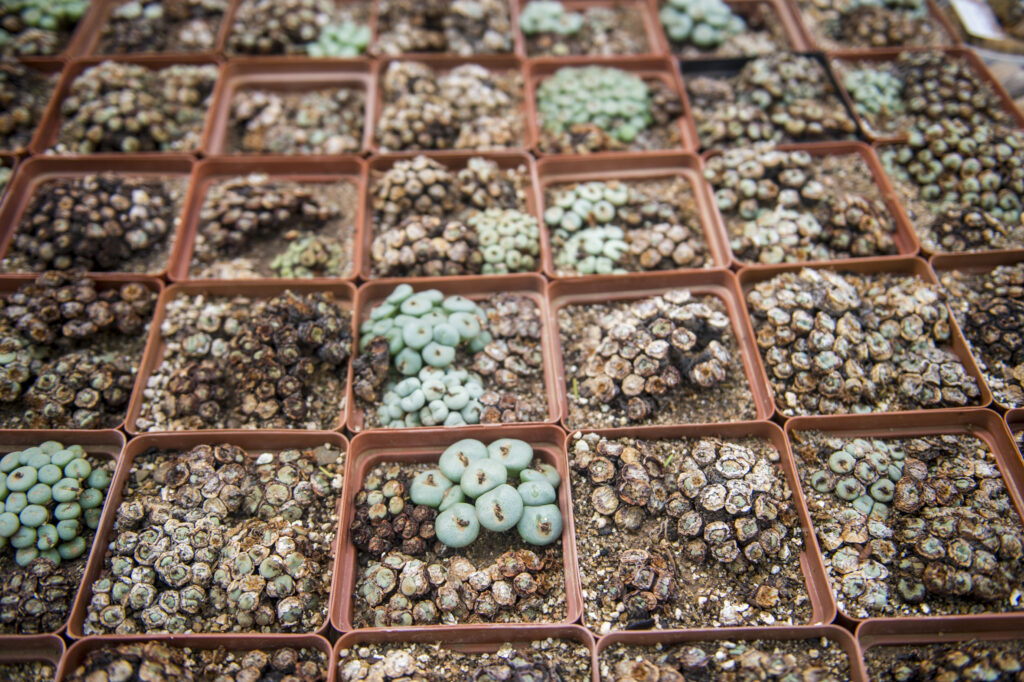 Photo Delwyn Verasamy
The idea arose at a recent meeting with horticulturalists at Sanbi.
“We were brainstorming how we can assist and this is one of the projects that they said is quite pressing and that they really do need volunteers and can we jump in and help,” says Hay, an agricultural scientist whose research focuses on how to use social media to connect with small-scale farmers.
“I believe social media is a powerful tool to connect with people outside of our usual spheres of influence so that’s why I took to social media and put out the call and opened it up to non-BotSoc members.
“One of our goals for the next year for our branch specifically is to grow our membership base as a way of showing the value of joining societies like BotSoc to try to get people more involved in some practical, easy-to-do conservation work that really has a huge impact,” he says.
The Karoo region has the world’s highest diversity of succulent plants, “which have always been highly sought after by international succulent collectors”, according to BotSoc.
In recent years a combination of circumstances have driven increased demand from Asia, North America and Europe, with online trading and social media platform Instagram fuelling the desire for these plants from people across the globe confined because of the Covid-19 pandemic, the society says. Since 2019, succulent poaching has climbed in South Africa and law enforcement authorities have confiscated an estimated 500 000 plants. The illicit trade has been sparked by worsening socioeconomic conditions linked to the pandemic.
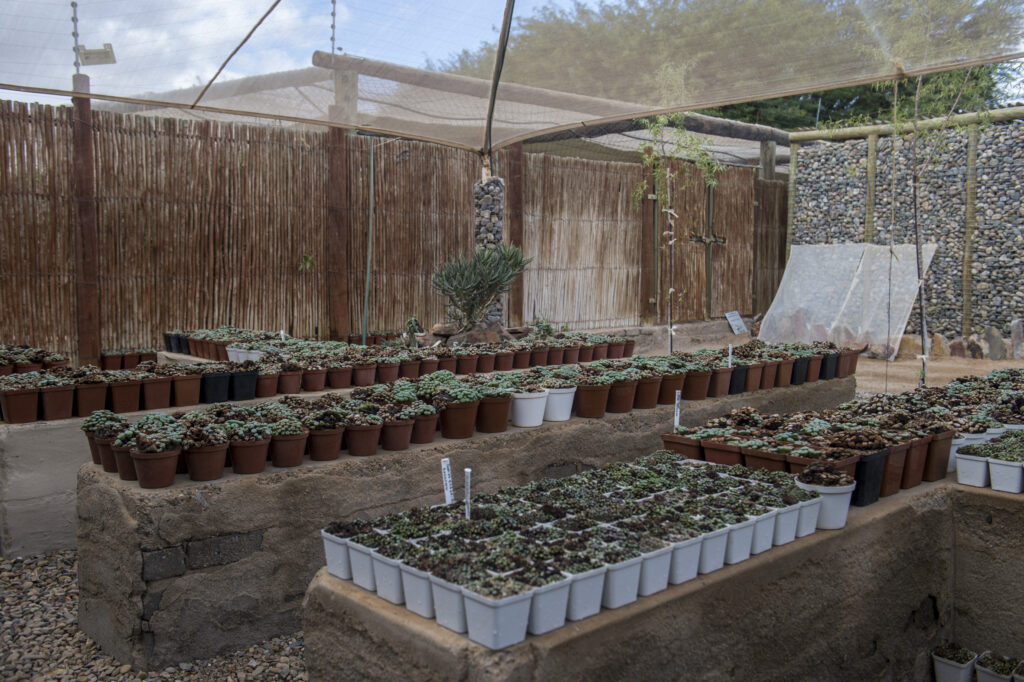 Photo Delwyn Verasamy
There is a direct correlation between the areas rich in succulent species and extreme poverty, with the primary regions affected by illicit plant harvesting being Knersvlakte, Richtersveld and Little Karoo, BotSoc says.
One particular succulent species that is being heavily targeted cannot be named. Botsoc says that due in part to its limited seed dispersal mechanism, an evolutionary quirk that makes it more vulnerable to extinction, these succulents are highly vulnerable and are known from extremely small and specialised ranges.
Last year, an emergency red listing by Sanbi’s threatened species unit in response to the increased pressure noted that 34 species out of 102 were under increased threat.
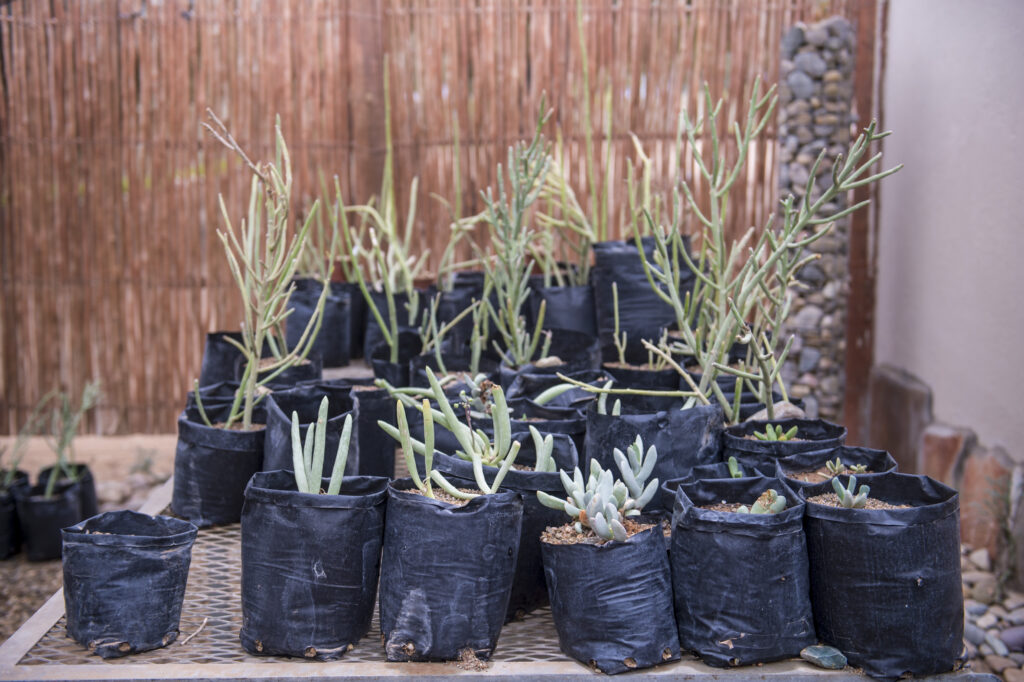
Twelve species have been assessed as critically endangered, and 13 previously assessed as “least concern” were changed to “vulnerable or endangered”.
The escalation of trade, new markets and a pool of economically marginalised poachers has emerged at a pace that “leaves an already constrained plant conservation sector reeling”, Botsoc says.
Confiscated plants are criminal evidence and cannot be distributed elsewhere until the case is concluded. “National botanical gardens’ horticultural facilities are not designed for this rapid, unplanned influx of plant material and the result is that existing facilities are over-capacity and staff overwhelmed by this sudden new mandate.”
There is an immediate need for pots and appropriate soil, emergency infrastructure to securely house plants and support of infrastructure at national botanical gardens, as well as skills to plan and curate conservation grade collections. Contact [email protected]
[/membership]