President Cyril Ramaphosa. (Lulama Zenzile/Die Burger/Gallo)
The Judicial Service Commission (JSC) was not mandated to make a firm recommendation as to who should become the country’s next chief justice and, by doing so last week it painted President Cyril Ramaphosa into a political corner, sources close to the process said.
“They exceeded their mandate here,” said a government source who asked not be identified by name.
The source said it was expected that the JSC would, after interviewing the four shortlisted candidates, report back to Ramaphosa on the factors that argued in favour or against the appointment of each.
This could have included reflections on gender representivity, the length of the term each candidate would be able to serve in the post before retirement and their proven administrative skills.
The JSC is drafting a report to the president, but calling a press conference on Saturday to say it has put the matter to the vote and arrived at the recommendation that he appoints Supreme Court of Appeal President Mandisa Maya was not part of the plan, notwithstanding the fact that the president followed an exceptional process of inviting public input and forwarding a shortlist with four names to the commission for the first time in history.
“It was a political ambush: that’s what it was,” a source said.
They added that although Ramaphosa was not bound by the recommendation, it would be awkward not to follow it. Firstly, the country has now not had a chief justice for four months after the retirement of Mogoeng Mogoeng. But secondly, and perhaps more dissuasively, appointing either deputy chief justice Raymond Zondo, his constitutional court colleague Mbuyiseli Madlanga or Gauteng judge president Dunstan Mlambo would mean rejecting a recommendation to appoint a woman.
Legal commentator Dan Mafora raised the further risk that the president might open himself up to legal challenge if he were to ignore the JSC’s recommendation, because it viewed its approach as lawful even if others disagree strongly.
On the other hand, if Ramaphosa were to appoint Maya, he would be seen as accepting the outcome of a process tainted by procedural irregularity.
According to the JSC, Mlambo got the second-most votes, followed by Madlanga, with Zondo coming in last.
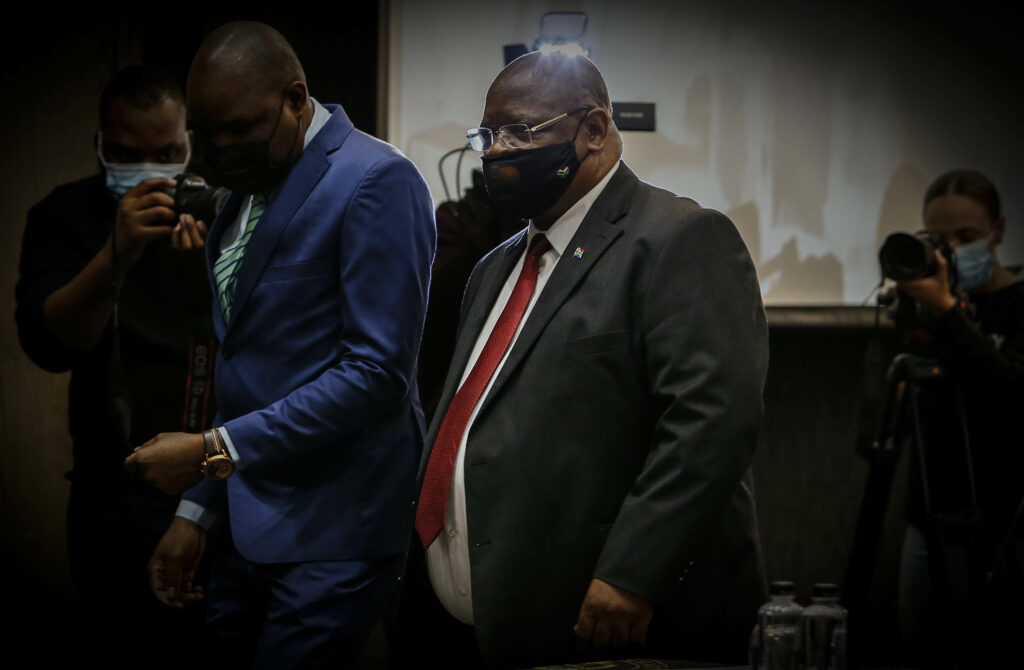 Acting Chief Justice Raymond Zondo
By the admission of its own members, there was confusion and debate in the commission’s deliberations as to how it should proceed.
Three people who argued strongly that a single candidate should be recommended to Ramaphosa were Speaker Nosiviwe Mapisa-Nqakula, Economic Freedom Fighters leader Julius Malema and JSC spokesman advocate Dali Mphofu, a source with insight into the deliberations told the Mail & Guardian.
The argument was that the commission should use the power it held and its proponents persuaded the room, although there were commissioners who demurred.
Former public protector Thuli Madonsela stressed that in law, the JSC lacked such power, in this instance.
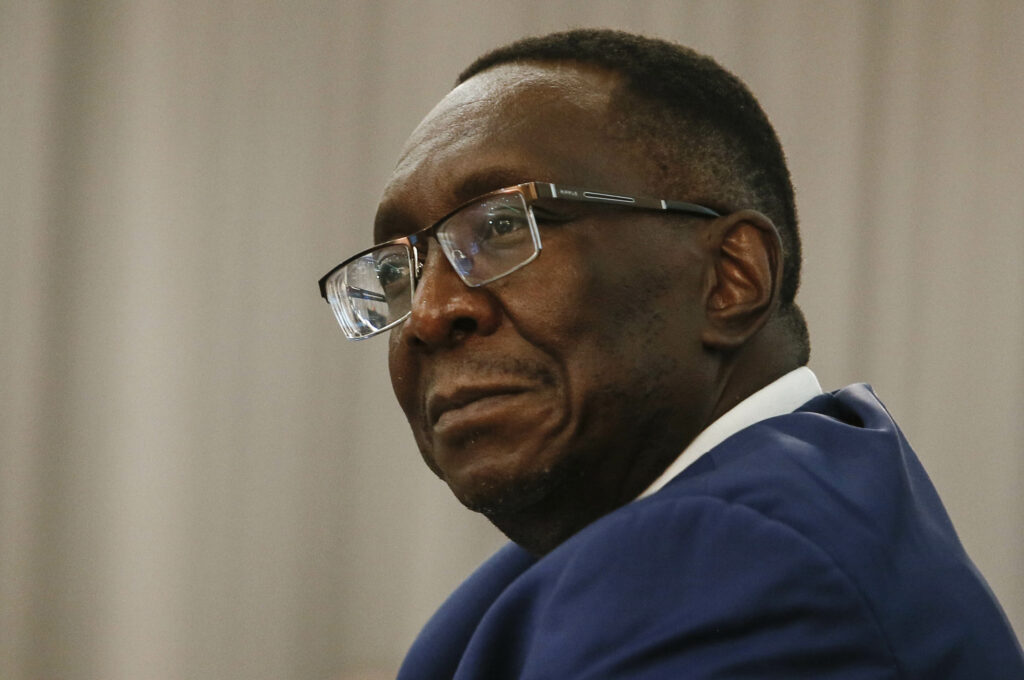 Dunstan Mlambo Judge President of the Gauteng Division of the High Court.
“When it comes to the appointment of the chief justice the Judicial Service Commission is only given the power to vet a candidate selected by the president; in other words the president is the only one given the power to select,” she said.
“Traditionally, the president has always been assisted by the minister of justice to perform this function.”
Madonsela said she saw two problems with how the JSC proceeded.
“Firstly, the JSC seems to have lost its mandate. It thought that it was conducting the same function that it conducts when it recommends judges; it therefore usurped the power to select … when, in fact, it had only been asked to vet people (who) had been selected by the president.”
All the JSC needed to do was to advise the president whether any of the candidates were not fit and proper; beyond that, it might have ranked how each performed in terms of the particular skills preferred for the post at this point in time.
“For them to then take away the discretion of the president to consider the other candidates is bizarre. It seems to [me] that an act of good faith by the president was rewarded with egregious bad faith by the JSC and that is really sad, because every one of those candidates was great in many ways,” Madonsela added.
“Where one was weak, the other was strong, and the JSC should just have indicated which of those strengths they consider crucial for the chief justice to take our judiciary and judicial services to the next level and which of the weaknesses they considered fatal for this task.”
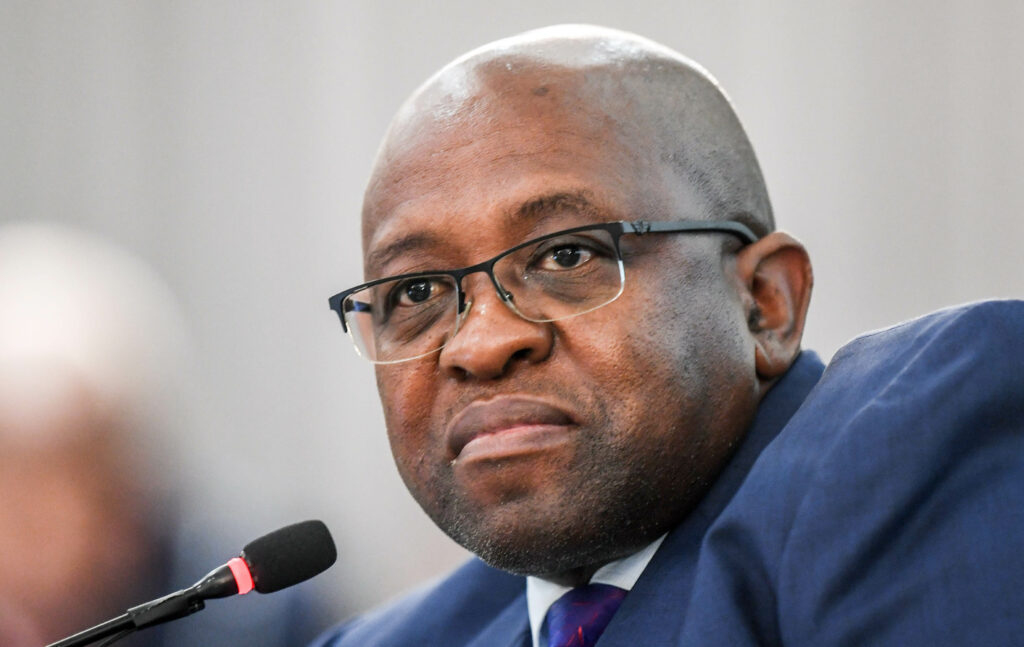 Justice Mbuyiseli Madlanga at the interviews for South Africaís next Chief Justice at Park Hotel. (Photo by Gallo Images/Daily Maverick/Felix Dlangamandla)
Madonsela said it was moot how Ramaphosa would proceed, but noted that the JSC was mistaken if it thought it had the last word, because the president still had to consult with all political parties represented in the National Assembly.
But in terms of section 174 (3) of the Constitution, which deals with the president’s powers in this regard, Ramaphosa is still not obliged to heed the views expressed in those consultations. The instance is a rare one of almost unfettered executive power vested in the president.
Law lecturer and analyst Richard Calland said Ramaphosa appeared to have given his power away, to some extent, through habitual indecisiveness.
It was widely welcomed that he sought to make the appointment process both more structured and transparent, but the JSC has faced sustained criticism for being opaque about its process and for politicising interviews to the extent that it was compelled to repeat those held with aspiring constitutional court judges last April six months later. The first round became the subject of legal review after Malema was allowed to use the opportunity to corner candidates on rulings politically unpalatable to his cause.
The JSC has only twice reluctantly released the record of its deliberations and Mpofu said last week that it would elaborate a set of clear criteria for appointment to the bench only after the appointment of the chief justice, who will also head the commission.
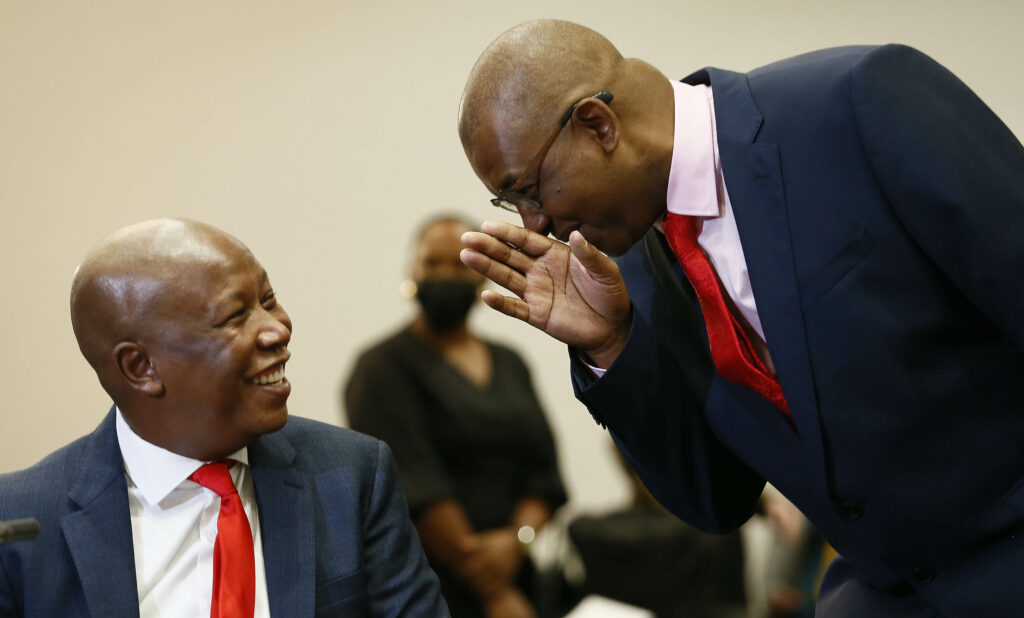 EFF leader Julius Malema and Advocate Dali Mpofu.
It was hence not hard to foresee that politics may again enter the process after the president forwarded four names to the JSC. There were fears that, as a close observer put it, “Going this route may result in him making a decision based on what is popular, rather than a decision based on what is best for the judiciary.”
There has been understandable outrage at the handling of Mlambo’s interview in particular, in which Malema and Mpofu confronted him with unsubstantiated allegations of sexual harassment. Mlambo had not, as required, been warned that this would be raised, and he dismissed the allegations as rumours.
Mpofu represents the General Council of the Bar (GSB) at the JSC, through an arrangement with Advocates for Transformation (AFT).
On Tuesday, the GCB said Mpofu’s conduct was seen as dragging the profession into disrepute and it was raising this with the AFT with a view to replacing him as a representative.
“The GCB has been requested by a number of constituent bars and individual members to seek the replacement of Mpofu SC on the JSC and is in discussions with AFT to that end,” it said in a statement.
“The unfair questioning of Mlambo, which closely followed that of Malema, created the impression that Mpofu and Malema were using the JSC as a platform for some political end.”
The Pan African Bar Association of South Africa warned that what it termed “interview by ambush” undermined the integrity of the JSC and weakened the judiciary.
[/membership]