In Mpumalanga, the ANC elected chair Mandla Ndlovu, deputy chair Speedy Mashilo, secretary Muzi Chirwa and deputy secretary Lindiwe Ntshalintshali.
The ANC’s step-aside rule — which forces party leaders accused of corruption to relinquish their positions once criminally charged — is likely to face serious challenges from the ruling party’s branches at its national conference in December.
The regulation has been enforced since the ANC’s 2017 elective conference by the party’s national executive committee (NEC) and has impacted the careers of key leaders including suspended secretary general Ace Magashule and a number of regional heavyweights. Critics say it has been abused to fight political battles.
The Mail & Guardian spoke to at least six leaders from provinces who say that the resolution will need to be reviewed in December. Some have also called for the step-aside resolution to be scrapped altogether.
Across provinces, ANC members who are campaigning for positions as provincial and regional leaders face the hurdle of the step aside resolution.
Mpumalanga treasurer Mandla Msibi, who was elected two weeks ago, was asked to relinquish his post soon after he assumed it. his position. Despite Msibi facing a double murder charge, the ANC Women’s League was among those who endorsed him for a position in the province’s top five.
In Limpopo, Danny Msiza, who is considered a kingmaker, is eyeing the post of provincial chair even though he was charged with racketeering, theft, fraud and money-laundering related to the defunct VBS bank.
Msiza, one of the ANC leaders who fought the step-aside resolution, is tapped to become provincial secretary in Limpopo.
In the Eastern Cape, Terris Ntutu is campaigning for provincial secretary and has also resisted the resolution that could scupper his ambitions.
A regional leader in Sekhukhune in Limpopo said branches had already expressed themselves regardless of the step-aside rule. The leader, who requested anonymity, said it was likely that branches would reject the step-aside rule across many ANC regions.
“If a resolution is not easily implementable it will go for a review and it will be the branches of the ANC who will have to oversee that level of review,” they said.
“It’s not a structure that took the resolution, it’s the conference of branches that took the resolution. Step aside seems to be disowned by its owners.”
Another regional player in the Free State said while the resolution was noble, it has been misused to purge leaders instead of its intended purpose of renewing the beleaguered organisation.
The regional leader from Mangaung said it would be un-ANC if the resolution was not reviewed in the next national party election.
“The contradictory part about it is that you can step aside yet branches can still elect you in the same position. It’s the branches that elect leaders with the awareness of their legal battles,” they said.
“There are a lot of sharp contradictions which need to be ironed out. If we are saying step aside, why is that same person allowed to reenter the election space? Are we not confusing the very same South Africans we were trying to win over? How has this helped the unity project? We must answer these questions.”
Ntando Khuzwayo, the chairperson of Durban’s Albert Park ANC branch and a lobbyist for former eThekwini mayor Zandile Gumede, said the step-aside rule had impacted heavily on the party in the province.
“We have a situation where a leader of a structure is elected and then has to immediately step aside. I don’t think this was what comrades had in mind when they drafted the resolution,” he said.
“The whole issue of step aside needs to be refined because if a person belongs to a structure and is called on to step aside, this affects the functions of the structure.”
Khuzwayo said that branches had been instructed to discuss and implement the regulation, but there was still a lack of clarity as to how to proceed.
“What does step aside actually entail? What kinds of meetings can they attend and what can’t they attend? What exactly should a person do? This has not been refined and we really don’t know how this is meant to be done,” Khuzwayo said.
“Hopefully because this is a conference year we are supposed to relook at the issue and give it meaning and look at how it is going to be applicable. It is currently impractical.”
Khuzwayo said that the step aside stipulation needed to be turned into “a tool that we can use”.
 Danny Msiza from Limpopo is facing charges regarding VBS bank corruption and if elected as Limpopo chair, he may be asked to step down. (Photo by Gallo Images/OJ Koloti)
“We are interested in having a functional ANC. We are going to engage on this matter in a close manner at the conference.”
Asked whether branches wanted the resolution to be revisited, Khuzwayo said the conference would have to consider that.
“If conference discussions take it down that road, then that is what conference would have done,” Khuzwayo said.
Another provincial leader who is expected to contest for a top-five position in Gauteng said the resolution was implemented in a very selective manner, adding that they would campaign for branches to support its scrapping in December.
“We will never allow anything which violates the constitution of the land. The constitution gives every individual a right to be innocent until proven guilty. The process must be exhausted until there is finality on the matter,” they said.
“A person who is in jail is not going to be able to lead the ANC, that is simple logic. That resolution is just cosmetic. In the conference we must know why the resolution was refined by the NEC, the guidelines are in conflict with the conference resolution. The conference said you must volunteer according to your conscience, it was not explicit or enforceable.”
Nelson Mandela Bay regional secretary Luyolo Nqakula said he supported step aside as a mechanism to assist with the renewal of the organisation.
“In as much as there is support for step aside, the movement has to base to what extent the adjudication of the process should serve political structures,” Nqakula said.
“We now run the risk of being more legalistic than political. It’s a necessary ongoing debate that must be heard,” he added, saying although he believed branches had not rejected the policy, the question of indictment did not necessarily preclude one from the election.
Nqakula said the ANC was also subject to the laws of the land. “The laws of natural justice also suggest that you are innocent until proven guilty.”
The step aside rule has also become a headache for the party in relation to Bathabile Dlamini. A meeting of top ANC officials on Monday was expected to discuss the women’s league leader’s resignation following her conviction and sentencing on perjury charges last month. But the officials are said to have only discussed the matter of Msibi.
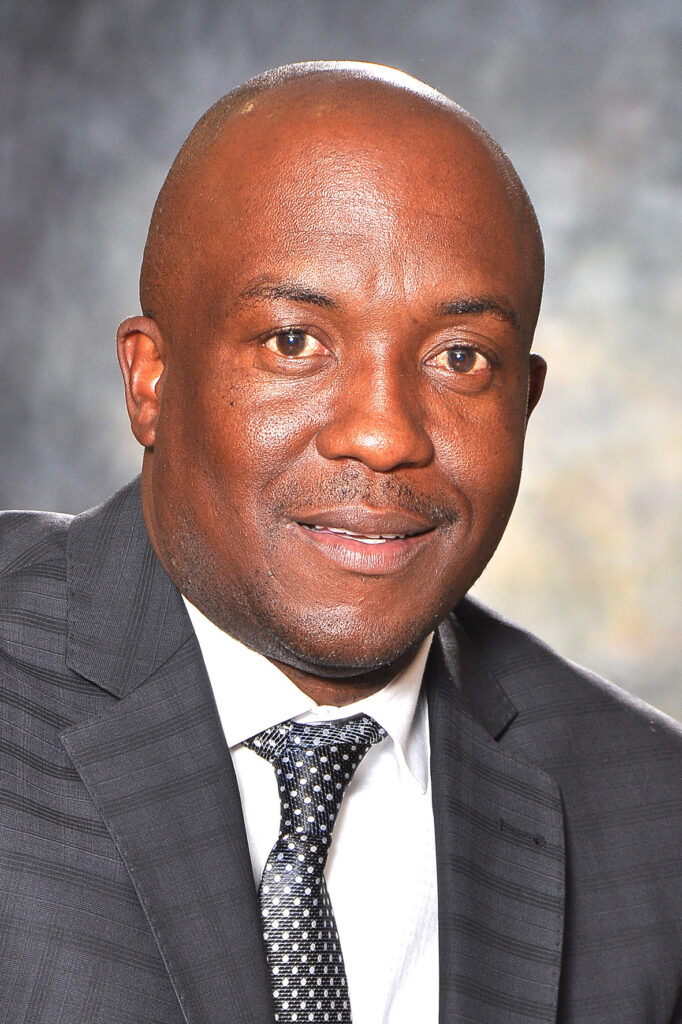 Mandla Msibi was asked to resign his post as he is facing murder charges
In December 2020, the NEC directed its top six to seek party elders — mainly former president Kgalema Motlathe and Mathews Phosa — to develop guidelines to make the resolution easier to implement for the faction-riven NEC. The two veterans had six weeks to produce and present the document.
The guidelines were presented at the next ordinary NEC meeting in February. They are:
- Stepping aside following indictment on criminal charges;
- Temporary suspension following indictment on criminal charges;
- Temporary suspension pending ANC disciplinary processes following indictment on criminal charges;
- Dealing with allegations of corruption or serious crime.
The guidelines were adopted and have been taken to provinces and branches for consultation. They add that the decision to step aside must be reviewed periodically by the NEC, the national working committee, the provincial executive committee or the provincial working committee at least once a year, or from time to time at the request of a member, office-bearer, or public representative.
[/membership]