Mooit River's shops were looted in the riots last July. (Delwyn Verasamy/M&G)
A year after the deadly riots sparked in KwaZulu-Natal and parts of Gauteng by the jailing of former president Jacob Zuma on contempt of court charges, there is no visible evidence that Mooi River was held hostage by its geography during a week of truck burning and looting.
The toll booths on the N3, which runs alongside the KwaZulu-Natal Midlands town, have been rebuilt after being torched during the first wave of attacks on Friday 9 June after the news that Zuma was being incarcerated.
The looting and violence engulfed Mooi River, the rest of the province and parts of Gauteng, claiming more than 340 lives and costing KwaZulu-Natal about R20-billion in damage and lost output.
The shops at the Mooi River Mall, which was cleaned out in the looting the day after the first trucks were burned — hours after similar attacks on the N2 near KwaDukuza — have reopened.
But residents of the town are scarred by their experience and are fearful that Mooi River’s location adjacent to a tollgate on the main corridor linking KwaZulu-Natal and Gauteng may see it targeted if tensions over Zuma’s future spill over into violence again.
The former president’s corruption trial has been adjourned to a holding date in August. His appeal against the overturning of his unlawful release on medical parole by then correctional services commissioner Arthur Fraser is still ongoing.
The release of the Zondo commission’s final report recommending that Zuma be investigated for facilitating the capture of state-owned entities by the Gupta family may also lead to further charges against the former president, and have increased concerns about what might happen if he is jailed again.
When the Mail & Guardian visited Mooi River last week, residents who recalled the riots were anxious that events beyond their control might once more bring their town — and their lives — to a halt.
Bongumusa Mdladla, 23, had watched the truck-burning and looting take place from his home in Town View, the section of Bruntville overlooking the tollgate.
Mdladla said he had woken on 10 July last year to find trucks being burned and looted but had stayed at home because he wanted to avoid danger. “Everything just happened overnight. We woke up in the morning and found the trucks on fire at the tollgate. After that, people started looting the mall.
“It stayed like that for about a week. Nobody could go to work and nobody could get past here on the N3. It was happening right here,” he said, pointing down the hill at the freeway.
Mdladla, who works as a merchandiser at a local supermarket, said: “I didn’t want to go to the danger so I stayed at home. The trucks were being burned by people from here. The [looting on the] freeway was people from here. People were helping themselves.”
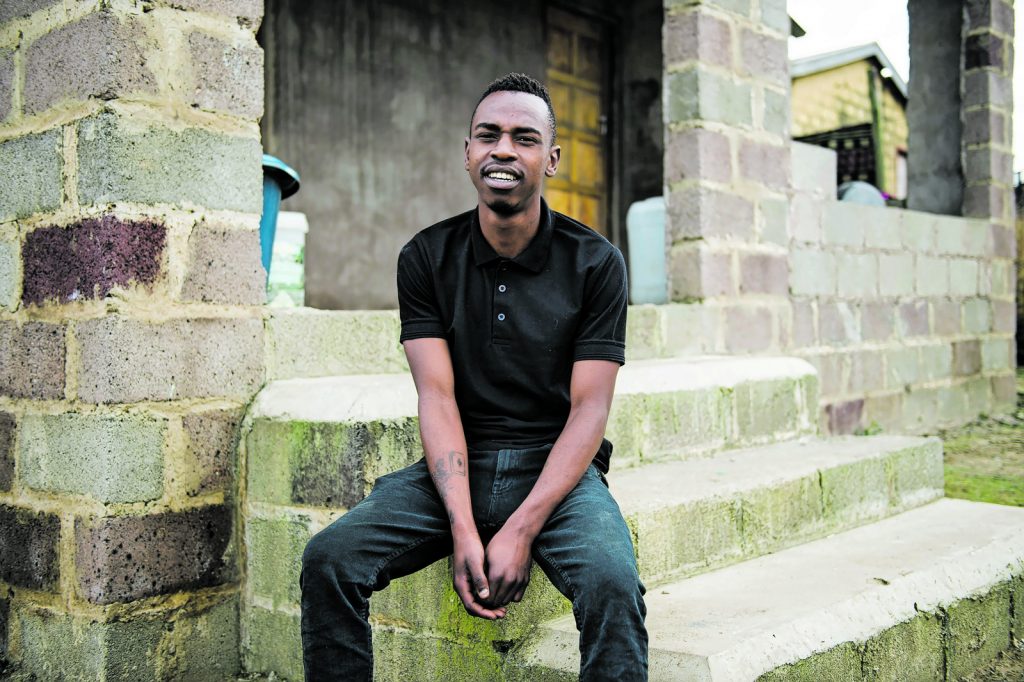 No warning: Bongumusa Mdladla, who works at a local supermarket, was surprised when people started attacking trucks at the tollgate. (Delwyn Verasamy/M&G)
He said Town View’s residents had been protesting over interruptions to the water supply and had previously blocked the freeway to get noticed but the riots last July had taken him by surprise.
“There was no indication that this was going to happen. It just happened. Now everything has gone back to normal. It’s like nothing ever happened,” Mdladla said.
“I still don’t understand. What they did wasn’t supposed to have been done. This wasn’t even our strike.”
Nelisiwe Mazibuko, the manager of the Clicks store in the mall, was at work when the attacks on trucks started. In total 37 were burned and looted.
“On the Friday it didn’t affect us. We were able to work, and we closed the store and I went home [to Estcourt].
“When we tried to drive to Durban at about 7.30pm, we couldn’t get through the toll,” she said.
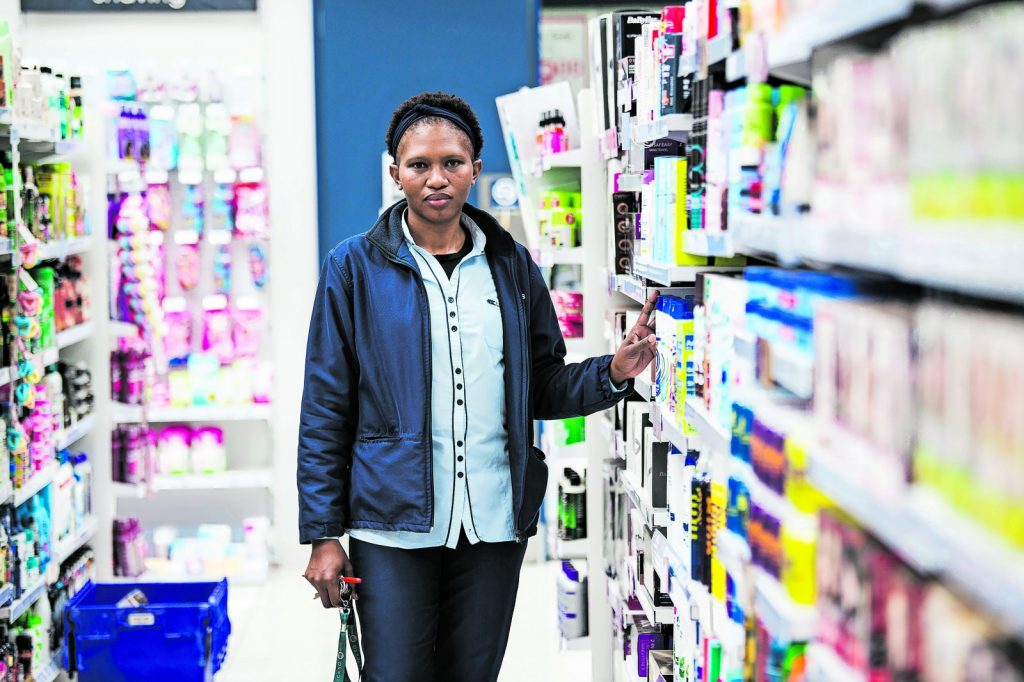 Tough time: Nelisiwe Mazibuko manages Clicks in Mooi River. The shop was gutted during the July 2021 riots. (Delwyn Verasamy/M&G)
By the next morning, the looting had begun and Mazibuko’s shop and the rest of the stores in the mall had been stripped of anything of value by Monday.
ATMs, one of which has still to be replaced, were torn out of the mall’s walls and taken away to be emptied.
Mazibuko said her store lost more than R3-million in stock, while shelves, windows, light fittings and tills had to be replaced.
“They took everything. Even the staff canteen and the paperwork. Whatever bits and pieces were still here had to be written off because it was destroyed.”
The staff members had to take leave and work at stores in Estcourt and Howick while the shop was being refitted and restocked, which took until 20 August. “It was tough for them. It costs a lot of money to travel to another town every day for work. There was also a lot of risk travelling by taxi late at night.”
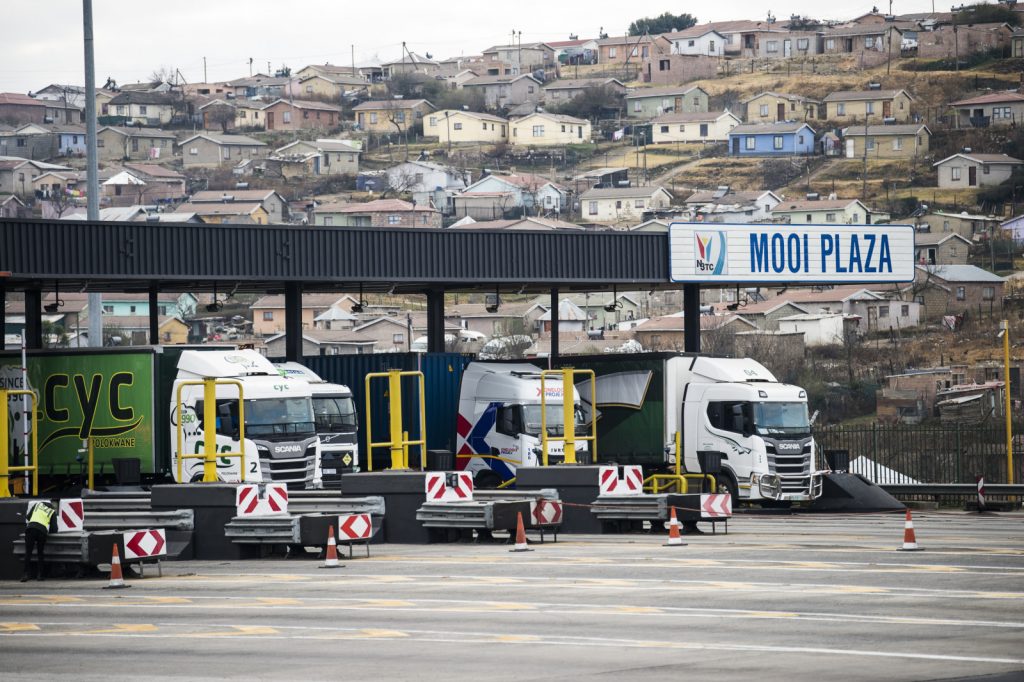 Standstill: Trucks at the Mooi Plaza toll gate were attacked, looted and burned, blocking the N3. (Delwyn Verasamy/M&G)
Mazibuko said the store, which had been battling to make its budget before the riots, had nearly closed permanently but had fortunately re-opened with a pharmacy, which had helped business.
But business at the mall had dropped off since the riots. Customer volumes had reduced because residents were going to shop in Howick and Estcourt instead.
“I myself do not feel safe working here in Mooi River, but I need to earn a living. People are scared because of what happened here, because it can happen again,” Mazibuko said.
Ali Usama, 26, lost about R200 000 in stock from his cell phone business in the mall during the riots.
Usama, who has been in South Africa for five years, is selling up and hopes to move to Europe in December because of his experience.
“They took everything in my shop, broke the glass, everything. I had to stay at home. There was nothing
I could do,” he said.
“Now I’m waiting for December.
I will go to Europe. There is no money here any more. I can’t stay here and risk my life for no money.”
Usama, who was not insured, is selling the shop to Ali Rachman, another Pakistani whose shop in the mall was looted, along with two others he owns in town.
Rachman said that although he was concerned there might be further riots, he would remain in the town, doing business.
“I can stay for now. If it happens again, I have to go,” he said.
Mohamed Ismail’s family have been running PK Foods since 1982, and have lived and worked in Mooi River and nearby Rosetta for 60 years.
The shop, which is located in the historically Indian part of the town’s centre, was not looted because security companies, armed residents and police officers stopped the crowd that had cleaned out the mall from entering Lawrence Street.
“We weren’t looted. We were fortunate. They hit the shop next door to us and then the cops arrived and dispersed the crowd.”
This, Ismail said, gave residents and shopkeepers time to get organised to defend the area from further attacks.
“Local people, the farmers and the security companies, all mobilised and managed to stop the looters,” he said. “The subway [linking the two sides of Mooi River] made it difficult for people to carry things away and easier to block the area off.
“They tried but the guys had a 24-hour patrol here. We were very fortunate we didn’t get hit. You can’t take a knock like that and survive. You can’t.”
Ismail said the location of the tollgate put Mooi River at risk because it was the easiest place at which to block the N3 and close KwaZulu-Natal off from the rest of the country.
“There is nothing wrong with Mooi River itself but because of the tollgate the place is a target every time somebody wants to block the freeway as it’s the easiest way for them to do it,” he said.
“After the unrest, everything went back to normal, but we know that as long as there’s the tollgate, there’s potential for problems.”
Fazila Safla and her husband, Khalid Sarang, own an electronics company and a butchery in Stock Lane, around the corner from the Ismails.
They had just bought the building and moved in when the violence flared up.
“When people started stoning and burning trucks we didn’t really take much notice. We were sort of used to it, because Mooi River is synonymous with the N3 and truck burnings,” Safla said.
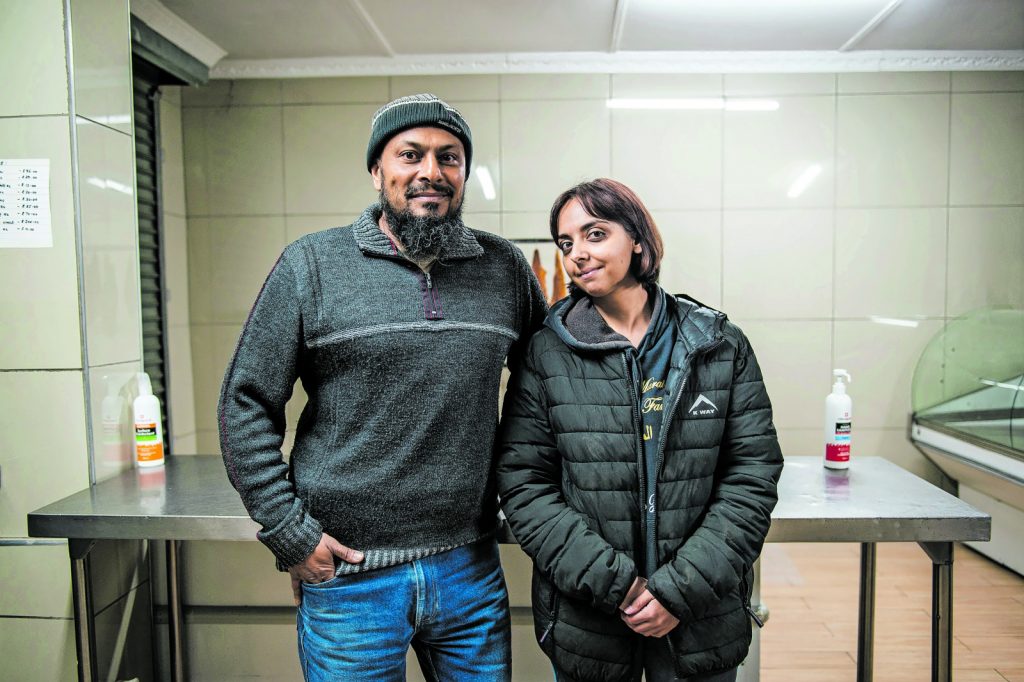 Resilient: Khalid Sarang and Fazila Safla joined other people and managed to defend their businesses when the looting started. (Delwyn Verasamy/M&G)
But by the next morning, when Sarang arrived to take a metal support from his new coldroom for galvanising, the looting started in the area.
Underinsured, they faced total ruin if their premises were looted and Sarang, a competitive shootist, was left with no option but to stand in the street with a shotgun along with his neighbours and other residents to prevent it from happening.
“People had come out with whatever they had, even baseball bats. Not everybody had guns. The cops arrived and fired rubber bullets and dispersed the crowd,” Sarang recalled.
“They told the people that they don’t want any deaths. We distributed hundreds of rounds of birdshot — number seven — to the people with shotguns. If you had a 9mm, we put you at the back. Rather put somebody in hospital with birdshot than be responsible for taking somebody’s life.
“We stood and managed to hold. It was a terrible time but the community all stood together. People came out with what they had to join us to protect what was left of the town. We didn’t sleep for three or four nights.”
Safla said that since the riots the town had returned to normal but that there was still an undercurrent of tension.
As a result, many businesses and schools had closed last month because of fears of renewed attacks on trucks during the shutdown that had been called over the petrol price increase.
The tension was apparent at the Mpofana local municipality, where security personnel mistook the M&G team shooting photographs of the civic offices for a potential threat to the mayor, Maureen Magubane.
Magubane’s office was petrol bombed and partially burned last month in an attack that is believed to be linked to tensions in the ANC, which nominated her as mayor.
Magubane took office after the local government elections last November. She previously served in the post for 18 months before being recalled by the ANC and demoted to proportional representation councillor as a result of internal dynamics in the party.
Magubane said she believed the riots had been sparked by “people going around towns lighting the fires of this looting”.
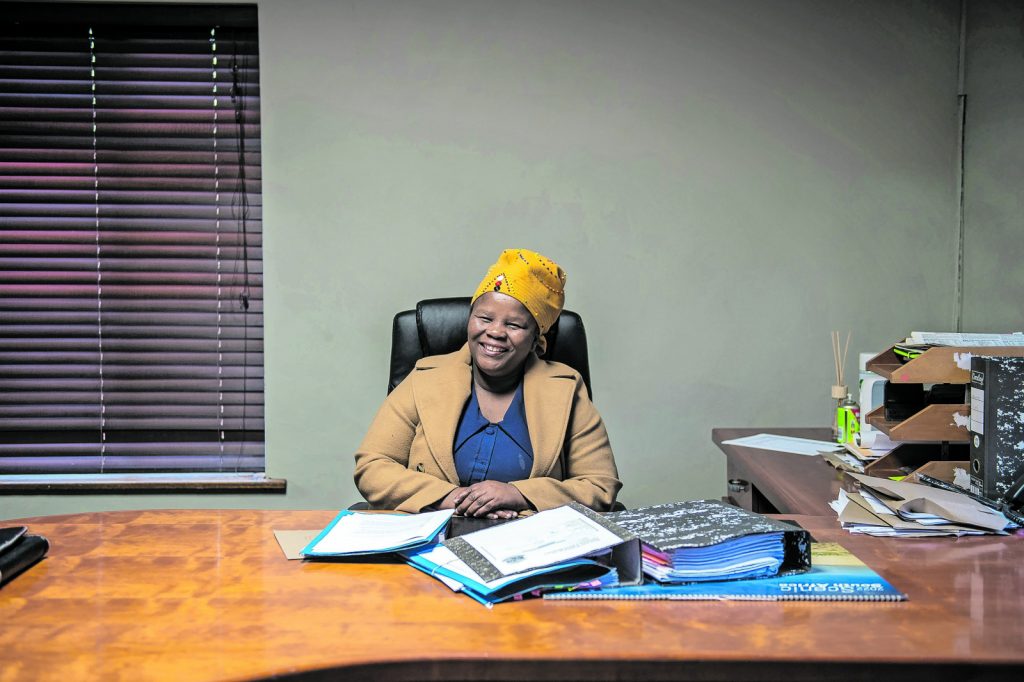 Dynamics: Mayor Maureen Magubanewas threatened after the riots in which the town’s shops were looted. (Delwyn Verasamy/M&G)
The fact that the attacks started during the day, and did not take place in the usual spot on the R103 where Bruntville residents normally protested, was evidence that outsiders were involved in starting the attacks.
“It didn’t start with us. People of Mooi River are crazy. When they see something going on, they get excited,” Magubane said. “When there were trucks [being attacked] they ran to them.
“Even when the [former] president was going to jail he passed here. We didn’t know,” she said.
Magubane, who farms maize at Rietvlei, said she and other farmers had sustained serious losses because they had been unable to transport their crop to market as a result of the riots and the subsequent refusal of trucking companies to enter Mooi River for some time.
Magubane said there was little the municipality could do should there be renewed unrest over Zuma’s legal situation.
“I think even the president cannot avoid this. It was like a thunderstorm. The people who must prevent this are our security services. As mayor, I won’t be able to prevent this. It is up to intelligence.
“It must be stopped before it starts.’’
[/membership]