Increasing value-added tax shifts the weight of systemic dysfunction to households already buckling under the pressure of inflation and economic exclusion. (Delwyn Verasamy, M&G)
It took an average of 341 days for South Africa’s nine water boards to pay their suppliers, which is significantly longer than the required 30 days, parliament heard on Tuesday.
The office of auditor general Tsakani Maluleke was briefing the portfolio committee on water and sanitation on its water board 2020-21 audit outcomes, the first special report informing parliament and the public about the state of financial and performance management at the water boards.
The country’s water boards are Overberg Water, Magalies Water, Rand Water, Bloem Water, Mhlathuze Water, Lepelle Northern Water, Umgeni Water, Amatola Water and Sedibeng Water.
Municipalities are the main customers of water boards and account for most of their income (more than 80% at six of the nine water boards), according to the auditor general’s report.
“The water boards experienced challenges with collecting these debts because of the worsening financial health in local government,” it noted.
Jolene Pillay, a senior manager in the office of the auditor general, told the portfolio committee: “A challenge for the water boards is how do they manage the collection of debt from municipalities, noting that a certain part of this might be out of their control. But it’s important that the water board determines how they are going to manage the relationship with municipalities and develop a … repayment agreement or some other mechanisms that they would use to ensure that they are eventually recovering money from the municipalities.”
‘Speed of service delivery’
According to the report, those who took the longest to pay their creditors were Sedibeng Water, which took 1 768 days or 4.8 years; Lepelle Northern Water (456 days); Amatola Water (283 days) and Mhlathuze Water (160 days).
“This exposed these water boards to interest and penalties on late payments, as included in fruitless and wasteful expenditure,” the report said. “It also had a negative effect on the supply chain ecosystem because suppliers that are not paid cannot maintain and operate their businesses to provide effective and efficient services.
“Suppliers may also not want to participate in future procurement at water boards that do not pay on time, which may affect the speed of service delivery.”
Sedibeng Water was to be dissolved and its assets and liabilities transferred to Bloem Water and Magalies Water in July this year.
Irregular expenditure
The report revealed that the overall financial health of the water boards had improved slightly in 2020-21, with none reporting any cash shortfalls at year-end.
Irregular expenditure decreased by 41% from R3.2-billion in 2019-20 to R1.9-billion in the 2020-21 financial year. Umgeni Water’s irregular expenditure totalled R511-million, followed by Rand Water (R301-million) and Sedibeng Water (R272-million).
Pillay said although there had been a significant decline in irregular expenditure, “the sector still has a way to go in terms of improving their internal control environment to prevent such irregular expenditure”.
Fruitless and wasteful expenditure increased by 12% from R264-million in 2019-20 to R296-million in 2020-21, with seven of the nine water boards reporting fruitless and wasteful expenditure for the year.
Audit outcomes unchanged
Just two water boards — Overberg Water and Magalies Water — were given a clean audit with the outcomes for the seven others either having “regressed or stagnated”, the report said. Five water boards, including Mhlathuze Water, were financially unqualified with findings on compliance with legislation or findings on reported performance information.
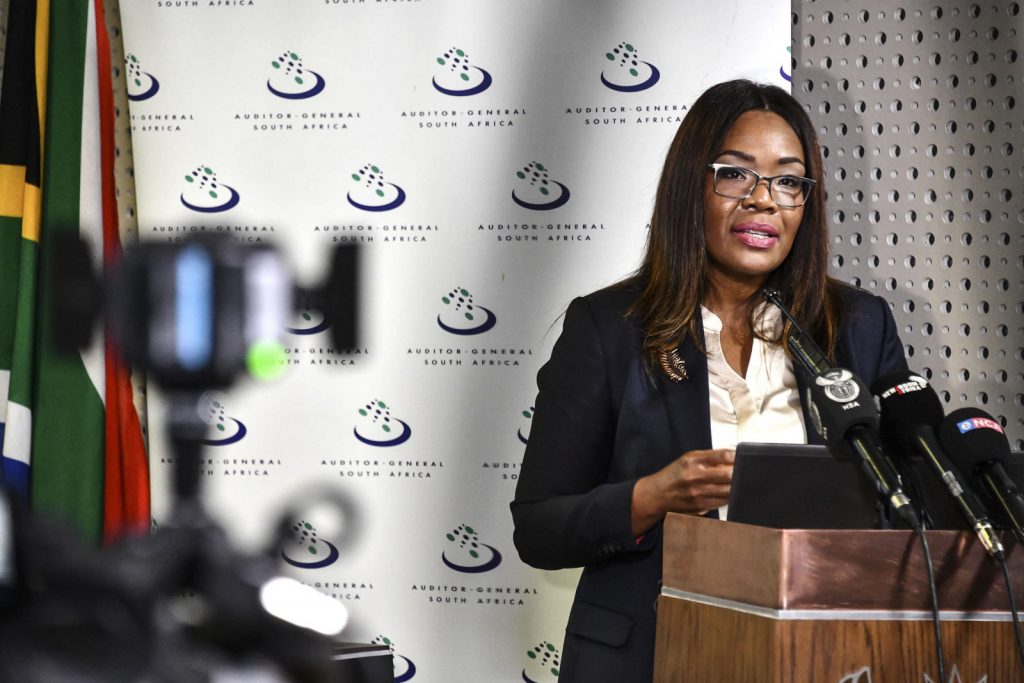 Auditor general Tsakani Maluleke. Photo: Ntswe Mokoena.
The report noted that although clean audits are important, the focus “should be more on how South Africans are … robbed of their dignity over avoidable remediable actions”.
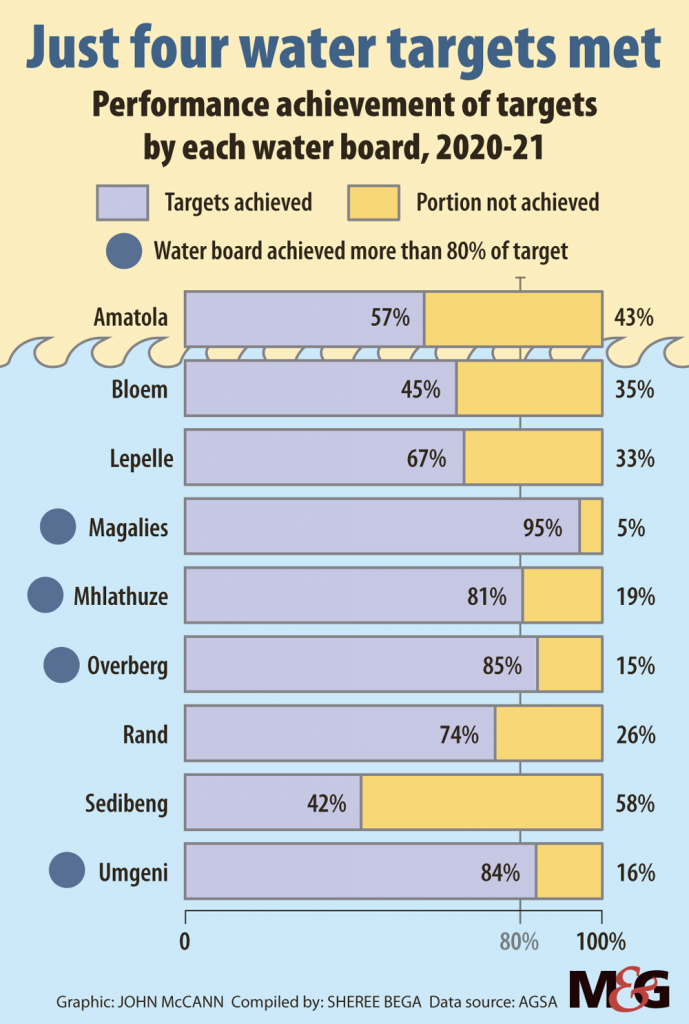
Only four water boards achieved more than 80% of their planned targets — Magalies Water (95%) Overberg Water (85%), Umgeni (84%) and Mhlathuze Water (81%).
Compliance with water quality standards
The South African National Standard specifies the minimum requirements for clean drinking water to be considered safe for human consumption. All nine water boards measured the quality of bulk water provided during the year and reported on this against the targets set, in line with the national standard requirements.
Only six water boards achieved water quality targets while Lepelle Northern Water, Overberg Water and Sedibeng Water partially complied with the specifications of the standard.
“At Lepelle, they did not comply with two of the indicators, being micro-compliance and operational compliance, where they indicated challenges with a shortage of chlorine gas in the country,” Pillay said. “Overberg indicated that they had challenges with pipelines and reservoirs running empty, increasing microbiological risks caused by flooding due to heavy rain. At Sedibeng, they did not comply because of design limitations and inadequate filtration at a treatment plant.”
Avoidable water losses
The prevention of avoidable water losses, much the result of ageing infrastructure that is not properly maintained, caused a total of 74.6 million kilolitres of water lost (R794-million revenue lost) in the system. Inadequate investment and maintenance of infrastructure and illegal connections.
According to a 2017 benchmark study by the department, the average South African consumes 237 litres of water a day. “This means that the amount of water lost in 2020-21 was enough to last more than 862 000 citizens an entire year,” the report said.
The sector has not defined a standard target for avoidable water losses at water boards, said Pillay. Lepelle Northern Water, Umgeni Water, Magalies Water and Mhlathuze Water targeted avoidable water losses of about 5% and achieved this result.
“We noted that some of the other water boards had set targets as high as 14% — some of them were 10% — but it was not clear how these targets were set and why there was such a big discrepancy,” said Pillay.
Water interruptions
Interruptions in water supply at a water board directly affect the continuity of the supply of water that municipalities deliver to citizens, industries, hospitals and other providers of essential services.
But the water boards do not define, measure and report on water interruptions consistently, which does not align with citizens’ experiences when it comes to the interruptions they regularly experience, the report said.
Four water boards that targeted between 0% and 3% of possible supply days and one water board that targeted zero days of interruption were able to achieve the targets set.
Umgeni Water targeted zero days of interrupted supply and reported 10.45 days of interruptions because of burst water pipes and cable theft at raw water abstraction points.
Overberg Water targeted zero days of interrupted supply and reported 17 days of interruptions because of burst water pipes from floods caused by heavy rain. Sedibeng Water targeted zero days of interrupted supply and reported 19 days of interruptions because of ageing infrastructure.
Rand Water cuts
Rand Water defined and measured its indicator differently from the other water boards, looking at unplanned water interruptions of longer than 24 hours, the report said.
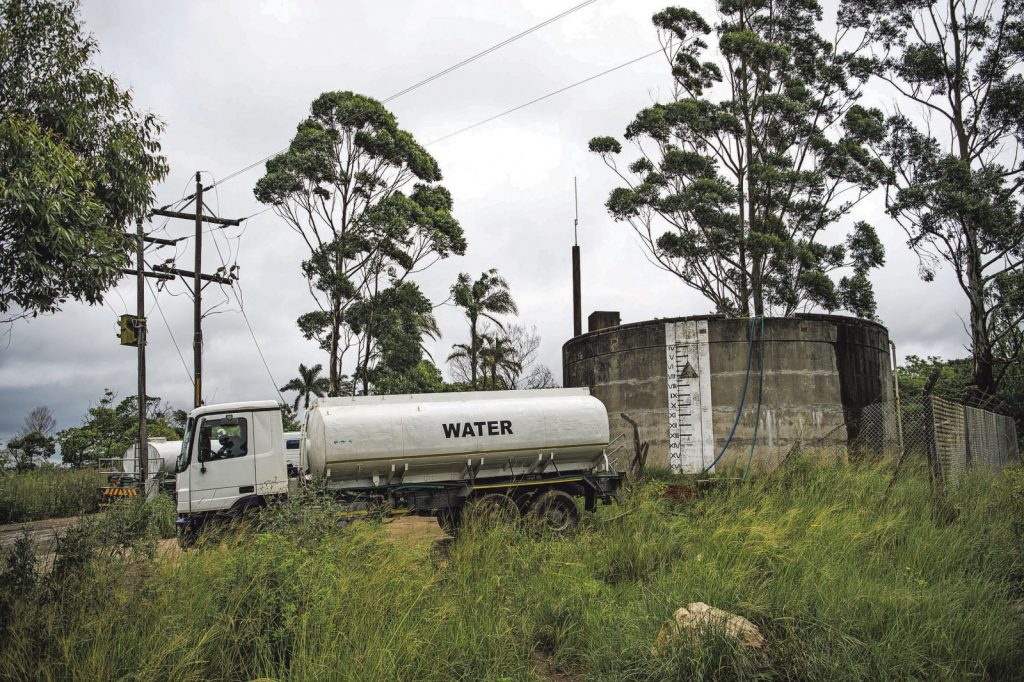 Photo: Photo Delwyn Verasamy
“Therefore, it did not measure planned water interruptions and unplanned interruptions of less than 24 hours. As a result, Rand Water reported zero unplanned water interruption days for the period reported, despite parts of the City of Johannesburg being without water for a week.
“The interruptions, reported by the [Rand] water board to be a result of electrical problems, caused several reservoirs to run dry in various areas. The City of Johannesburg implemented contingency plans to lessen the impact. A similar event occurred in mid-March 2022, again causing several reservoirs to run dry and leaving citizens in affected areas without water,” the report said.
“This was also evident during the planned shutdown in November 2020, where citizens were without water for three days.”
Dire state
Dr Ferrial Adam, the manager of Outa WaterCAN, said South Africa’s water situation will not improve until water boards maintain infrastructure. The AG’s report “once again highlights what we already know – our water and sanitation is in a dire state.
“Since the last report there has been minimal change and not enough culprits being held accountable. Many of the water boards are still plagued by bad financial planning, a lack of investment, underspending on maintenance and difficulties in collecting debt from municipalities. While the government is battling to fix municipalities, perhaps they must rethink direct payments to municipalities to ensure that bulk services can be paid for directly,” Adam said, adding how this could bypass potential maladministration and secure future bulk supply.
That the report revealed that Rand Water, South Africa’s largest water board, spent just 0.25% of the value of its assets on repairs and maintenance – the lowest in the country – “raises more questions, given the recent water shedding in Johannesburg, where we were told that the fault lies with municipalities”, she said.
[/membership]