Driven to closure: Sunshine Hospital’s survival depends on the Road Accident Fund finally paying the money the court has ordered it to.
A private hospital on the East Rand dedicated to treating accident victims faced closure because the Road Accident Fund (RAF) refused to pay it hundreds of millions in arrears — but may have been granted a reprieve by the constitutional court.
The apex court on Thursday denied the RAF leave to appeal a high court ruling from July that it pay the Sunshine hospital in Actonville R301 million.
The decision came four days after Ken Ford, the hospital’s director, told 131 staff they would receive their last salary at the end of April.
Ford said he had no choice after RAF chief executive Collins Letsoalo insisted, as per his petition to the concourt, that claims could not be paid pending the finalisation of a Special Investigating Unit (SIU) inquiry into the fund.
Employees reacted to their retrenchment with composure, and remarkable concern for their employer, he said.
The hospital’s legal battle for payment resembled a wealth of other claimants’ battles with the fund that recently earned Letsoalo the wrath of the Mpumalanga high court.
Sunshine had received no payment from the fund since May and stopped taking new admissions in January, when it had 57 patients. Currently only four remain in its care.
It was bought in 2002 by Newnet, of which Ford owns half. It had a policy of never turning away trauma patients with no medical aid. Word spread that it readily accepted indigent patients when other private hospitals did not, Ford said, and ambulances started bringing accident victims directly to Sunshine.
“Patients were lying in state hospitals with serious injuries without being treated, so we started to take them because they requested a transfer.
The 200-bed hospital came to take only road accident victims, and the RAF began referring patients to it.
“It took over our business, we just got full, that ended up as the business. The demand was such that we had no capacity to treat anybody else, and most of that demand came from the state.”
In 2007, the RAF signed a cooperation agreement with Newnet, whereby the fund assigned staff to the hospital to help victims file compensation claims.
The arrangement was halted after the RAF gazetted a tariff that was prohibitively low. Sunshine, like other private hospitals, stopped taking fund claimants. In 2010, the constitutional court ruled that a tariff that denied road accident victims treatment in a private health facility was irrational.
Sunshine again started taking in RAF patients. In the meanwhile, a law amendment lifted the R25 000 limit on the RAF’s liability to patients injured in the vehicle deemed responsible for an accident. The hospital experienced a deluge of referrals, Ford said.
Its working relationship with the fund endured until April 2020, when “suddenly we did not get a cent”.
Others found themselves in the same boat. The Hospital Association of South Africa asked why accident claims went unpaid.
The Covid-19 pandemic was initially cited as the cause of delay. Eventually, then minister of transport Fikile Mbalula was alerted and a meeting called with the hospital association and representatives of affected parties.
The RAF insisted it was paying all hospitals monthly. Ford said this was not true in his case. Three more meetings followed, before the fund told him the hospital was under investigation. He gave investigators full access to the hospital.
In December 2020, Newnet approached the high court for payment of arrears that had accrued over years as claims went unpaid.
The RAF agreed to pay R394 million in monthly instalments of R36 million. This was the sum of the claims sent to the RAF’s Received Not Yet Paid (RNYP) list, which reflects invoices approved by the fund’s auditing department for payment within 30 days. It continued paying for 18 months, disbursing R683 million.
Payment ceased without explanation in May last year. There was further R301 million on the list of invoices approved for payment.
The hospital again took legal action.
In court papers, Newnet said it had interpreted ongoing payment as confirmation that it was “never intended to be limited to that amount”, but meant to cover ongoing treatment of RAF claimants.
This was confirmed, the company’s lawyers said, by the fact that the RAF’s administrators continued approving invoices from the hospital, attaching these to the RNYP list. There was further confirmation that the fund kept referring patients to the hospital.
Newnet’s lawyers obtained a warrant of execution to attach RAF property, which the fund challenged in the Pretoria high court.
The company filed a counter application for the sum of R301 million, to be paid within two days. Alternatively, it asked the court to order that the RAF pay R90 million immediately, and the rest in monthly instalments of R45.5 million.
In an affidavit, Newnet said the proceedings were literally a matter of life and death for patients who had no way of paying for treatment if the fund did not.
The hospital was by then owed more than double the amount claimed, which was calculated only on the basis of invoices confirmed as due for payment by the RAF’s merits and bill review section.
“In fact the full amount due by the RAF to Newnet at this stage amounts to approximately R800 million.”
The hospital said it had no hope of securing bridging finance from a bank because the RAF was its only significant debtor.
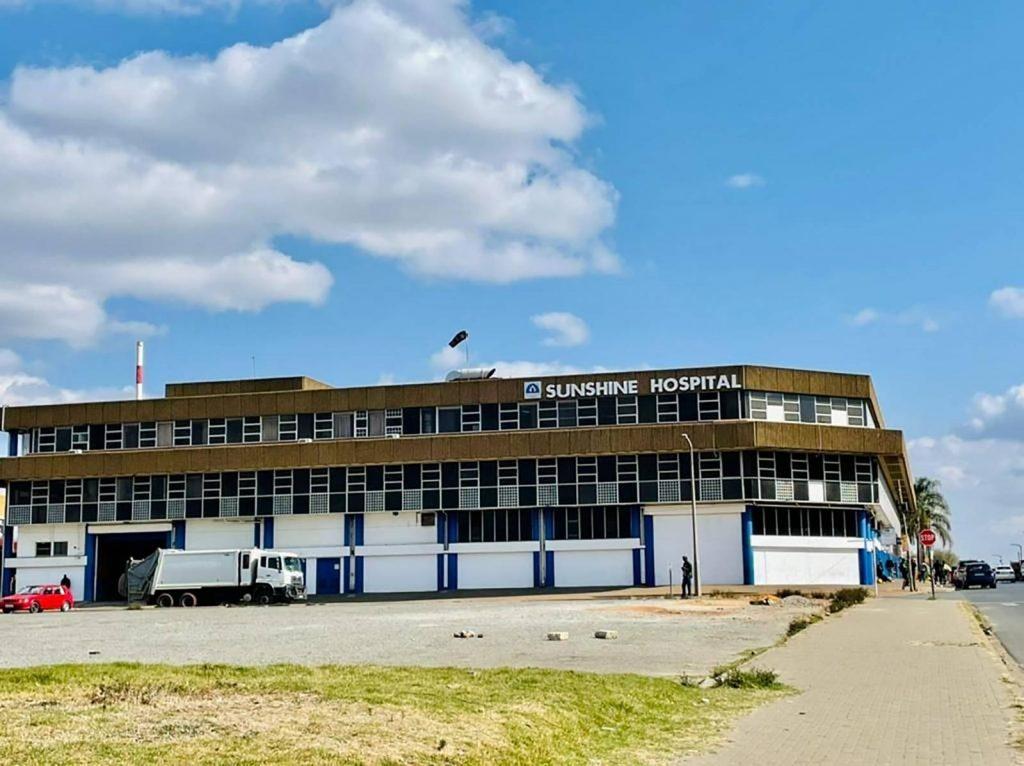 The Sunshine Hospital on the East Rand dedicated to treating accident victims faced closure because the Road Accident Fund refused to pay it hundreds of millions in arrears — but may have been granted a reprieve by the constitutional court.
“Financial institutions are simply not interested in providing facilities to Newnet if it is disclosed to them that the reason for the need arose from non-payment by the RAF and that the ability of Newnet to repay any advances will be dependent on future payments by the RAF.”
On 25 July, Justice Nicoline Janse van Nieuwenhuizen ruled that the attachment process was invalid but ordered the RAF to resume monthly payments to cover the R301 million. She dismissed the fund’s argument that it could not pay invoices without the say-so of the SIU.
The high court refused the RAF leave to appeal in August and the supreme court of appeal followed suit in September. The following month, Letsoalo petitioned the constitutional court for leave to appeal, further suspending the implementation of the high court order.
In a founding affidavit, Letsoalo said the fund could not pay the hospital pending the finalisation of the SIU investigation as doing so might be deemed irregular or wasteful expenditure.
Letsoalo then sought to introduce an affidavit by SIU investigator Mbuso Maseko as proof that Sunshine Hospital was under investigation, saying he could not obtain it earlier for lack of time.
The presidential proclamation, signed in December 2021, authorises the SIU to investigate maladministration and corruption in the fund, including unlawful payments made by the fund, and to recoup financial losses.
SIU spokesman Kaizer Kganyago told the Mail & Guardian the hospital was not a suspect in the investigation but a person of interest, as were all parties who submitted claims to the fund on behalf of road accident victims. “Being a person of interest does not mean you have done anything wrong.”
The unit reported a week ago that it was, in the first phase of its inquiry, investigating 102 law firms that had received duplicate payments from the RAF.
A 2021 Pretoria high court ruling has cast light on how duplication typically arose. When a writ was issued against the fund, notice was sent to its central treasury office. But by then most claims had already received attention in a regional RAF office, “which then makes payment to the attorneys in ignorance of the attachment and payment to the relevant sheriff”.
The court granted an exceptional order suspending the execution of writs of execution and attachment for six months to give the RAF breathing space to settle all personal claims stemming from court or settlement orders older than 180 days “ to prevent the RAF’s implosion”.
At the time of the court ruling, its draft financial statements reflected a deficit of R322 billion. Its legal bill stood at R10.8 billion in 2020. Letsoalo has since fired the fund’s panel of attorneys, and the RAF has incurred a string of adverse court rulings.
A perusal of the litigation shows two patterns, one of settling claims on the date of the court hearing, the second of appealing adverse rulings, promptly suspending implementation of the order for payment.
The fund is seeking leave to appeal a judgment that declared unlawful its directive that no claimants be paid if their medical aid had already covered treatment. It was challenged by Discovery Health as discriminatory.
A ruling by Mpumalanga Judge President Francis Legodi in January delivered a damning analysis of the RAF’s handling of claims, and its inability to comply with court rules.
Legodi issued a personal cost order against Letsoalo and the directors of the fund in two consolidated cases where it agreed on the trial date to settle claims that had been mired in delays for years, marked by requests for documents already filed.
The court had summoned Letsoalo to explain why the RAF failed to take part in pre-trial meetings, why many matters were at the 11th hour “when enormous costs of litigation were already incurred” and what it was doing to stem this waste.
Letsoalo responded with a letter saying he was struggling to find counsel to help him understand what had transpired in the case.
The court said Letsoalo and the board were to blame for the fund’s lack of legal capacity, which burdened courts and prejudiced claimants.
“The frustrations brought about by this chaos can be seen from the directives issued by various divisions including this division,” the judge said.
He ordered that the ruling be brought to Mbalula’s attention since the chief executive “serves at the pleasure of the minister and the board”.
Letsoalo was sacked from the Passenger Rail Agency of South Africa in 2017, amid a controversy over a three-fold increase in his salary. He has claimed that he was sidelined for fighting corruption.
The RAF responded to questions on the impasse as follows: “As a state institution, the RAF cannot honour payments where there has been clear corrupt practices. Overbilling, over-servicing and fraudulent claims are under investigation and the RAF cannot continue paying state funds with this evidence in its possession.”
“The PFMA expects the RAF to pay valid invoices — what is fraudulent and corrupt cannot be valid.
“Meanwhile, Mr Letsoalo and his lawyers have nothing to do with the matter between Sunshine and the RAF.”