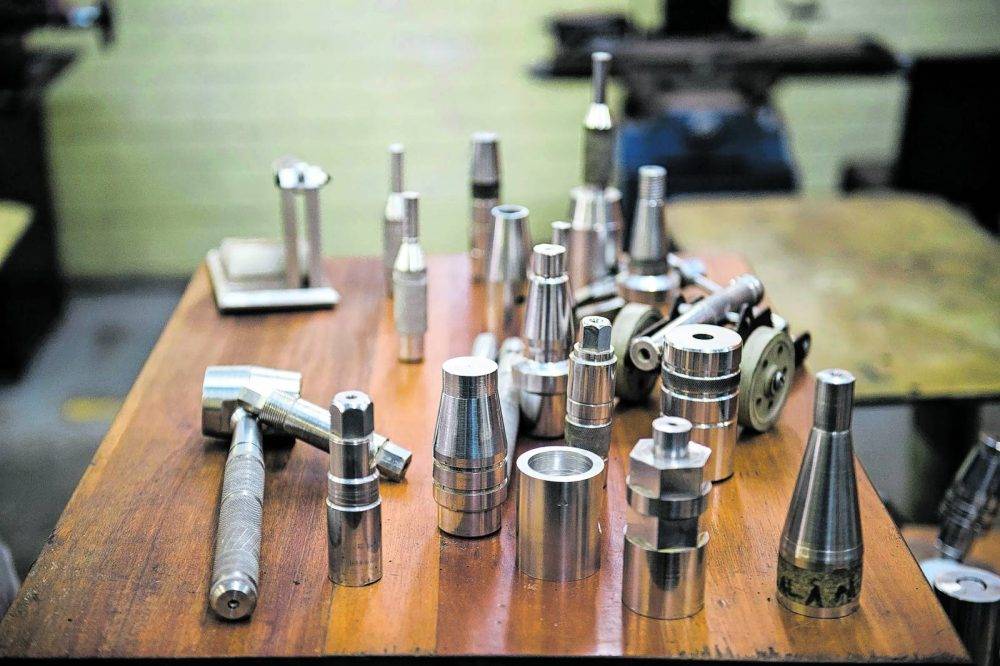
Engineering machinery at the Katlehong Engineering School. (Delwyn Verasamy/M&G)
Twelve matric learners from a Katlehong school in Gauteng will shortly do their practicals to become accredited drone pilots, giving them a competitive edge in the scarce skills job market.
The learners, who will undertake their final drone assessments after completing their national senior certificate examinations on 28 November, are the first cohort of a three-year drone academy programme at the Katlehong Engineering School.
It is part of an array of initiatives aimed at priming the township’s children to matriculate with additional accreditation and sought-after technical skills.
Drones, officially known as unmanned aerial vehicles, are specialised aircraft with no human pilots, crew or passengers on board.
“Because the content of the course is so advanced, and the learners have normal schoolwork to do, we had to divide the drone curriculum, meaning the 12 learners began the programme in their grade 10 year,” explained Jaco Opperman, the school principal.
The programme is run in conjunction with Cranfield Aviation Training in Johannesburg’s Fourways suburb while the Katlehong school waits to receive its accreditation from the South African Civil Aviation Authority to do its industry-recognised practicals without an external body.
Outside of the school, Cranfield charges people nearly R24 000 for a 10-day course that includes theory and practical lessons to acquire a pilot licence.
“We are waiting for the 12 learners to complete their grade 12 exams before they can go for their final practicals because you must be 18 years old to receive a drone-flying licence,” said Opperman, who has been the school principal since July 2015.
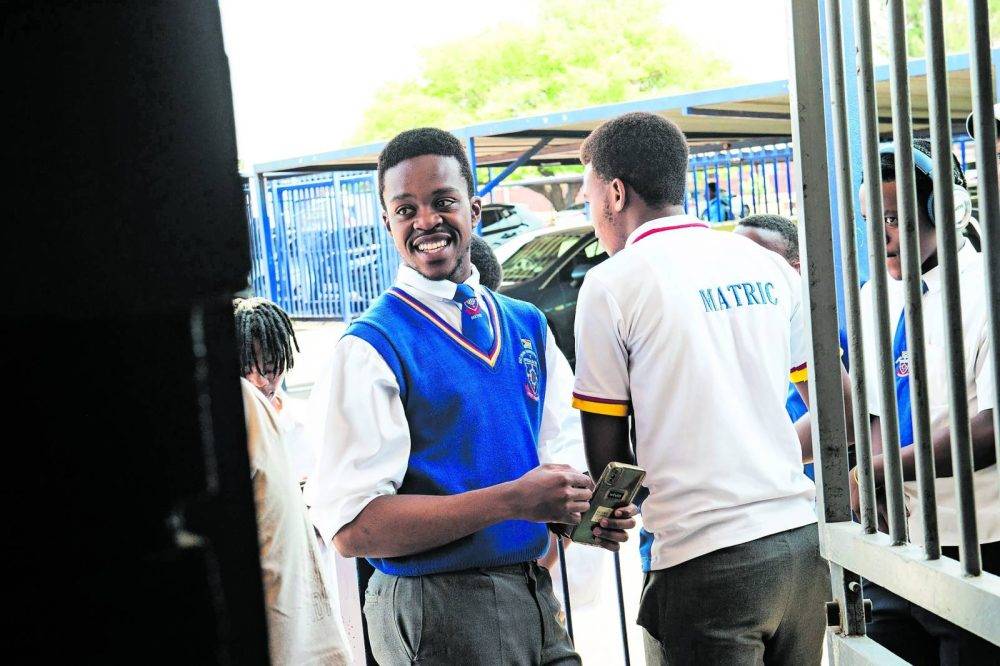 Grade 12 learners are writing their final exams at the Katlehong Engineering School. (Delwyn Verasamy/M&G)
Rantsani Bogopa, the deputy principal, said the school’s leadership identified a teacher among the staff to receive training and get recognition by the civil aviation authority as a drone flying instructor.
“One of the requirements of becoming a school of specialisation is the upskilling of employees. So, we take that very seriously,” Bogopa said.
“Unless it is necessary, we do not like going out there to find people to run our initiatives for us — we have capable people right here who just need the correct training.”
The Katlehong school is one of 35 schools of specialisation in Gauteng offering specialties such as maths, science, information and communication technology, engineering, commerce, entrepreneurship, arts and sports.
It was launched by now premier Panyaza Lesufi during his tenure from 2014 to 2022 as member of the provincial executive council responsible for education.
For Opperman’s school the main focus — among a host of other technical disciplines — is to produce electrical, mechanical and civil engineers, including industrial and production engineering and physical engineering science technicians, all of which form part of the top 10 scarce skills in South Africa.
The specialisation school also has certification from the Institute of Plumbing South Africa to conduct trade tests for learners so that they can leave as accredited plumbers.
It is a model followed in all technical fields offered in Katlehong, with 73 former learners currently serving apprenticeships to become mechanical engineers at major dealerships, including Mercedes-Benz.
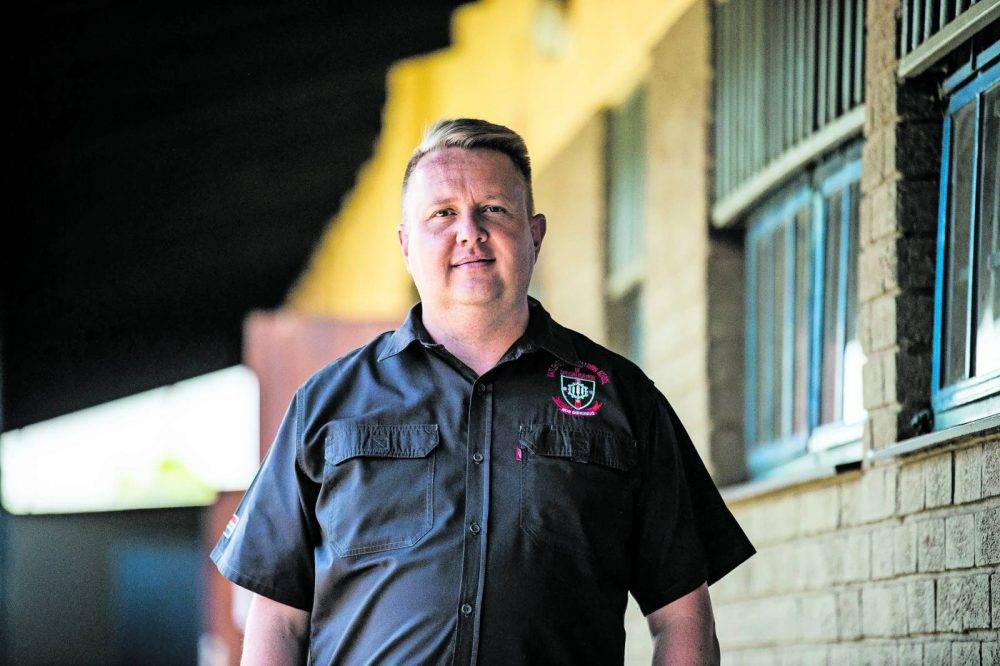
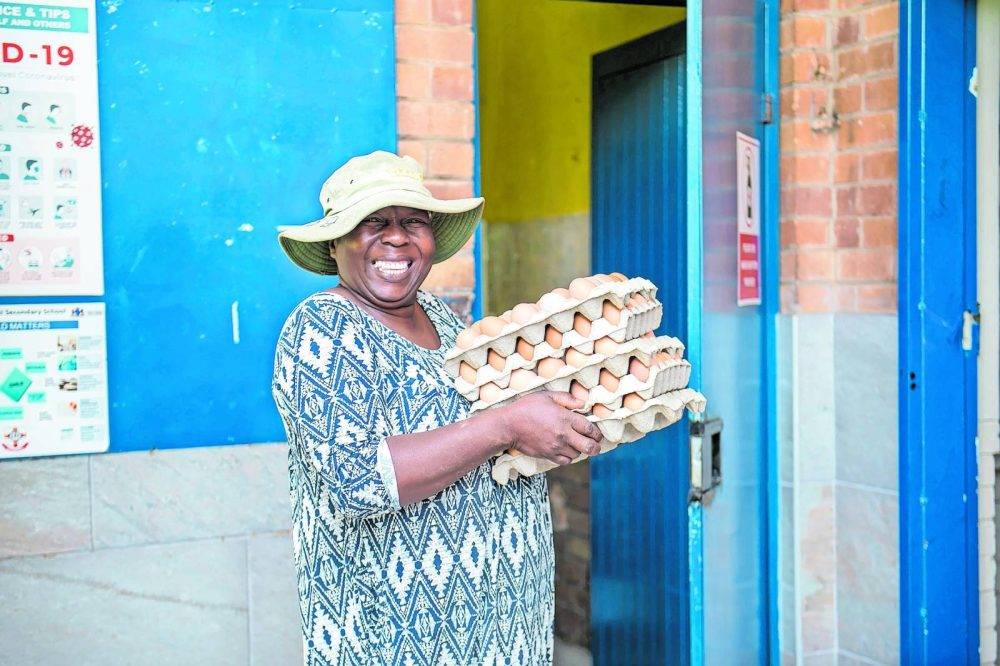 Schooled for success: Principal Jaco Opperman (left) drives entrepreneurship at his school, which has a chicken farm, where Sis’Nomsa (right) runs for the egg-selling business. (Delwyn Verasamy/M&G)
“We have a relationship with Mercedes-Benz and our learners service cars at those dealerships. We log their hours so that, when they leave school, they cut the time to become mechanical engineers from 48 months to 30 months,” Opperman said.
Multinational energy and electrical engineering firm Actom is also a partner at the school, providing a weekend maths and science curriculum to learners from grades 9 to 12, who are chosen to participate, based on their marks.
This year, 20 learners who matriculated last year began their apprenticeships with the company at its facility in Germiston, Ekurhuleni.
Grade 9 pupil Enzokuhle Unam Ngcaku is part of Actom’s weekend maths class, and wants to become an aircraft mechanic after finding out about the profession during a career day at his school earlier this year.
“I will do a three-year course to reach my goal, the last two years will be a paid apprenticeship, instead of the four-year undergraduate degree offered in university,” said the 15-year-old.
An example of companies recognising the importance of helping young people in trades is the recently launched Allan Gray Makers StartUp Academy, which wants to give entrepreneurial skills to plumbers and electricians aged 18 to 35. The academy is a subsidiary of financial services firm Allan Gray.
“We believe that entrepreneurship is a powerful driver of economic growth and job creation,” says Palesa Mofokeng, the recruitment and selection manager at Allan Gray Makers, which closes its applications on 31 January.
Lesufi said this drive to move learners away from a heavy focus on academics was the reason for launching advanced schools mainly in townships.
“Recent statistics show that 85% of matric learners go to universities after completing their matric and become academics. Schools of specialisation will change that,” Lesufi said in September 2022, as he wrapped up his tenure as education MEC.
“Learners in such schools will be able to either work immediately at industry-leading companies, or they will embark on entrepreneurship and start their own businesses.”
This week, Opperman said the entrepreneurial aspect formed an important part of his school, including a chicken farm with 1 840 hens producing about 70 trays of eggs a day.
The agricultural technology learners are responsible for feeding the hens, filling the coops with grain in the mornings and early and late afternoons, as well as cleaning the commercial spaces “because they have to learn responsibility”, the principal said.
“We wanted the school to focus on entrepreneurship, so we introduced project-based learning — focusing on the practical aspects of education because learners enjoy that more,” he added.
“The learners are involved in the sorting, the packing, the marketing and the selling of the eggs. Remember, this is a no-fee-paying school, so this is a way to raise funds for the school.”
The school repurposed an old building into an air-conditioned office where the egg-selling operation is run, with only card payments or electronic fund transfers accepted on the premises.
Moreover, learners grow vegetables used in their feeding scheme programme. The main crop is spinach.
A tour by the Mail & Guardian showed the use of technology such as the hydroponic system of planting.
The school was also installing a dripping system in its agricultural section as part of innovative ways of growing crops, this time using buckets to produce green beans, tomatoes and cucumbers, among other vegetables.
“There is a skill when it comes to growing cucumbers — you must control the environment and the temperature inside [the greenhouse], otherwise it tends to grow skew and you cannot sell it to the market,” Opperman explained.
Abri Herbst, a teacher and head of agricultural technology at the school, was getting his hands dirty preparing the greenhouse for the new planting technology during the M&G’s visit.
But it is the community outreach projects that the school especially takes pride in, such as availing its driving school facilities — set up to ensure that learners leave school with a driver’s licence — to Katlehong residents, especially young people, free of charge.
“It’s an old saying, but I really believe that sharing is caring,” Opperman said.
The school owns a registered driving truck and a driving simulator machine, which is where the learners begin their lessons before moving on to the code 10 truck.
“I don’t want my children to crash any of the Mercedes-Benz vehicles when they are doing their apprenticeships. A driving licence — basically a competent driver — has become a necessity when you go into the job market,” Opperman added.
“I want my children to leave here with added advantages for them to be competitive in their adult years.”
A native of Ekurhuleni, having grown up in the city’s suburbs towards the end of apartheid, Opperman is adamant that he is as much a member of Katlehong as its mainly black residents, saying that he loves the area and wants to see all its schools thrive.
It is a township beset with educational problems. The M&G reported in February about how the Kwa-Dukathole Comprehensive School “squandered” R10 million in government funding over three years, while matric results plummeted from an 88% pass rate in 2021 to 66.2% last year, and high school learners sat on bricks because there were no chairs.
Police are also investigating a fraud case after R70 000 was allegedly stolen from Kwa-Dukathole in January last year after a grade 12 learner’s name was allegedly used by the school’s governing body chairperson, Siphamandla Thulo, to syphon the money.
There have been no consequences implemented by the Gauteng education department for the apparent looting of public funds, which resulted in the school securing credit of R20 000 from a loan shark for emergency purchases.
Opperman, while acknowledging “issues” in some Katlehong schools, spoke highly of the department, saying he received major support from the premier’s office for his work.
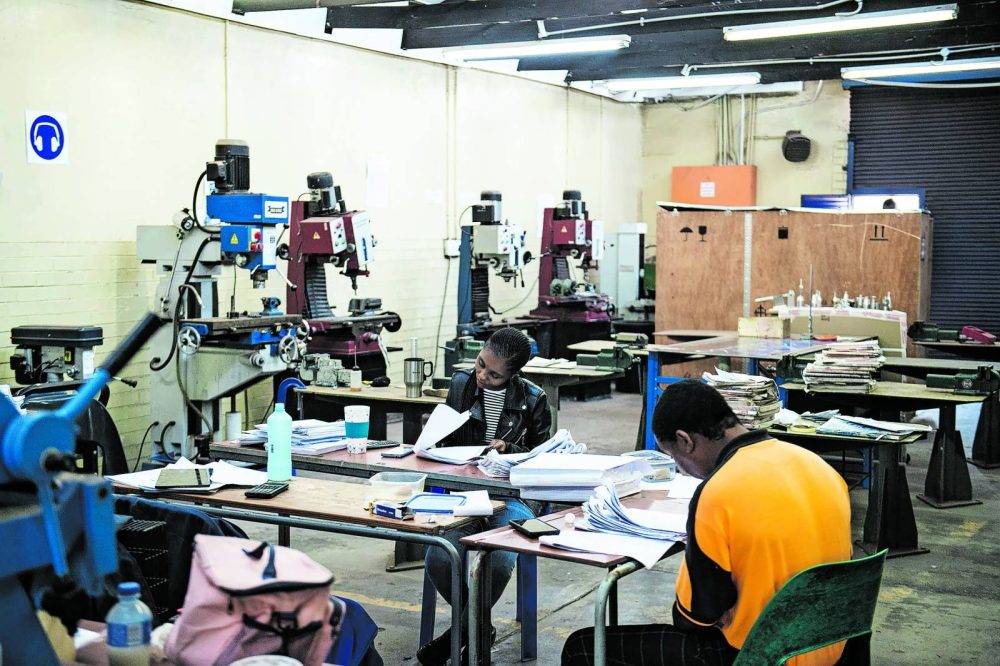
 Nuts and bolts of education: Teachers mark exam papers at the fitting-and-turning and mechanical engineering workshop. (Delwyn Verasamy/M&G)
The principal, who still has 20 years before reaching retirement age, said he had no plans to leave Katlehong because “there was still a lot of work to be done”.
His love for the township dates back to about 1998 when he was a junior police officer assigned to the Katlehong North police station.
“We used to arrest a lot of car hijackers and a vast majority of them were young men,” Opperman recalled.
“The other cops used to beat and torture them a lot. I could not stomach it because I’m a very soft person, but I also could see that all that was needed was to give the young guys a proper opportunity so that crime did not become an option to earn a living.”
He left the police service after a few years to pursue an education qualification at the University of Pretoria, eventually ending up with a postgraduate degree from the same institution.
Opperman said he and the chairperson of his school governing body, Tshidiso Molese, were in the process of extending the engineering school’s campus by acquiring the former grounds and classrooms of Kgolamoriti Primary School.
The former Sepedi first-language school had to close a few years ago when the number of learners dropped.
Should the education department grant the request, Opperman said the premises of the former primary school would be used for learners in grades 8 and 9.
“We have more than 3 000 applications for grade 8, but we can only accept 250. Everyone wants to come here, which is a good thing,” he said.
“I want to increase that intake to 500 in grade 8 so that more children get the opportunity to be taught by us. As I said to you, we still have a lot of work to do before I even think about leaving Katlehong.”