


In June, this country turns its face towards its young. We always have, since the morning in 1976 when the children of Soweto walked out of their classrooms and into history.
I was not yet born when Hector Pieterson was carried bleeding through those streets. I arrived later, in a Johannesburg that still belonged, by law, to other people. My mother was a domestic worker. I learned early what it meant to grow up in a country that had decided, before I could even speak, what my language, my schooling and my horizon were permitted to be. My identity is what keeps me anchored because it connects me to the struggles, sacrifices and dignity of those who came before me.
That is why the fiftieth anniversary of the Soweto Uprising is not, for me, a date in a textbook. It is the hinge on which my own life turned. The young people who marched on 16 June 1976 were protesting, on the face of it, the imposition of Afrikaans as the language of their learning.
But beneath that grievance lay something far larger: a refusal to accept that the children of the poor should be schooled for servitude. They were demanding an education worthy of their humanity. They paid for that demand in blood.
I am a beneficiary of what they bought. The domestic worker’s daughter became an advocate, then a prosecutor and now the public protector of the Republic. I do not recount this to celebrate a personal journey.
I recount it because every door that opened for me was first forced open by teenagers with placards who were younger than many of the students whose complaints now cross my desk. I carry their names into this office.
So when people ask what drives the cases I have chosen to pursue, I have deliberately steered this office towards the systemic — towards administrative and governance failures that do not harm a single individual alone but instead quietly distort the futures of thousands and towards the vast inequalities that leave the poor and vulnerable with limited access to some of life’s most basic necessities, which stand as a constant and stubborn reminder of the unfinished work of our democratic project started by brave pioneers such as the class of ’76.
Consider the state of our schools today. When my investigators visited the Eastern Cape, they found learners packed into classrooms at a ratio of more than 120 learners to a single classroom and children still having to use pit latrines, half a century after a generation marched for the dignity of the African child.
In Thembisa, we found a primary school built on a wetland, its grounds run through with sewage, with nearly R100 million spent on a structure unfit for a child to enter.
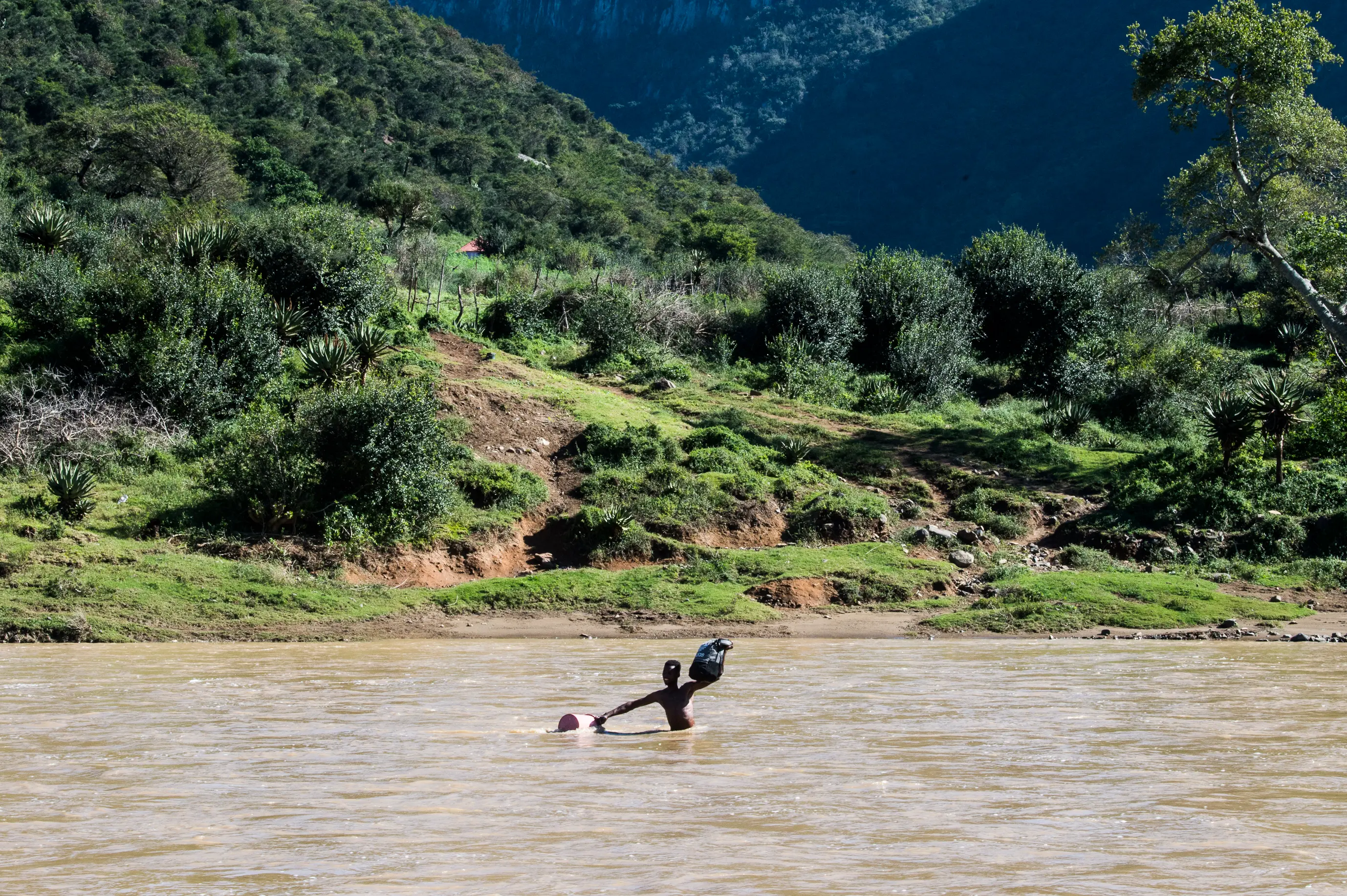
In KwaZulu-Natal — the province that shaped me — we stood on the banks of the uThukela River and listened to learners describe how an unfinished bridge keeps them from their classrooms when the rains come, the same waters that separate the sick from the clinic on the far side.
Fifty years after Soweto, a child in this country can still be kept from school not by a law but by a river and a government that did not finish a bridge.
This is what I mean when I say the dream has been deferred rather than fulfilled. The students of 1976 did not challenge the system so that their grandchildren could learn to read while seated on a dirt floor. The struggle has changed its shape — it is now a struggle against maladministration, against money that disappears somewhere between the budget and the building — but it is the same struggle.
It is the same struggle, too, when it comes to the cost of higher learning. The youth of ’76 fought their way towards the schoolhouse; today’s students fight to remain in the lecture hall.
The systemic work we have driven on the National Student Financial Aid Scheme (NSFAS) — on allowances that arrive late or not at all, on the maze that stands between a poor child and the funding that is theirs by right — is, to me, the direct descendant of that first demand.
Without education, we cannot preserve the future of this country. I have said it on every campus I have visited and I will keep saying it.
And it is the same struggle when it comes to those our society leaves most exposed. Our investigation into how the justice system treats victims of gender-based violence began in the worst possible way — with a woman turned away from a court when she came seeking protection, who was then murdered together with her child.
We inspected dozens of courts and found buildings unfit to receive the frightened and the grieving: files scattered on the floor, systems that did not speak to one another, doors that ought to have opened and did not.
The fight for freedom was never only about the vote. It was about whether the state would show up for the woman seeking a protection order, for the child owed maintenance, for the poor and the powerless when they most needed it.
Too often we found that it does not — and that is precisely the conduct this office exists to correct.
I am reminded often that I am the youngest person to have held this office and the first to have served as deputy before ascending to it. I have not always known what to make of that “distinction”. But I have come to believe it carries a particular obligation.
There is, in our country, a deepening discord between young people and the institutions of our democracy — a creeping sense that the courts, the Chapter Nine bodies, the very Constitution itself, belong to someone else. I understand the pull of that apathy. I also know it to be the most dangerous inheritance we could leave behind.
Today, young people under the age of 30 make up more than half of the world’s population at a time when extreme global inequality is increasing.
Young people globally are expressing growing frustration with what is perceived as incapable political leaders and institutions, rampant corruption and government repression.
This breakdown in trust between young people and the government, coupled with young people’s continued political exclusion, is contributing to a decreased affinity for institutions and shifting political identities.
However, the young people of 1976 did not turn from the institutions of their day in resignation; where those institutions excluded them, they demanded better ones into being. Their faith was never in the system as it was but in the system as it could become.
That is the bridge I most want to help build — not only across the uThukela but across the generations. When I make time to attend graduation ceremonies or to sit with learners and speak plainly about integrity and ethics, it is not ceremony for its own sake. It is an attempt to say to a young person, in a language closer to their own, that this democracy is theirs to claim; that accountability is not a favour the powerful grant but a right the people hold; and that the institution I serve will stand beside them when they choose to exercise it.
This conviction now reaches beyond our borders. Through the African Ombudsman Research Centre, which I am privileged to chair, we are equipping ombudsman institutions across the continent to hold their own states to account and to measure our collective progress against the African Union’s Agenda 2063 and the Sustainable Development Goals.
Good governance, the rule of law and clean administration are not abstractions. They are what the eradication of poverty actually requires and poverty, in our country, falls hardest of all on the young. As I have reminded my fellow heads of oversight institutions, our own hands must be clean before we can call for clean government.
Fifty years on, I have come to think that the truest tribute we can pay to the children of Soweto is not a wreath or a moment’s silence. It is to recognise that their dream is a common denominator running through every South African generation since then — a constitutional promise of a better life for all.
We honour the youth for the tremendous contribution to the struggle for freedom that they have made and are still making, [and] in the words of the great Madiba: “Every new achievement of our fledgling democracy does honour to their memory. Each candle that we replace with electricity, each new clinic that we build, each child that we immunise against a preventable disease, each house that we build, each acre of land that is redistributed, each new tap that we open, each dusty road that we have tarred brings us closer to the vision that we all prayed for on that occasion we last met — a better life for all.”
The foundation for that better life has been laid. But there is still much more to pray for and work towards.” That dream is not yet fulfilled. But neither is it abandoned.
And for as long as there are still rivers our children must cross to reach a classroom, I will understand my work to be exactly what those young people began on a cold winter morning 50 years ago — the unfinished business of freedom.
Advocate Kholeka Gcaleka is the public protector of South Africa.