


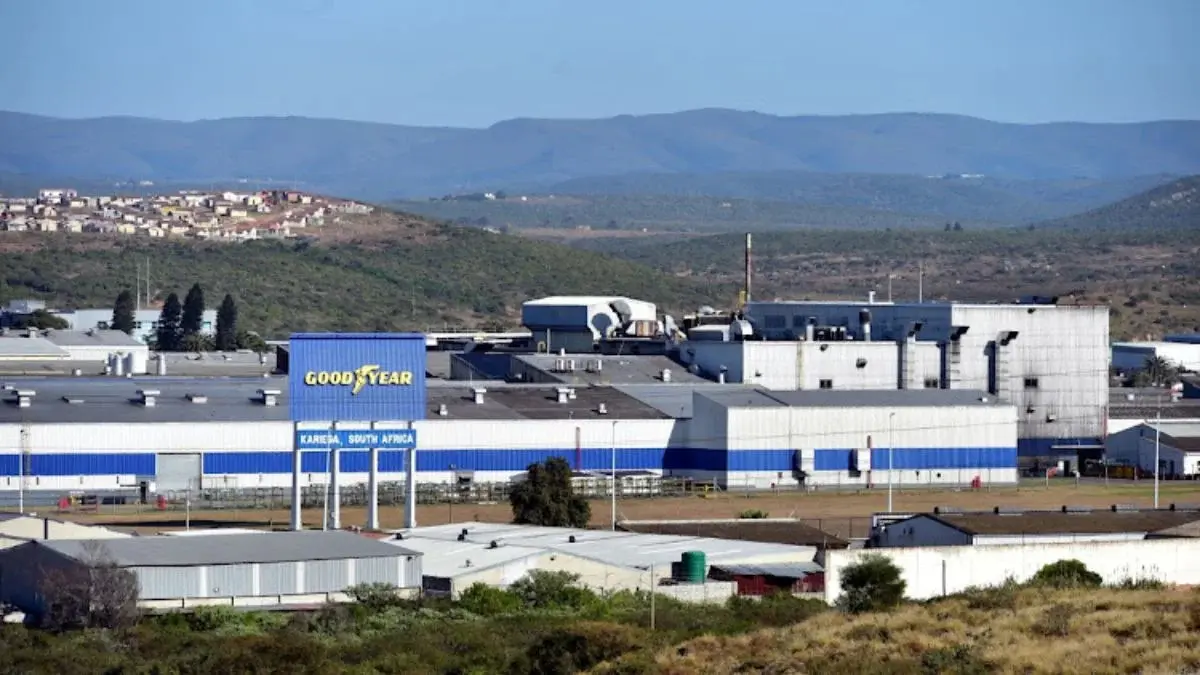
Goodyear shut its 78-year-old tyre plant in the Eastern Cape in 2025, costing more than 900 jobs. Nissan sold its Rosslyn plant to Chinese automaker Chery and stopped building cars there after 60 years of manufacturing in South Africa. And last year, Ford announced it would cut close to 500 jobs.
The National Association of Automotive Component and Allied Manufacturers (Naacam) says South Africa's auto component sector has lost about 7 500 jobs and seen at least 15 businesses close over three years. Sixty-three percent of its members say they're either cutting jobs or considering it. This is one of the country's biggest employers and biggest export earners and it is struggling.
Several factors are contributing to the closures. Cheap imports, mostly from China and increasingly from India, are landing in South Africa at prices local factories can't match. Energy and logistics costs keep climbing and electricity supply remains unreliable. Then there's the global movement to electric and new-energy vehicles.
William Kelly, an industry observer, says switching from a petrol or diesel drivetrain to an electric one is mostly a retooling exercise and South African plants could build electric vehicles if someone made the investment case. But why would an original equipment manufacturer (OEM) spend billions retooling a local line for an electric Hilux when Thailand builds it?
Naacam chief operating officer Nduduzo Chala says that when an OEM says it will "now make 80, 70 or 50 vehicles" instead of what was planned, component makers don't have a choice — they cut shifts and then they cut people.
But amid the depressing headlines, South Africa is landing promising automotive investments.
I recently visited Ogihara South Africa's new parts manufacturing facility at Dube TradePort in KZN, touring the site with the civil and structural engineers behind it, STRUXIT.
The 32 000m2 industrial press plant development, valued at more than R1.1 billion, is the largest investment Dube TradePort has landed. The plant localises the production of about 25 000 tonnes of pressed steel components previously imported from Thailand, manufacturing 101 inner body parts for the Toyota Hilux and Fortuner. Once it's running full tilt, it'll employ more than 250 people and support more than 1 000 jobs indirectly.
It sits inside Dube TradePort's TradeZone 2, which is a Special Economic Zone (SEZ). Think of an SEZ as a business-friendly bubble inside a country. It's a defined patch of land where taxes are lower and red tape is thinner.
More than R4.6 billion has been invested on site in Dube TradePort, and more than 5 000 permanent jobs have been created. Ogihara accounts for more than a quarter of that.
Stuart Manzie, STRUXIT's industrial lead on the project, explained that the team looked beyond finding the first suitable-looking plot.
"A press plant like this runs 800-tonne and 500-tonne presses and one monster 2 300-tonne press, hammering steel all day," said Manzie. "That creates enormous vibration."
To solve this, the engineering team designed an isolated pit system "specifically engineered to dampen those forces before they travel anywhere they shouldn't".
South Africa produces around 40% of its car components locally; the rest is imported. The government's target, under the South African Automotive Masterplan, is 60% local production by 2035. The plant accounts for roughly 2% of that.
Kelly cautions that a car's 'local content' percentage is a complex equation that rests on traceability. For example, stamping, welding and assembling a panel on South African soil accounts for only part of its value if the steel is imported.
While the country produces enough flat steel of its own, a plant like Ogihara's can claim the entire panel as local content. If the steel is imported, only the stamping and pressing count towards the local content valuation and the local content number logged against that Hilux drops accordingly. "It is why we are seeing pressure on the local content percentage number", Kelly says. "At the current rate of de-industrialisation we will never see 60%."
The mechanism points at raw materials beneficiation. We keep debating it, while our own biggest steelmaker has spent years fighting to stay open and is now a fraction of its former size.
Modern cars are stacked with electronics, almost none of which are made here. Bosch, for example, may need two million units a year of a given part to make local manufacturing worthwhile. South Africa builds around a third of that.
Kelly says it has nothing to do with cars and everything to do with business: reliable power, lighter red tape, no employment equity thresholds to navigate, no requirement for a local partner to hold 30% of the operation and a country that wants those component lines has to compete on those terms, not just on wage costs.
Kelly points out that Chery's arrival is a much-needed bright light on the horizon.
Toyota and Volkswagen have decades of South African history while Ford has more than 100 years. The Germans at BMW and Mercedes-Benz build world-class cars locally and have done so for decades. But Chinese manufacturers are taking market share off all of them at a pace neither can match on price. Their shareholders are unhappy about it.
Investments like Ogihara mainly buy time; Kelly named 2029 as the sort of horizon people in the industry are watching. "Current investments are less about innovation and more about keeping production going."
The model line-up makes his point. Volkswagen's only locally built affordable cars are the Polo, now nine years old, and the Vivo, 17 years. Both are approaching end of life and Chinese rivals beat them on spec at a similar price.
Encouragingly, despite this, he says Volkswagen exports South Africa buys them in large numbers, underscoring the affordability proposition. Volkswagen exports plenty more to the EU and UK. The problem is that the key markets are phasing out fossil-fuelled vehicles, probably by 2035. If Volkswagen has nothing in the zero-emissions category to export by then, the plants' production numbers will probably drop, or worse, close.
Toyota no longer builds an affordable car locally, instead importing its entry-level range in partnership with Suzuki from India. The share of locally built cars sold to South Africans keeps shrinking even as headline investment numbers look fine, because OEMs are building fewer, pricier cars for higher margin and leaning harder on exports to keep the lines running — exports that South African buyers subsidise through import duties.
The duty is reallocated as credits that OEMs earn by exporting locally made cars, which they can then use to offset the import duty on vehicles they bring in from elsewhere or sell to other manufacturers. Ford is the exception. Since it's the one OEM building its own engines locally rather than importing them — though Kelly warns that advantage evaporates the moment Ford goes electric, since batteries are imported and sourced from other manufacturers.
Ogihara worked because conditions lined up in that spot. Ageing plants without SEZ backing, models nobody wants to make electric versions of yet, suppliers who can't compete with landed Chinese pricing — the closures keep coming, regardless of how good a new factory looks.
But one plant is a drop in the ocean next to thousands of lost jobs and a localisation target we are 20 percentage points short of. If lower tax, reliable power, working logistics and rules that hold for a decade are what it takes to justify a R1.2bn bet, why is the treatment reserved for a few hundred hectares instead of being the baseline everywhere?
Manufacturing is one of the last sectors that absorbs school-leavers at scale and hands them a skill worth keeping. Those skills are in serious demand globally, while a generation of young South Africans sit without work. Every plant that closes takes one of those opportunities away. Every Ogihara puts one back.
