Residents say the findings proves their concerns about pollution ‘are real'
At least once a week for two years, Stacy de Wet’s son woke up in the mornings with blood all over his bedding. Most nights, he had to use a nebuliser just so that he could breathe.
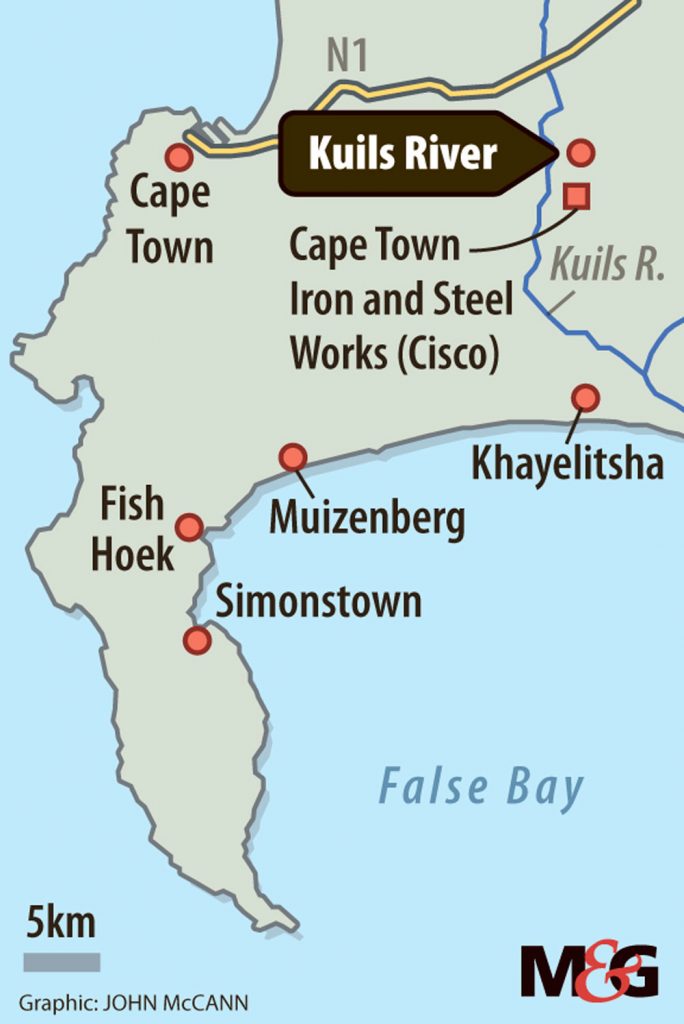
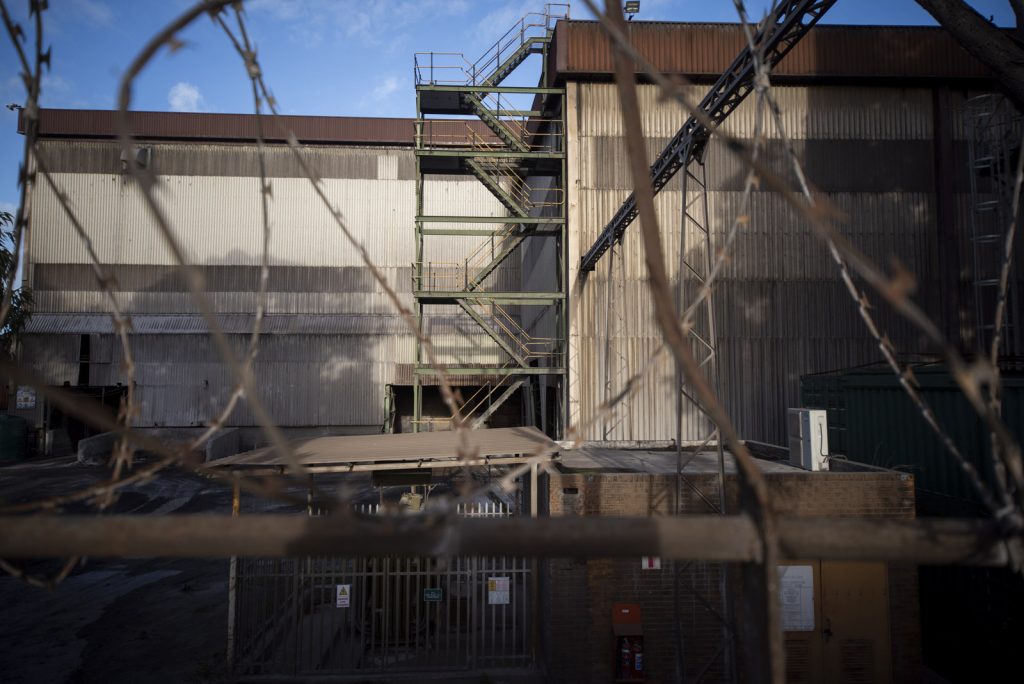
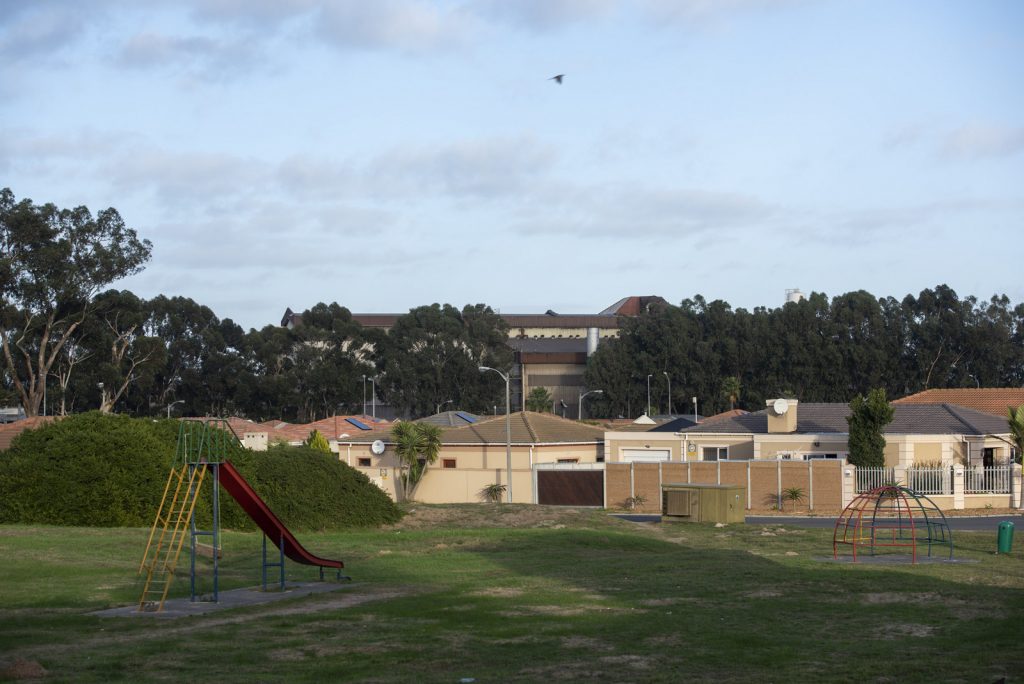
For the mother-of-two, who lives in Kuils River near Cape Town, the culprit loomed a kilometre from her family’s home: the Cape Town Iron and Steel Works (Cisco), which produces steel from scrap using an electric arc furnace.
The steel mill was placed under care and maintenance in 2010. In June 2012, it was sold to a Turkish company, DHT Holdings Africa. De Wet’s son was five when the facility restarted in October 2017.
“When they were operating so hectically within those two years, the whole area stank permanently of metal and chemical fumes. The smoke and the fumes were hanging so thick it felt like you were in a fog,” said De Wet.
Hundreds of complaints
Her son developed asthma and suffered regular nose bleeds. “We bought very expensive air purifiers, but when they [Cisco] were operating during load shedding, obviously we couldn’t use them.”
De Wet wasn’t alone. Between October 2017 and August 2019, more than 426 complaints were officially logged by local residents about the steel mill on their doorstep. These centred on noise, fugitive emissions, dust fallout, fumes, smell and smoke with residents listing headaches, insomnia, nosebleeds and coughing.
In 2019, the City of Cape Town approved Cisco’s final atmospheric emissions licence. Cisco ceased production in September that year and DHT Holdings Africa subsequently went into business rescue.
“My son hasn’t had asthma since Cisco closed,” De Wet said. “He didn’t have it before they reopened in 2017 and started pumping all those fumes out and when they closed, it mysteriously went away.”
Heavy metals in soil
Now, a new study by the South African Medical Research Council (SAMRC) has found that heavy metal soil contamination exists in some preschools in Kuils River, a residential suburb with commercial, industrial and agricultural zones. The aim of the study was to measure the levels of heavy metals, identify the contamination levels and possible sources of heavy metals, and evaluate the health risk caused by heavy metals to the children living in Kuils River.
Young children, it said, spend a considerable portion of their time in preschool facilities, often involved in play and developmental activities in their indoor and outdoor environments.
“Therefore, children who live or attend school in close proximity to industrial developments, especially where buffer zones are inadequate or absent, or where implementation of regulations and standards is lax, may become exposed to highly elevated concentrations of heavy metals in soil,” the study stated
A total of 143 soil samples were collected from 34 preschools, mainly from the garden area, children’s play area or the roadside, adjacent to or opposite the preschool. Although heavy metal concentrations in soil samples were below the South African reference levels, at certain preschools arsenic and zinc concentrations were found to exceed the more protective Canadian soil reference values.
“Our findings indicated that the ingestion pathway was the greatest contributor to the non-carcinogenic risk. The ingestion pathway also contributed the most to cancer risk.”
The analysis indicated contributions from industrial operations, non-exhaust vehicular emissions and natural sources to heavy metal exposure in the study population.
Health problems
The emission of pollutants such as heavy metals into air, water and soil may cause significant local and downstream contamination, as well as harmful exposures in affected communities.
Heavy metal exposure may result in a range of health problems, including neurocognitive effects, behavioural disorders, cardiovascular diseases and respiratory problems, even at very low levels. “Children are particularly vulnerable to ingestion of heavy metals (hand-to-mouth and object-to-mouth exposure pathways) deposited in soil,” said the study.
The baseline study provides evidence of heavy metal exposure in a vulnerable community situated in close proximity to pollutant-generating operations. “It indicates a missed opportunity to implement healthy planning practices that might have averted exposure to heavy metals and other pollutants in the longer term, and the associated burden of ill-health for resident communities as well as the future cost of care that will be borne by the health sector and the economy overall.”
To protect the affected people, children in particular, the study provides evidence of the need for action, including the institution of mandatory buffer zones between pollutant-generating activities and human settlements.
‘Toxic, hazardous’ dust
The study’s findings are heartbreaking, said De Wet. “No parent should have to worry about their child playing in contaminated soil.”
According to another Kuils River resident, who did not want to be named, the research has “basically proved” that their concerns are real. “I sincerely hope that some authorities wake up and take note regarding heavy metals soils contamination and poor spatial planning — lack of buffer zones.”
The resident said a fallout dust bucket project had been initiated by residents. “Dust samples were collected and sent away for full elemental analysis and various heavy metals were detected. This was all done at own cost and time. The results showed exceedances protective of a water resource for arsenic, cadmium, chromium, copper, manganese, nickel and lead. Chromium, manganese and lead also exceeded the standard residential soil screening values.
“This raised serious health concerns as well as concerns about how this facility was potentially polluting our receiving environment through the accumulation of toxic fallout. Heavy metals accumulate and do not degrade, remaining persistent in the environment.”
The resident is concerned about stockpiles of “bag house dust” being stored in polypropylene bulk bags on Cisco’s property. “Those bulk bags are being stored in the open, exposed to all weathering on normal soil. Some bags have burst open spilling said consents in Cisco’s south yard.
“We don’t know the contents of these damaged bulk bags but it’s alleged to contain electric arc furnace dust, which likely contains heavy metals such as lead, zinc, manganese, lithium, cadmium, cobalt, strontium, mercury etc. We don’t know why the bags are being allowed to accumulate or how long they will be stored in the open air.”
In November last year, the Kamal Group acquired Cisco.
“Upon arrival on site, the group realised that the previous owners had neglected some environmental obligations, like the stored bag house dust,” said Gagan Santos, the chairperson of Kamal Cisco. “The new management promptly commenced with efforts to remedy the situation, and we have made good progress in that direction as we have been able to conclude a contract for clearing all the accumulated dust.”
Santos said the Kamal Group is a well-established business house in Tanzania. “We are one of the leading steel rebar manufacturers in East Africa. The main priority of our chairman is to keep the environment and community safe and healthy. It is our sincere endeavour to take all the possible measures and provide all the necessary support to the society in this regard.”
Patricia van der Ross, mayoral committee member for community services and health at the City of Cape Town, said the stockpiles of “waste” are by-products of the steelmaking process, that were left onsite by the previous shareholders (DHT Africa), when the facility ceased production and went into business rescue in 2020. “The new management of Cisco appointed a contractor on 9 May, to re-bag this by-product (where required) and remove it off site, for further processing. This process is currently underway.”
Albi Modise, the spokesperson for the department of forestry, fisheries and the environment said Kamal Cisco is not registered for the storage of waste or as a waste management facility under the norms and standards for the storage of waste. The department had prioritised a further inspection.
‘We’re studying the findings’
Van der Ross said the city is studying the findings of the SAMRC’s research and has scheduled an meeting with the lead researcher “to unpack the study in more detail to obtain a better understanding of these findings. The study does, however, suggest that the sources of the heavy metals are from industry, motor vehicle emissions and natural origins”.
Rudolf van Jaarsveldt, the spokesperson for the Western Cape department of environmental affairs and development planning, said the “allegations raised in the study” are beyond the scope of the department’s mandate to address. “While the city was tasked to take the lead in the matter, this provincial government was always willing to participate in various site inspections and meetings to find solutions to the problem.”
According to Modise, the Green Scorpions, together with officials from the city, reacted to several complaints reported by people living near the Cisco facility in 2019.
“The initial concerns reported related to air quality impacts resulting from alleged significant emissions … A second inspection was conducted on 4 October 2019 to verify whether measures deployed by Cisco to address the concerns were effective.
“These included monitoring for dust by virtue of fencing, monitoring of emissions and particulate matter in the residential areas concerned, and continuous emission monitoring to evaluate the performance of the electric arc furnace. This included the conclusion of two rounds of stack emission testing and an assessment of heavy metals.”
During an October 2019 inspection, it was found that Cisco had ceased operations. “The department, however, wishes to point out that the results from air quality tests and monitoring did not warrant a criminal investigation by the department, and therefore, no further steps were taken.”
Dustfall well within legal limits
Van der Ross said historic dustfall monitoring results recorded both on Cisco’s facility’s fenceline and from residents’ sampling, has shown that the dustfall associated directly with Cisco, “is well within the legally prescribed industrial dustfall rates and the stricter non-industrial dustfall rate, which is indicative that the facility’s dust generation, is well managed”.
Cisco’s air pollution abatement equipment was previously assessed by an independent engineering specialist, “who made some recommendations for improvements to the system. These recommendations have been implemented,” she said.
The city required Cisco to appoint independent specialists to measure the concentration of heavy metals being discharged to the atmosphere through the stacks.
“A dispersion modelling study was then undertaken, whereby the results of these tests were then modelled to determine ground level atmospheric concentrations of these pollutants.
“The results were then compared to internationally accepted health exposure guideline levels. The study found that all measured pollutants were below levels that could cause health risks to sensitive populations.”
The city, she said, will continue to monitor Cisco’s operations closely “to ensure compliance with the atmospheric emission licence”.
[/membership]