Seabirds, many of them globally threatened, are sitting ducks for the rodents who are eating them alive
When seal harvesters arrived on South Africa’s Marion Island 200 years ago, they unwittingly brought tiny stowaways with them to the remote oceanic outpost — invasive house mice.
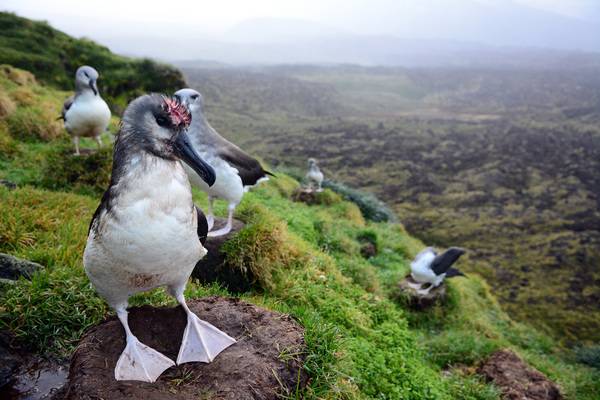
The rodent infestation has devastated populations of native invertebrate and plant species. And now, hordes of hungry mice on the sub-Antarctic island, home to globally important seabird populations, including the wandering albatross, are eating its seabirds alive.
According to the Mouse-Free Marion Project, a registered nonprofit company established to eradicate the mice in a R450 million project, the rodents are eating chicks and even adults of both surface-nesting and burrowing seabirds.
“Left unchecked, they are predicted to cause the local extinction of 19 of the 28 species of breeding seabirds found on the island, some within the next 30 years,” it said.
Marion Island, which is about 2 300km from Cape Town in the southern Indian Ocean, and forms part of the Prince Edward Island group, is home to about 2 million seabirds.
If all goes according to plan, in the winter of 2025, a fleet of helicopters, ferried by sea from South Africa, will spread rodenticide bait from underslung buckets in overlapping swathes across the island.
On whether other species are at risk from the poisoned mice, experts said this has been “very carefully and rigorously assessed as part of our planning”.
“Although the possibility of secondary poisoning from dead mice cannot be completely excluded, we certainly expect that almost all of the mice will die underground and therefore won’t be available to scavenging birds. Most of the seabirds on the island have a marine diet and feed out at sea.” said Anton Wolfaardt, the project manager of the Mouse-Free Marion Project.
This is the only method that has so far proved successful in eradicating rodents from large islands, according to the project, which was initiated by BirdLife South Africa and the department of forestry fisheries and the environment.
“Upon successful completion, the project will restore the critical breeding habitat of more than 2 million seabirds, many globally threatened, and improve the island’s resilience to a warming climate.”
Plague of mice
“We’ve known for a long time that the mice have been having adverse impacts on the terrestrial ecology of the island in that they have been having an impact on the vegetation, and importantly on the invertebrate populations of the island,” said Wolfaardt.
As an example, he cited how a flightless moth, endemic to the Prince Edward Islands, is “probably now at 10% of its global population due directly to the impacts of the mice”. The moth plays a key role in recycling nutrients from dead vegetation.
Mice are supreme generalists, Wolfaardt said. “They eat anything to stay alive and to thrive and so, what’s been happening, as the climate on Marion Island has become warmer and drier, those conditions have been more favourable for mice, and has enabled them to extend their breeding season.”
Sitting ducks
Normally in the cold, wet winters, the rodents would allocate all their energy to survival. “But with the ameliorating conditions for mice, they’ve been able to breed for a longer period of the year and that has contributed towards very extensive and significant increases in their population. And that has resulted in ongoing declines in the invertebrate populations and increased damage to vegetation.”
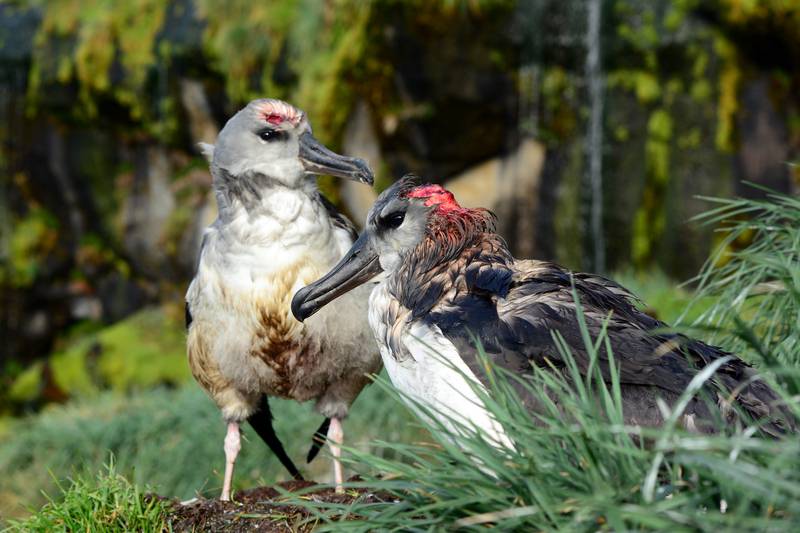
In 2003, according to BirdLife International, the first observations of mice attacks on wandering albatross chicks were recorded, followed by predation on sooty albatross chicks in 2009. This increased in 2015, which was the driest year on record. “Since then large numbers of albatross chicks have been attacked each year, adding urgency to the need to eradicate mice from the island,” it said.
The mice have caused the collapse of other foodstuffs that they have relied on historically in winter and are now looking for other sources of food, Wolfaardt explained.
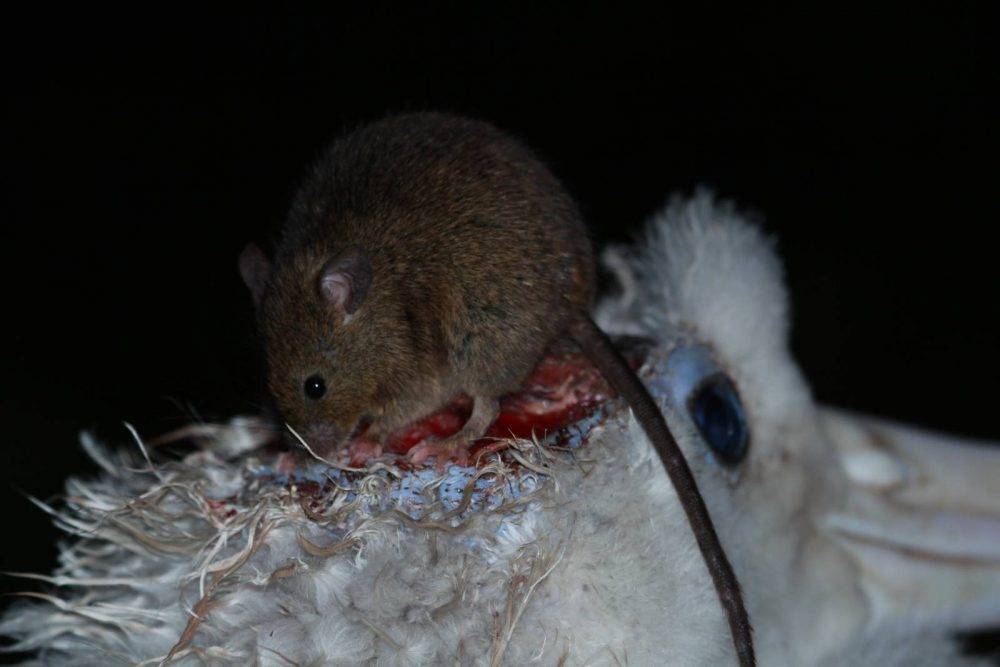
“And they found that in the form of these naive seabirds that have not evolved any defence mechanisms to protect themselves against these novel predators. In the last 30 years especially, the scale and extent and scope of those impacts has expanded … When you see a wandering albatross chick that has been eaten alive by a swarm of mice, it’s kind of visually drastic.”
In 1948, a few cats were sent to Marion Island to control the mice, but they bred and by the 1970s, about 2000 feral cats were killing an estimated 450 000 seabirds every year. By 1991, the cats were finally eradicated from Marion.
The mice have caused the collapse of other foodstuffs that they have relied on historically in winter and are now looking for other sources of food, Wolfaardt explained.
“And they found that in the form of these naive seabirds that have not evolved any defence mechanisms to protect themselves against these novel predators. In the last 30 years especially, the scale and extent and scope of those impacts has expanded … When you see a wandering albatross chick that has been eaten alive by a swarm of mice, it’s kind of visually drastic.”
Adaptable
As an invasive species, rodents are particularly adaptable, Wolfaardt said. “Unfortunately for Marion, the projections for the changes in climate are that the climatic conditions are going to become increasingly more suitable and favourable for mice, which means they will almost certainly continue to increase in number and there would be more pressure on seabirds especially because they have sort of stripped out a lot of other food, which they have survived on historically.”
That it’s only going to get worse “really stresses the importance and the urgency” of the eradication operation to remove that threat “so that we can secure a more favourable future for the seabirds and the island as a whole”, he said.
Marion Island supports about a quarter of all wandering albatrosses on the planet. “It is one of the species that is commonly impacted by mice, so the impacts of mice on Marion have a very significant impact on the global population of wandering albatrosses and a number of other species for which Marion hosts a large proportion of the global population.”
Critically important
In her budget speech in May, Forestry, Fisheries and Environment Minister Barbara Creecy said the “critically important” Mouse-Free Marion Project, in partnership with BirdLife South Africa, aims to restore Marion Island, a Special Nature Reserve and Ramsar Site Wetland of International Importance, by eradicating invasive house mice.
“Provided Birdlife SA can raise the remaining funding from a range of interested international donors, this ambitious project is envisaged to be completed in 2025,” Creecy said
According to Wolfaardt, just over a quarter of the R450 million target has been raised so far. “We have recently significantly scaled up our capacity and our fundraising team and we’ve got many irons in many fires and are hoping to receive some good feedback soon.”
Aerial baiting
At 30 000 hectares, Marion will be substantially larger than previous rodent eradication efforts undertaken on islands in a single operation.
They needed to make sure to get rid of every single individual. “All it would take is for one pregnant female to survive and for that individual to then re-populate the whole island.”
Flight paths are being developed. “The pilots and the helicopters would essentially fly those flight paths exactly. We would have GPS and GIS technology that would monitor in almost real time how the bait covers the flight path to make sure that there is complete bait coverage.”
Ecological restoration
Winter conditions on Marion Island are likely to be hard, and while the mice would be at their hungriest, getting enough flying days would be difficult because of the weather.
“So, it might be that for a few days or even a few weeks, we wouldn’t be able to bait the island because of strong winds, poor visibility or heavy rainfall,” Wolfaardt said, adding that contingency plans for this are being built into planning.
The eradication project is about ecological restoration. “We know from other similar operations on sub-Antarctic islands that once these introduced predators have been removed, those ecosystems rebound, sometimes very quickly,” Wolfaardt said.
“In some cases, for seabirds, it might take a little bit longer for the overall population to start growing to the extent that it will over time, but certainly you will start finding very rapid increases in breeding success and those species then become more resilient to other pressures that they might face such as regards to climate change.”