


If you have scrolled through online configurators of major legacy automotive brands, you would be forgiven for thinking that every motorist in South Africa has suddenly stumbled into a trust fund.
The pricing of modern vehicles has become untethered from the economic reality of the people expected to buy them.
Top-tier double-cab bakkies, like the Toyota Hilux and Ford Ranger, vehicles that once served as the humble, utilitarian backbone of the economy, are comfortably pushing past the R800 000 mark in their higher trims, with flagships easily demanding more than R1 million.
Standard European family SUVs — once a staple of suburban driveways — now require a similarly exorbitant financial commitment.
Yet, when you step off the glossy showroom floors and look at the hard data from the Automotive Business Council (Naamsa) and WesBank, a radically different picture emerges.
The South African consumer is incredibly resilient but is fighting a daily battle against automotive inflation. In the fight, a clear battle line has been drawn in the sand.
The magic number dividing the entire South African automotive market is R500 000.
The harsh mathematics
While a massive chunk of the new cars on sale are priced well over half a million rand, only a fraction of the tax base can traditionally afford them.
The disconnect between what cars cost and what citizens earn has never been wider.
To comfortably finance a R500 000 vehicle without putting down a hefty deposit, you need to navigate the bank's stringent affordability algorithms.
Financial institutions generally advise that a vehicle instalment should not exceed 25% of a buyer's gross monthly income.
If we look at a standard finance agreement for a R500 000 car spread over 60 months at prime plus a moderate risk margin, with no deposit, the monthly instalment lands somewhere between R11 000 and R12 000, depending on your credit score.
To comfortably absorb the cost while leaving room for insurance, fuel and the spiralling cost of living, a buyer needs a gross monthly salary of nearly R47 000.
According to recent South African Revenue Service tax statistics, less than 15% of the registered tax base earns in this bracket, which immediately excludes most of the motorists on our roads.

Danger of debt structuring
How are so many expensive cars still rolling off dealership floors?
The answer lies in aggressive and sometimes precarious debt structuring. The traditional 60-month loan is no longer viable for most household budgets, so consumers are forcing affordability through prolonged financial mechanisms.
Data from vehicle financiers consistently show that the average loan duration has stretched to 72 months. However, even an extra year of payments isn't enough to soften the blow of modern car prices.
This has led to a massive over-reliance on balloon payments. Buyers are deferring 20% to 40% of the vehicle's purchase price to the end of the loan term just to make the monthly instalments palatable.
This creates a dangerous illusion of affordability. It pushes the break-even point — the moment when the car's trade-in value equals the outstanding debt — dangerously far into the future.
But for the growing cohort of buyers who refuse to be crippled by long-term debt, the sub-R500 000 space has become a battleground.
A July sales surge driven by pragmatism
Despite the financial crunch, the market is finding ways to survive and even thrive.
July 2026 proved to be a watershed month for the industry.
Overall, new vehicle sales reached 57 708 units, which reflected an 11.9% increase from the previous year.
Passenger vehicles accounted for 40 912 of the units, representing the best passenger car sales figures since September 2014.
Naamsa noted that lower fuel costs helped offset the impact of the full reinstatement of the general fuel levy, easing pressure on household and operating budgets and contributing to a much more supportive environment for vehicle demand.
When households get a bit of breathing room at the pumps, they are more willing to sign a finance agreement.
The New Market: Asian challengers and Toyota's defensive line
If you want a brand-new vehicle for less than R500 000, the established European premium brands are largely absent.
Nature abhors a vacuum and the void they left has been ruthlessly filled by brands bringing serious, undeniable value for money.
The sub-R500K new market is an Eastern front.
Suzuki, relying on its Indian joint-venture operations, followed Toyota closely in July by selling 5 994 vehicles. Volkswagen came in third with 5 799 units.
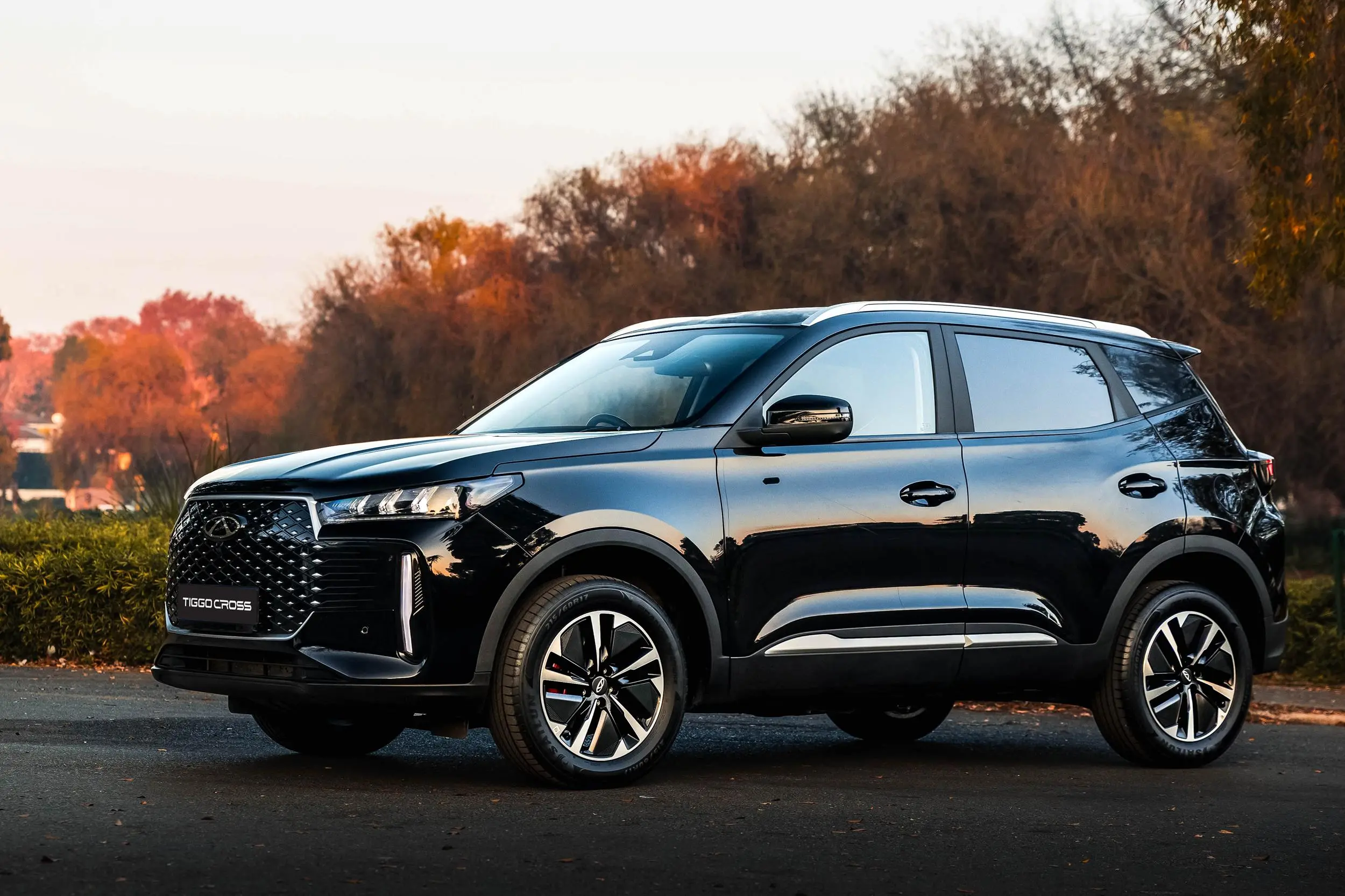
However, the Chinese manufacturers continue to climb. Chery, GWM and Jetour all featured in the top 10 selling brands for July.
Having recently been behind the wheel of budget-friendly disruptors like the Changan Alsvin, it is abundantly clear why South Africans are voting with their wallets.
The Chinese brands are packaging leather interiors, panoramic sunroofs and a suite of active safety features into vehicles that slide comfortably under the R500 000 ceiling.
Toyota, however, is not taking this lying down.
The Japanese giant led the way in July by selling a massive 14 142 units, a 13.9% year-on-year increase.
At the beginning of 2026, Toyota recognised the tangible impact of Chinese cars and decided that the best way to keep its standing in the country was to flood the market with new options.
Toyota launched several new vehicles in June, including the latest Hilux, the Land Cruiser FJ, the new RAV4 and its all-electric bZ4X.
The newly launched Hilux was the top-selling vehicle in July as it moved 4189 units.
It was followed by the Volkswagen Polo Vivo and the Chery Tiggo 4 Pro.
The used market and the bakkie wars
While the new car market is surging, the pre-owned market remains the engine room of South African buying power.
For every new car financed in the country, roughly 2.3 used cars are driven off a lot.
The sweet spot for the average buyer sits squarely in the R200 000 to R350 000 bracket, though the average financed used car price has crept up beyond R430 000 due to scarcity of clean stock.
When you look at what pre-owned buyers are taking home, the list is purely pragmatic. The Volkswagen Polo Vivo is practically liquid currency on the used market.
But it is the double-cab segment that tells a fascinating story of brand loyalty and perceived value.
Buyers desperately want the lifestyle and capability of a double-cab but many refuse to pay top dollar for a new one, opting instead to let the first owner take a R200 000 depreciation hit on a pre-owned Toyota Hilux or Ford Ranger.
Interestingly, on the new vehicle front, Ford has continued its massive momentum after refreshing the Ranger earlier this year.
While it ranked fourth in overall July sales figures, Ford emerged as the top-seller of double-cab bakkies in the country for the first half of the year, moving more than 10 075 double-cab Rangers.
The NEV wildcard: electrification for the masses
Perhaps the most exciting shift happening under the R500 000 mark is the sudden and disruptive arrival of new energy vehicles (NEVs).
South Africa's transition towards electrified mobility gained serious momentum during July 2026, with 3 045 NEVs sold, representing a massive 104.2% increase compared to the 1 491 units recorded during the same period in 2025.
The sudden jump in NEV sales is down to affordability. Before 2025, there were no plug-in hybrid (PHEVS) under R1 million.
However, after the introduction of the BYD Sealion 6 in April 2025 which saw a PHEV priced at R630 000, more and more manufacturers decided to follow suit.
Now, there are offerings from BYD, Geely and Chery that are within affordable territory for South Africans.
Traditional hybrid vehicles (HEV) continue to lead the way with 1 488 units sold in July but PHEVs contributed 990 units.
Pure electric vehicles (EV) sold 419 units, accounting for 13.8% of NEV sales. On a year-to-date basis, the country has recorded 13 193 NEV sales.
The sustained growth across all three technology categories demonstrates that consumers are increasingly embracing electrified vehicles, supported by a broader range of product offerings that are finally breaking into the sub-R500K and mid-tier brackets.
As we move through the second half of 2026, the data paints a clear picture of who the South African motorist is today.
They are fiercely protective of their hard-earned cash, deeply analytical about long-term value and entirely willing to abandon legacy brands that no longer serve their financial reality.
Whether they are extending loan terms to secure a new double-cab, hunting for depreciated gems on the pre-owned market or turning to disruptive Asian automakers and affordable hybrids to secure a feature-rich crossover, the core motivation is identical.
The R500 000 divide is not just a financial threshold; it is a psychological one. South Africans are demanding genuine value and for the first time in a long time, the market is being forced to provide it.