Divine silence: Jacob Zuma (centre) receives blessing from pastors and preachers at an inter-faith gathering held in May 2017 to pray for him, at the height of state capture. He resigned as president nine months later, after pressure from the ANC itself. Photo: Rajesh Jantilal/AFP/Getty Images
God is everywhere in South Africa.
She resides in the national anthem. The very first line — Nkosi Sikelel’ iAfrika — calls for Her blessing. One stanza down She is sought for Her protection; in the next it is proclaimed the calls are ringing out from heaven. Three different languages united in their faith.
God is invoked at dinner tables around the country each night — whether through Christian or Jewish prayer or the breaking of bread at iftar during Ramadan this month.
The percentage of the population with a holy inclination, survey data tells us, is at the unanimous majority.
In one of our darkest hours, at the onset of the Covid-19 pandemic, President Cyril Ramaphosa obliged religious leaders and called for a national day of prayer. He declared: “I call on our people to offer a prayer and a thought for the protection and healing of our land and its people from this disease.”
But his emphasis was more fostering solidarity than appeasing a deity. The insinuation being that we are a nation connected spiritually — despite our inability to always articulate that spirituality through the same chorus or institutions. The Mail & Guardian’s God edition, which is published each year at this time, was founded on that premise.
In this context it is remarkable that God has never penetrated deeper into our political framework. We have churches that are powerful, wielding great influence. Yet none can claim to have to have diverted us off the secular path. Our state bows its head at the altar of liberalism and rarely allows it to be turned.
Religion has never done well at the polls. When the African Christian Democratic Party captured 1.6% of the vote in 2004, it represented the best performance that a faith-based entity had ever had. Similarly, Al Jama-Ah’s 0.18%, and the capture of a single seat, at the last national elections was seen as the landmark moment for the Muslim party.
What distinguishes both parties is that they advocate for policies based on religious doctrine, something against which the South African electorate has clearly spoken. This is not to say that it does not identify with politicians on the same faith lines as themselves.
Writing in The Conversation earlier this year, David Jeffery-Schwikkard argued that the ruling ANC had the perfect winning strategy. By offering a mix of “religious rhetoric and a secular policy agenda”, it was able to cast its net wide, securing the support of a deeply political nation that still valued Sunday worship.
The ANC has offered its ear to the word of God for much of its century-plus existence. Even though a chunk of that history is tethered to the South African Communist Party and socialist atheism, the church always found its way back into the fold. Albert Luthuli, ANC president between 1952 and 1967, was well-known as a Christian minister; Oliver Tambo, his successor, told religious leaders in Lusaka in 1987: “Our founders were churchmen and women … that link has never been broken.”
More recently, proudly Pentecostal Jacob Zuma has given us the indelible image of a leader on his knees at the mercy of blessings. (We must presume God, once again, did not interfere to answer his prayers and preserve his presidency.)
But this reasoning doesn’t fully encompass the internal tug and pull in the ANC — especially as it settled into its position as ruling party of a new nation. Nelson Mandela was largely able to ignore the idea of faith playing a role in governance. Thabo Mbeki, a proud intellectual, was expected to do the same until he surprisingly began sprinkling the gospel into speeches. His Damascus moment culminated in the 2006 State of the Nation address in which he equated the national project to “God’s blessing to the Prophet Isaiah”.
Only a year later the party, effectively dismissing notions of a turning point, produced The RDP of the Soul. The discussion document was ruthless in its caustic assessment of religious leaders while condemning Christians who sully the ANC’s interfaith philosophy by refusing to find common ground with Muslims, Hindus, Jews and African faiths.
“The separate development of religious institutions is as strongly entrenched as it was in the apartheid era,” it proclaimed. “The problem is … many are too busy running their inherited separate activities to work out united strategies of transformation. They produce statements but not strategies.”
To what extent the church has flitted in and out since then can only be debated. But God, by any name, has been thoroughly warned off fiddling with policy.
Central to the disconnect between church and state is the understanding that religious values and democratic ideals are often in direct conflict with one another. Where doctrine might denounce abortion and gay marriage, as easy examples, our Constitution holds them aloft as ideals for an inclusive world.
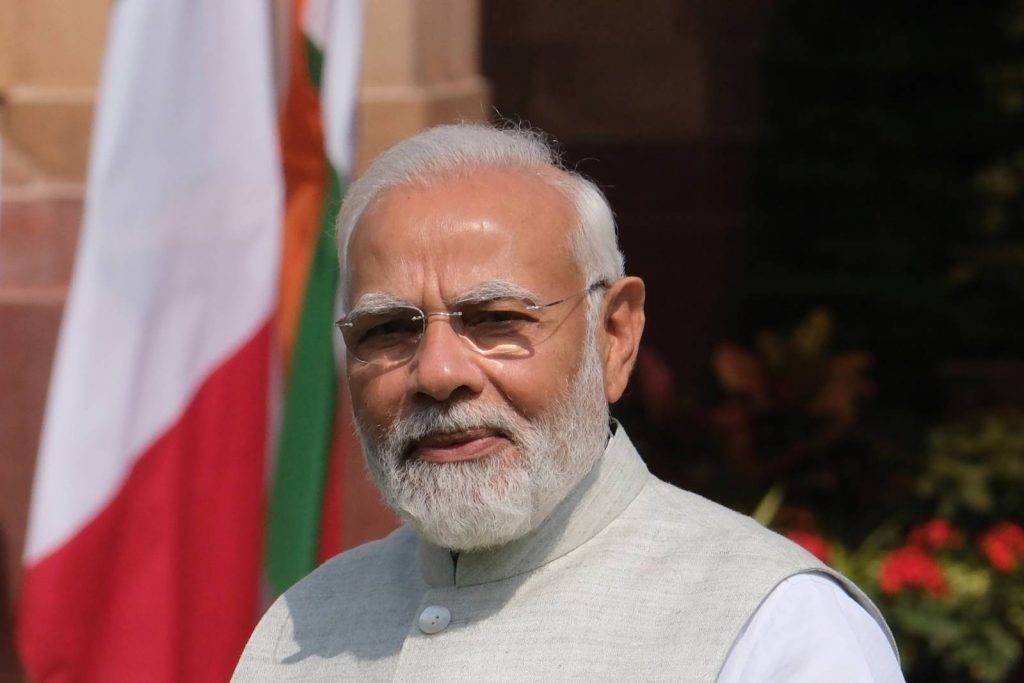 Divisive: Narendra Modi, India’s prime minister, has deepened mistrust between Hindu and Muslim citizens. Photo: T Narayan/Getty Images
That we remain faithful to our temporal ideology might not always seem noteworthy to us, but any student of history or geopolitics could, off-the-cuff, cherrypick dozens of counterexamples that haven’t been as fortunate.
You need only look at our Brics (Brazil, Russia, India, China) partners — all purportedly secular — whom we will welcome to our warm Durban shores in August.
Brazil is just a few months removed from a biblical battle in its last elections. One poll ahead of voting day indicated that nearly 60% of the electorate considered religion an important factor in swaying their ballot. To defeat the staunch evangelical Jair Bolsonaro, emerging President Luiz Inacio Lula da Silva was forced to fight him on his own holy turf, promising Catholics that he would retain the country’s values. Labelled as “the devil” by his opponent’s wife, Michelle, one such promise he made was to keep abortion banned (except were the mother has been raped or her life is at risk).
With war raging in Ukraine, President Vladimir Putin has used the conservative ideology of the Russian Orthodox Church to villainise anything that might be construed as soft Western values. In November he signed an upgrade to the “gay propaganda” bill, effectively making it illegal to promote homosexual content of any kind.
In India, deepening divisions along religious lines have characterised Narendra Modi’s presidency; a regime author Arundhati Roy earlier this year described as “violent Hindu nationalism underwritten by serious corporate money”.
This is not just a non-Western problem. It shouldn’t be forgotten that the base of liberal hegemony, the United States, is the land that gave us the “What if Jesus was aborted” posters. Its leaders, meanwhile, universally tiptoe around Israeli foreign policy in fear of Judeo-Christian reprisals at the polls.
Contrast these cases to that of Jon Qwelane, arguably the most high-profile incident of bigotry — certainly the most legally prolonged — our country has seen. The journalist dreamed out loud that the Constitution might be rewritten to bring it closer to Anglican values and halt gay marriage, lest bestiality creep into our society next. Qwelane was ultimately condemned by the constitutional court, helping us to further build our understanding of the line between tolerance and hatred.
That South Africa has escaped these perils should not be taken for granted. We are a nation that overwhelmingly believes in a higher power, yet we continually choose to put our faith in our mortal systems.
God is everywhere — evidently he doesn’t have time for our petty politics.