Price tag: The Impala Platinum acquisition of Royal Bafokeng is regarded as healthy for the company in the medium to long term. Photo: Waldo Swiegers/Getty Images
The consolidation of leading players in platinum mining in South Africa, Impala Platinum and Royal Bafokeng, has come at the right time; the industry is buffeted by global headwinds that threaten profits.
Impala will first face a tough time making back the money spent on buying Royal Bafokeng, mining analysts say, adding that on a day-to-day basis the acquisition will not really shield the former from the bleak outlook for platinum.
Northam Platinum last week accepted Impala’s offer to buy out its 34.5% stake in Royal Bafokeng in a deal that consisted of a cash offer of R9 billion and shares in Impala that roughly translate to 3.3% of the company. The two have been in a fight over control of Royal Bafokeng since Northam acquired close to 35% in 2021, with the aim to eventually gain control of the company.
In November last year, Northam announced its proposed all-share offer in Royal Bafokeng but it pulled its offer in April this year, citing a fall in metal prices.
Although reaction to the latest deal has been largely positive, there is an expectation that demand for the precious metal will remain depressed over the next few years, because of a shift in the vehicle sector — a key source of demand — towards electric vehicles that don’t require catalytic converters made from platinum.
The acquisition is more of a medium to long term benefit for Impala rather than short term, said Peter Major, the director of mining at Modern Corporate Solutions.
“They paid a high price for that company and they will get synergies out of it. But most of these transactions were taking place at really high PGM [platinum group metals] prices and everything was easy and could be justified at those PGM prices. Now that they’re down, the transaction may be hard to justify,” Major said.
Leading producers of platinum in South Africa are Anglo American, Sibanye Stillwater, Impala and Northam. During 2020-21, Anglo American’s output was up by 106%, Sibanye Stillwater’s increased by 16%, and output from Impala was up 12%, according to GlobalData, a London-based data analytics company.
With Royal Bafokeng in its stable, Impala may emerge more powerful, ultimately leading to a shift in the platinum industry.
Major said Impala would be much larger and be better equipped to compete, but noted that the company is quite tapped out after the Royal Bafokeng transaction.
“They paid quite a bit when they bought North American Palladium and now they bought Royal Bafokeng. You add those two up, they must be more than 50% bigger, those are two very big assets and they were bought at much higher PGM prices meaning they paid more for assets that cost less now,” he said.
Impala acquired Canada’s North American Palladium at a price tag of $758 million in 2019.
In 2021, Impala offered Royal Bafokeng R43 billion for the shares it doesn’t already own. At the time Implats owned 24.5% of the Royal Bafokeng shares in issue, bought for R10 billion. This deal was not approved.
Earlier this year Impala got into a deal with the Public Investment Corporation to acquire its entire shareholding of 9.26% in Royal Bafokeng. This meant Impala had a 55.46% controlling shareholding. Then Impala bought Northam’s entire 34.5% stake in Royal Bafokeng, which the latter had bought in 2021 for R180.50 a share.
The acquisition will lower Impala’s cost per ounce over time, Major noted. “Instead of Impala using money for capital expansion they just bought capital expansion. It definitely increases the life of the Impala mine. There is almost nothing negative about it for the sector, the transaction is good. For the sector it means Impala is healthier, has better resources, has longer life and should have lower cost production.”
In an interview with the Mail & Guardian on Monday, the chief executive of Anglo American Platinum, Natascha Viljoen, said the consolidation of Royal Bafokeng and Impala was a positive development for the platinum mining industry.
“It is important that that new ownership works out. There’s going to be a requirement from Northam and Impala to find a way to make sure that they can optimally operate in this new entity.”
She explained that from an asset point of view, Impala Platinum is best placed to extract the right value out of Royal Bafokeng assets.
“If you don’t consider any of the underlying interactions on what is happening in that space, overarching from an asset point of view all of Royal Bafokeng’s assets in Impala’s hands gives all of those assets longer life and synergy in terms of adjacent mining industries. I think it’s positive for the industry and positive for the Western Limb,” Viljoen said.
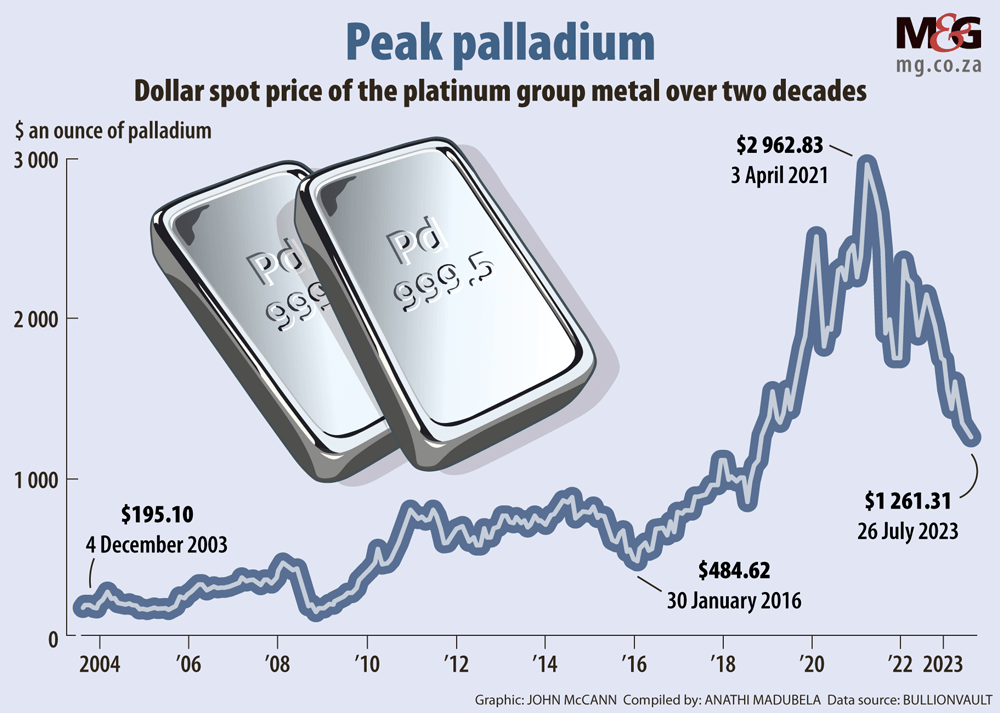 (Graphic: John McCann/M&G)
South Africa’s Western Limb of the Bushveld Complex is home to more than 70% of the world’s platinum and chrome resources.
Impala Platinum now owns 98% of Royal Bafokeng’s share capital.
“In light of the prevailing market conditions and negative medium-term outlook, the Implats mandatory offer presents a unique and attractive opportunity for Northam to lock in substantial value in relation to the disposal shares, with a strong cash underpin that has not been adversely affected by the steep decline in PGM equity valuations across the sector,” Northam Platinum said in a statement about last week’s deal.
Northam Platinum’s chief executive, Paul Dunne, said the disposal presented the company with a chance to strengthen its balance sheet and liquidity position.
“It will also positively affect Northam’s ability to continue to return value to its shareholders in the short to medium-term, including through potential dividends and/or share buy-backs, following on from the … share buy-back which was implemented in 2021,” he said.
When the Royal Bafokeng-Northam deal was first announced, Dunne emphasised that the transaction was a strategic one. The deal, he told the M&G at the time, gave Northam access to Royal Bafokeng Platinum’s shallow ore bodies, of which 65% comprise platinum.
Independent equity analyst Simon Brown said an Impala with Royal Bafokeng’s assets would be big enough to compete with the likes of Anglo American, which on Monday reported a deep plunge of 71% in interim earnings for the six months to end June, dropping to R7.9 billion from R26.7 billion in the first half of 2022.
“Royal Bafokeng Platinum is a good asset and it is right next door to Impala Platinum so that will help with scale. They are well positioned to compete,” Brown said.
“However, with the depressed platinum outlook this transaction will only shield Impala in the medium term, but in the longer term they need new projects locally.”
Impala said in a statement that it would now seek to compulsorily acquire all of the Royal Bafokeng shares not already held by it.
After this, Royal Bafokeng will become a wholly-owned subsidiary of Impala.
The acquiring mining company said it will terminate the listing of Royal Bafokeng shares on the JSE after an application is made.
Brown said the delisting of Royal Bafokeng shares is a good move by Impala because placing the company internally removes listing costs.
“The delisting makes sense. But it’s sad because the more listings the better; better for the country, better for the government and better for investors. We have a few choices of liquid platinum companies so I’m really sorry about the delisting,” Major said.The JSE was averaging about 25 delistings a year from 2015 to 2022, the M&G previously reported.